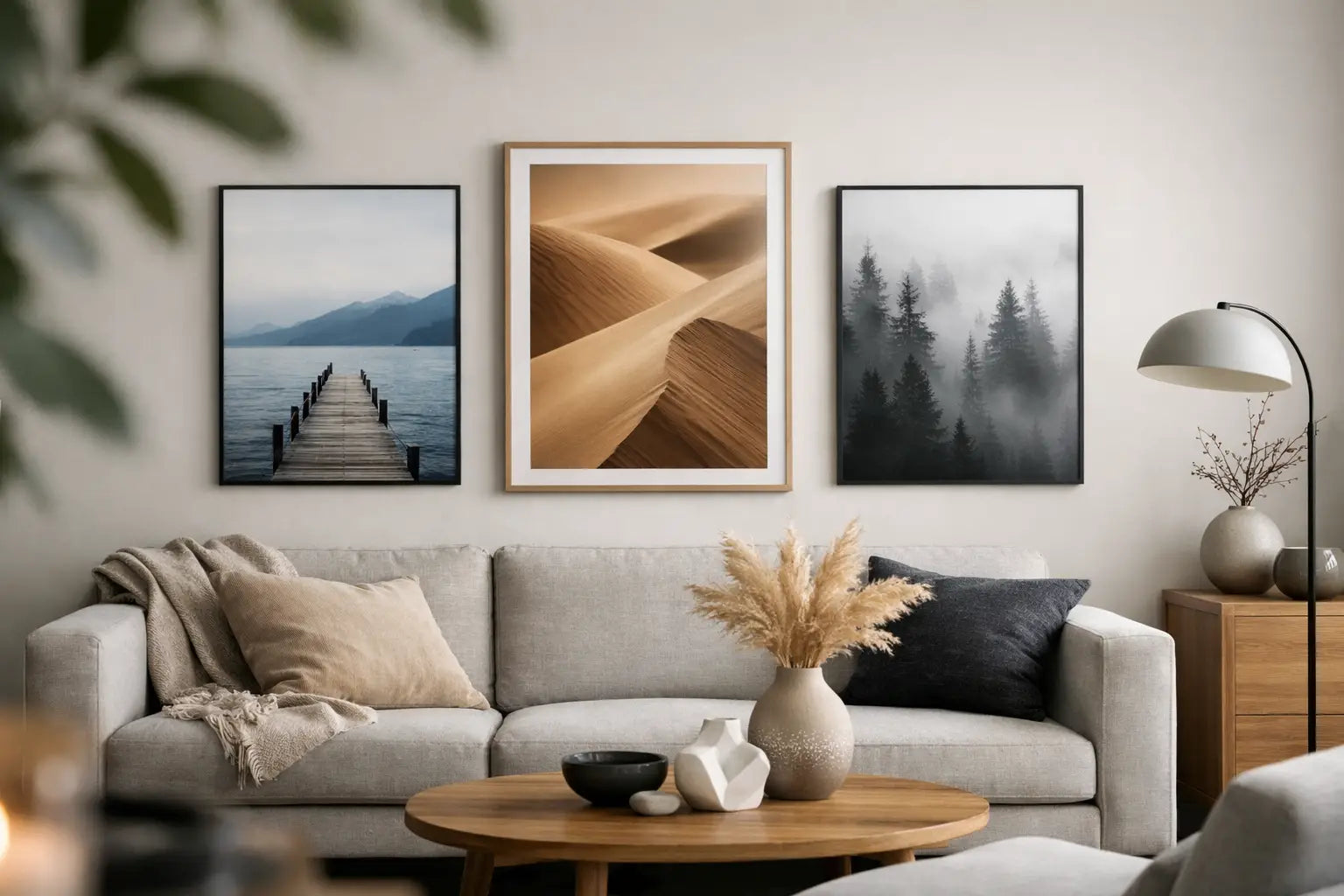
Choose the right photo art for the modern living room
A living room can be meticulously furnished and still appear unfinished. Often, the problem isn't the sofa, the rug, or the lamp, but rather a wall that lacks definition. Photographic art for the modern living room provides precisely this visual anchor: it gives the room depth, guides the eye, and unites furniture, colors, and personal memories into a harmonious whole.
Wall art doesn't have to be complicated. The key isn't knowing every decorating rule, but rather choosing a motif, format, and frame that suit the room and your lifestyle. A large-format coastal scene can exude tranquility, an urban architectural photograph conveys clarity and confidence, while abstract photography can subtly introduce color and movement into an interior.
What modern photographic art should achieve in the living room
A good piece of wall art doesn't just decorate a blank space; it creates a focal point. Especially in modernly furnished living spaces with clean lines, understated colors, and a few carefully chosen pieces of furniture, photographic art can make a statement. It prevents minimalism from feeling cold without visually cluttering the room.
The strongest motifs either pick up on existing tones or create a deliberately chosen contrast. In a living room with sand, cream and light wood, they look Photographs of Sylt, The Hamptons or Mediterranean coasts harmonize particularly well. They bring light, spaciousness, and a relaxed travel atmosphere into the room. Darker motifs from New York, Hamburg, or featuring striking architecture, on the other hand, give light sofas and natural materials more definition.
The point is not to exactly replicate colors. An image can incorporate new nuances. For example, if a deep blue from a seascape photograph is repeated in a cushion, a vase, or even just as a subtle accent, a compelling connection is already created.
The right theme: atmosphere before decoration
When choosing a motif, a simple question helps: What kind of atmosphere should the living room exude? Someone who wants a calm, open space after a long day will choose different photographic art than someone who wants to decorate a city apartment with a cosmopolitan character.
Coast, light and wanderlust
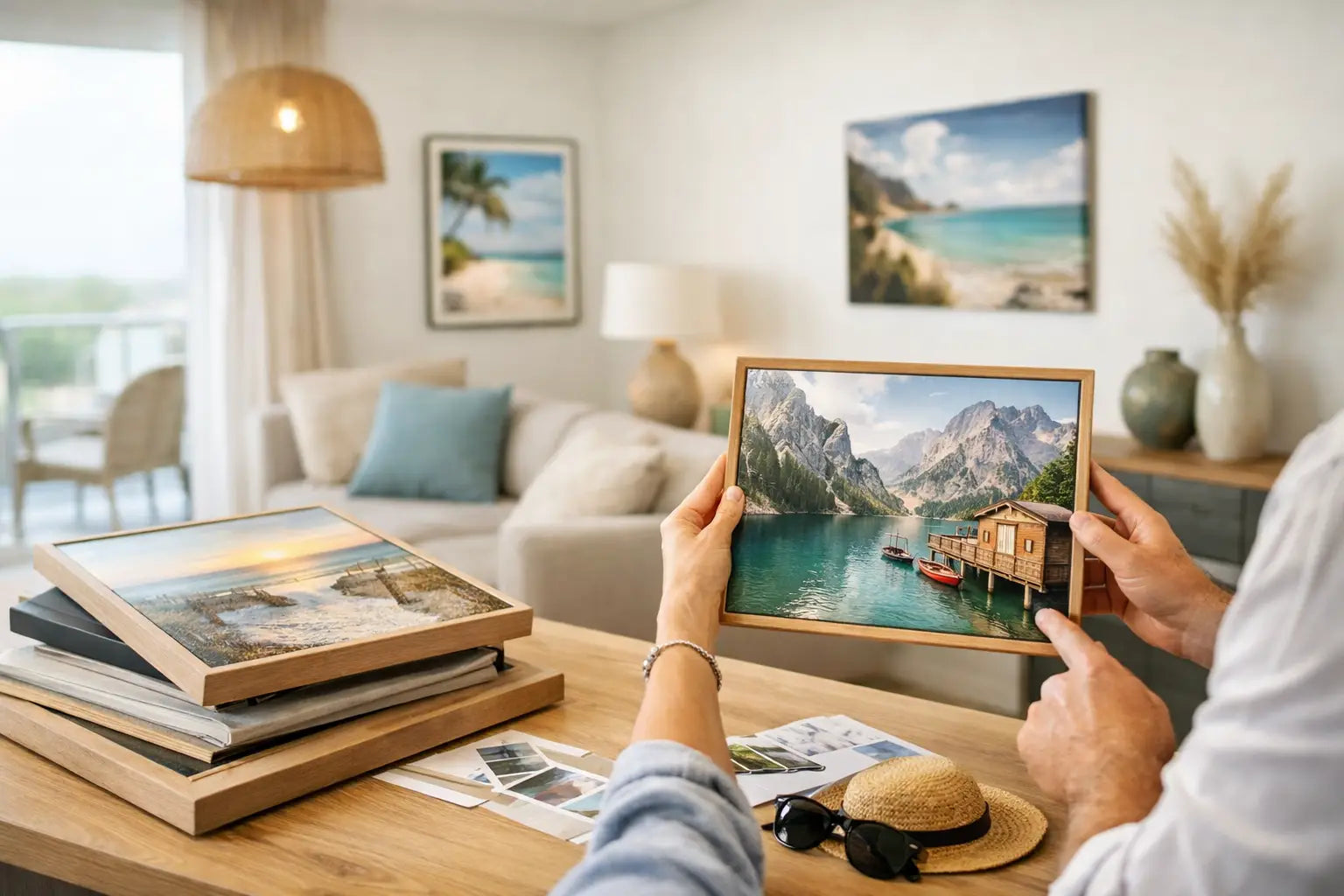
Coastal motifs are an elegant choice for living spaces intended to convey a sense of lightness. Dunes, beach houses, palm trees, or the interplay of water and sky appear timeless, not seasonal. They work particularly well in rooms with linen fabrics, light-colored carpets, natural wood, and soft upholstery.
For a minimalist interior, airy photos with plenty of sky or horizon are suitable. If the image is intended to be more eye-catching, the photograph can include clear areas of color – for example, turquoise water, lush green, or the warm facade of a house in Saint-Tropez or California.
Cityscapes with character
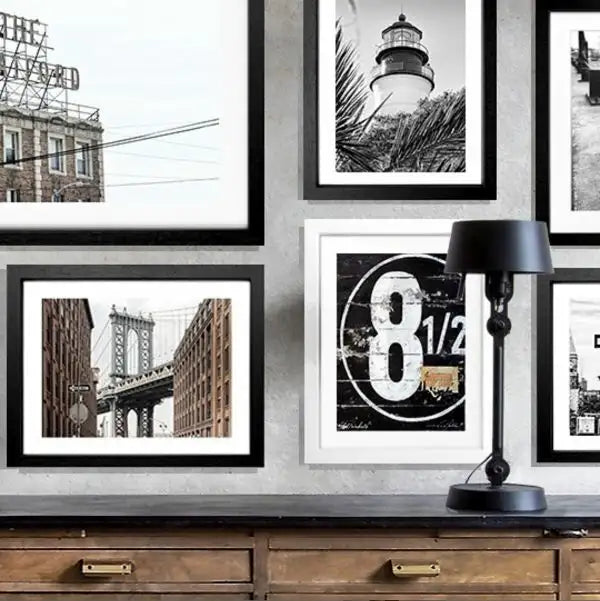
City photography brings structure to the wall. It complements modern sofas, metal, dark wood, glass, and graphic lighting. Hamburg appears approachable and elegantly North German. New York confident and international. It is important to adapt the visual language to the space: A calm architectural shot can appear very elegant, while a dynamic street scene generates more energy.
In smaller living rooms, motifs with clean lines and a limited color palette are often the better choice. They create depth without generating visual clutter. In spacious older apartments or lofts, on the other hand, the photography can be more dramatic.
Abstract photographic art as a flexible accent
Abstract motifs are particularly versatile when the room doesn't explicitly call for a coastal or metropolitan setting. They can be coordinated with furniture and materials through color, texture, and composition.An abstract painting in warm earth tones can add warmth to a modern living room with bouclé, travertine, and oak. Black and white compositions complement a minimalist, architectural interior.
The advantage: Abstract photographic art remains open to change. If new cushions, a different rug, or an armchair are added, the image doesn't need to be immediately reimagined. Nevertheless, it shouldn't appear arbitrary. Choose a work whose color palette or rhythm serves a recognizable purpose within the room.
Photographic art for the modern living room in the right format
The most common problem with wall art isn't the subject matter, but rather its small size. A single small picture above a wide sofa quickly gets lost, even if the photography is excellent. Modern living spaces often benefit from larger pieces of art that give the wall a clear focal point.
The picture above the sofa should generally be visibly wider than the sofa cushions, but not take up the entire width of the furniture. As a guideline, a total width of about two-thirds to three-quarters of the sofa's width appears balanced. When displaying a group of pictures, the group as a whole is what counts, not each individual picture.
A horizontal format accentuates long sofas, sideboards, and open wall surfaces. It reinforces the horizontal calm of a room and is particularly well-suited for landscapes, coastal scenes, and expansive architectural designs. Vertical formats add height to narrower walls, corners, or areas next to windows. They are ideal when a wall surface is limited but open at the top.
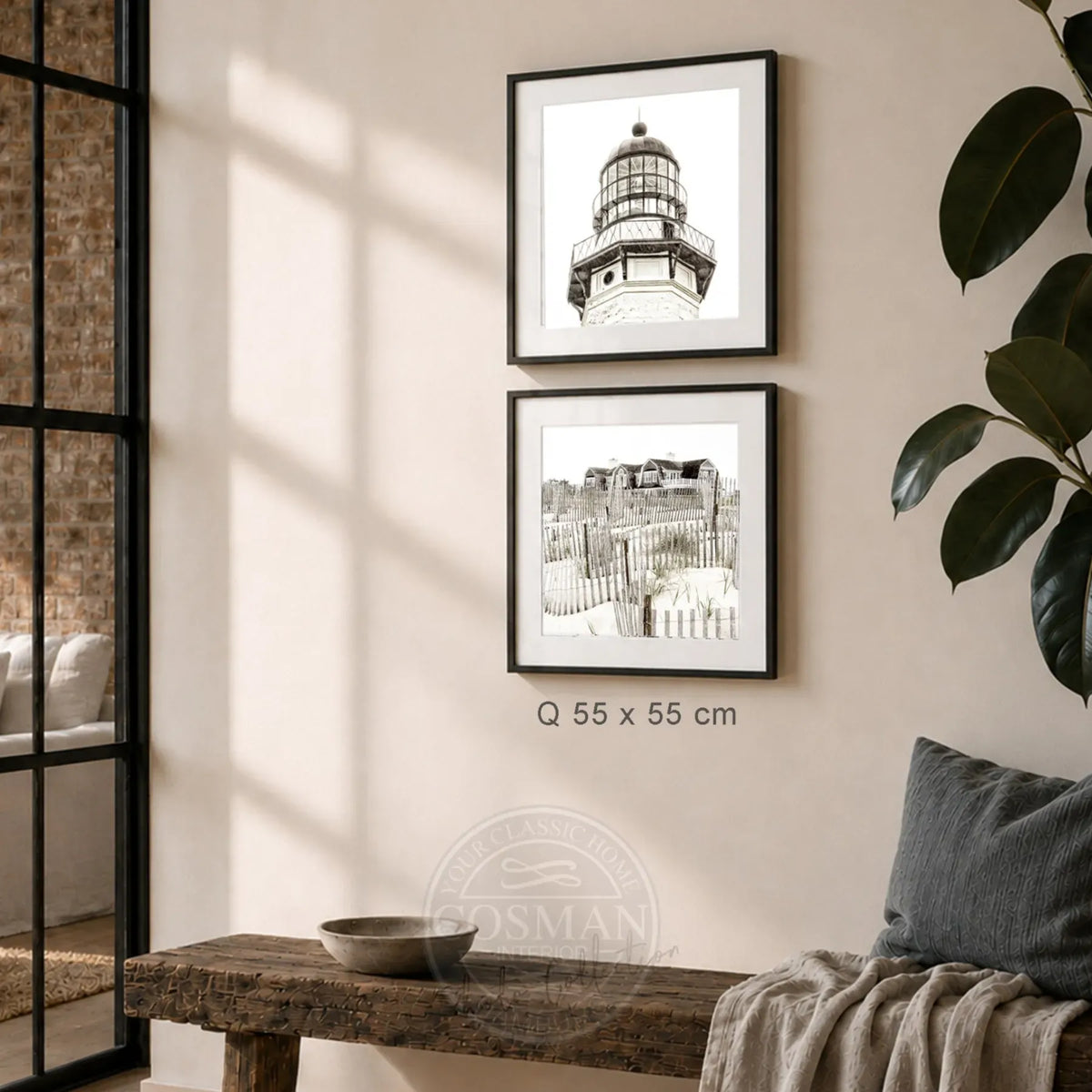
A large-format single image creates a calm, sophisticated, and clear impression. Two complementary works placed side by side can rhythmically structure a wall, for example, above a long sideboard. A classic gallery wall with multiple formats adds personality but requires more planning. It works best when the subjects, frames, and spacing are carefully coordinated. Those seeking an immediately compelling solution are usually better off with a striking main image.
The framework determines the effect
Frames are more than just accessories. They determine whether photographic art appears as a carefully considered piece of furniture or hangs on the wall like a loose poster. A well-crafted frame gives the image weight, protects the print, and creates a clear transition between the picture and the room.
Black frames create contrast and complement graphic motifs, urban photography, and modern interiors with dark accents. White frames appear light and understated, especially on light walls or with airy coastal shots. Natural wood brings warmth to minimalist spaces and harmonizes with oak, rattan, linen, and organic shapes. For a particularly elegant, serene look, a slim frame might be the better choice, while a more pronounced profile deliberately lends the image more presence.
The glass also influences the impression. Acrylic glass protects the photograph and ensures a high-quality, clear presentation. In living areas with plenty of natural light, the reflection of windows and light fixtures is also crucial. Don't automatically hang the picture opposite a large window. A slightly offset position can significantly improve the effect.
The right height and a suitable location
A picture above the sofa is best hung not too high. A distance of about 15 to 25 centimeters between the bottom of the frame and the backrest is usually sufficient. This creates a connection between the furniture and the artwork. If the photograph is hung significantly higher, it appears detached from the living area.
On a blank wall, the center of the image is roughly at eye level. In seating areas, it can be positioned slightly lower than in a hallway.The crucial factor is the view from the perspective from which you actually use the living room: from the sofa, from the dining table, or when entering the room.
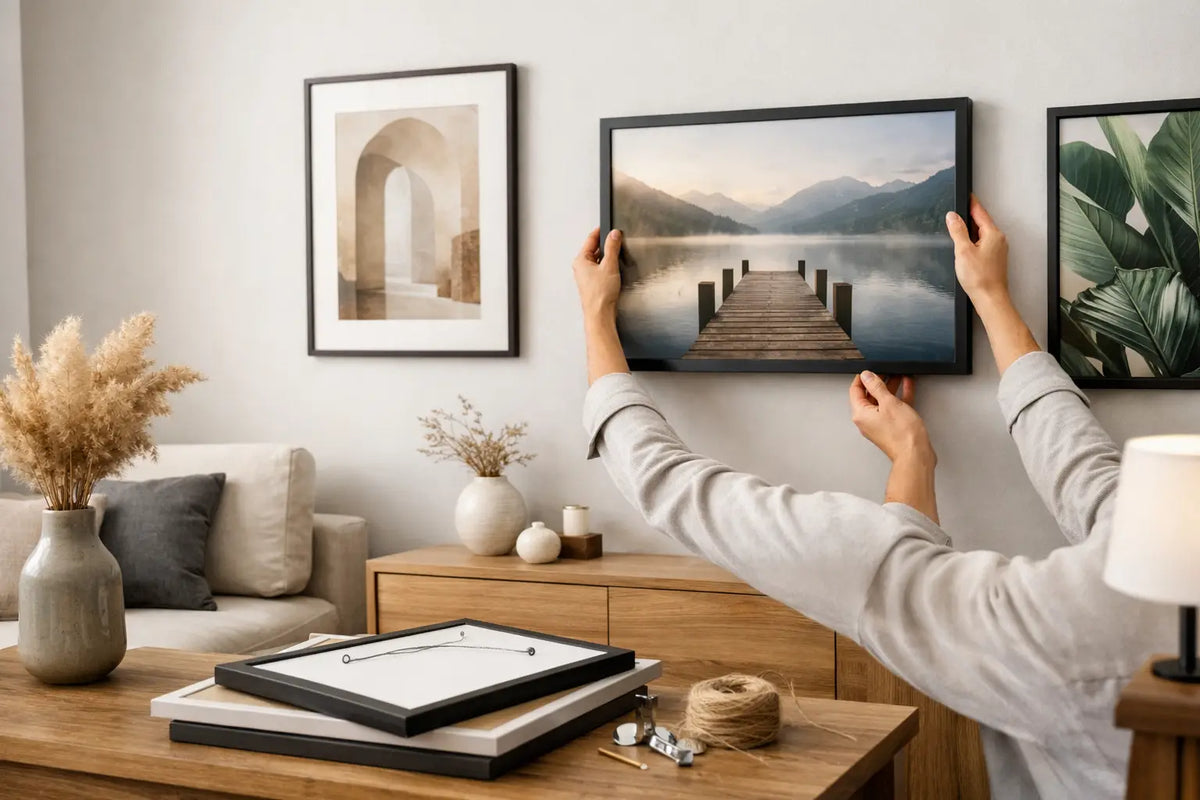
Before hanging your artwork, it's helpful to cut a piece of packing paper to the size of the desired picture. Tape it to the wall with painter's tape and check the spacing, proportions, and viewing angles in both daylight and evening light. This simple preparation prevents mistakes, especially with custom sizes and large-format wall art.
Quality that permanently enhances the space
No matter how perfect a motif is, it quickly loses its impact on flimsy paper, a simple frame, or an improvised hanging system. For a living room that's meant to remain cohesive for years to come, a professionally crafted solution is worthwhile. High-quality photo paper brings out details, contrasts, and color depth. A handcrafted frame ensures that the artwork looks convincing even up close.
Wall art that arrives fully assembled and ready to hang is especially convenient. This eliminates the need to organize the print, frame, and mounting hardware separately. At Cosman Photocollection, images are produced to order, hand-framed, and delivered with hanging hardware – a well-thought-out solution for anyone who wants to decorate their rooms with high-quality pieces without having to coordinate multiple suppliers.
Photographic art can be displayed in a modern living room. Don't choose the most inconspicuous picture for the largest wall, but rather a motif that guides your room in the direction you want to live: relaxed by the sea, urban and clean, or warm, personal and cosmopolitan.