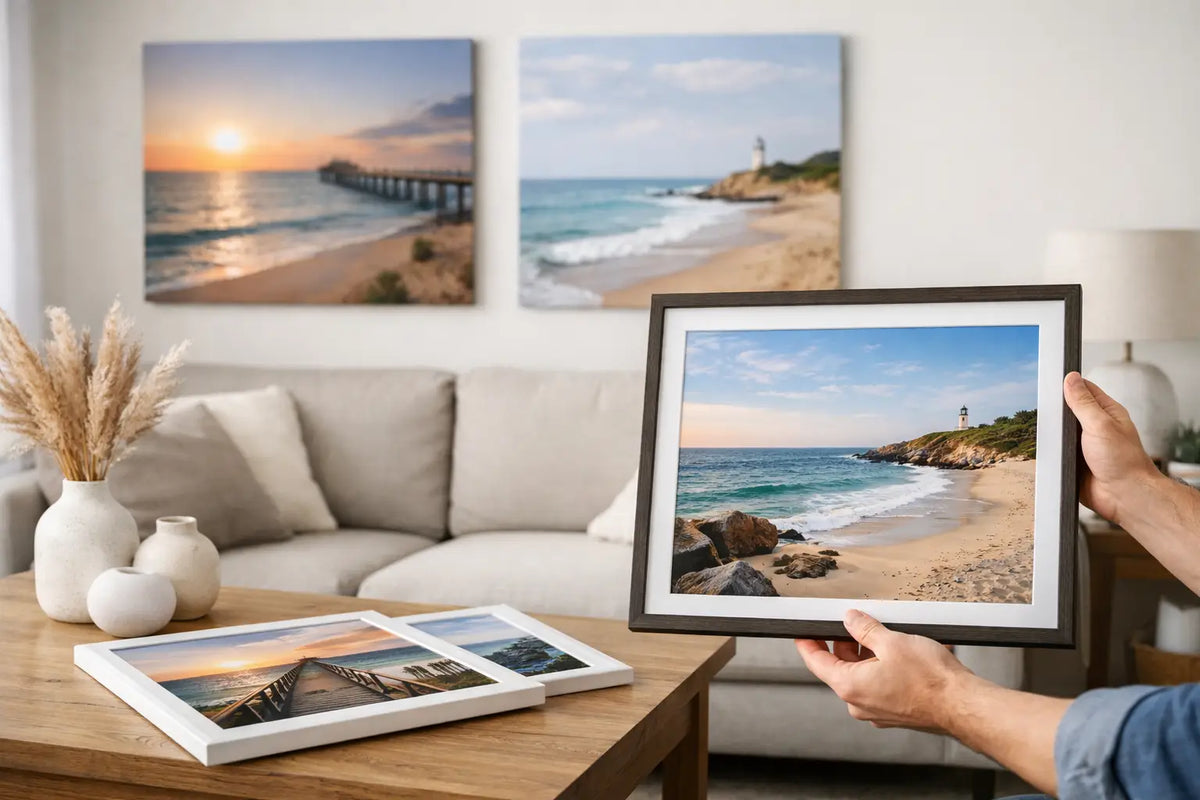
Buy coastal pictures for the living room and choose correctly
A calm sea off Sylt, bright Beach houses in the Hamptons Or the clear horizon line of a Californian coast: Those who want to buy coastal pictures for their living room aren't just choosing a subject. It's about a tangible change of scenery on their own wall. Good coastal photography brings light, vastness, and a relaxed sense of ease into the room – without making the living room look like classic nautical decor.
Especially in urban apartments, but also in vacation homes or spacious living areas, coastal motifs create a counterpoint to everyday life. The key is that the image, its size, and its framing suit the room. Then an empty wall becomes a precisely placed design element that unifies the room's style.
Buy coastal pictures for your living room: The motif determines the mood
Not all coastlines are created equal. A picture of the deep blue Atlantic, white waves, and dramatic clouds makes a much stronger statement than a light dune landscape in sand and beige tones. Therefore, it's worth considering the desired effect before making your selection – not just the destination.
For a calm, contemporary living room, motifs with plenty of sky, horizon, and understated colors are ideal. They make small rooms appear more open and give a clear direction to furnishings with natural wood, linen, or light fabrics. Photographs of beach paths, dunes, and secluded coves look particularly elegant when they don't depict too many elements.
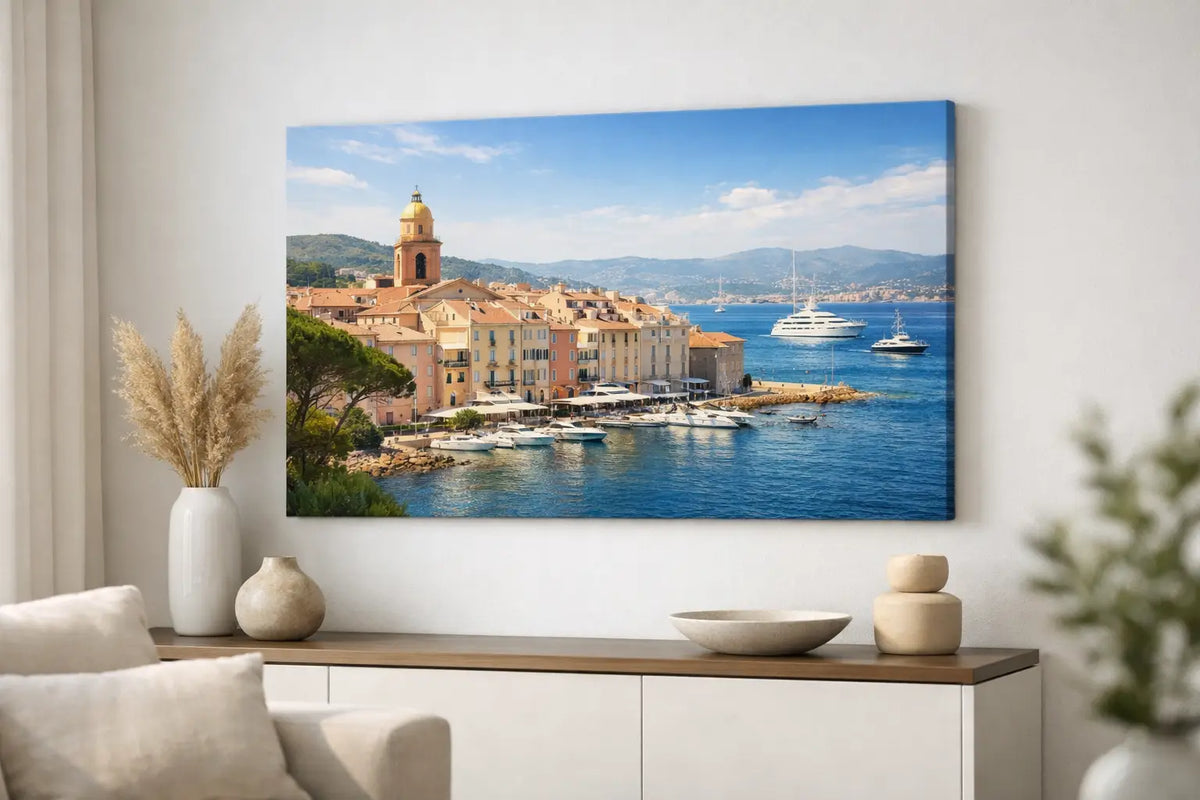
Those seeking more contrast can work with coastal architecture: the clear geometry of a beach house, a striking facade in Saint-Tropez or a pool with a sea view. Such motifs go well with modern furniture, dark woods, glass, and minimalist color schemes. They bring the character of a travel destination into the room without relying on blatant vacation symbols.
The perspective also changes the impression. A wide shot of the sea creates a sense of calm and visual depth. Close-up shots of waves, rocks, or textures in the sand appear more graphic and can add a modern, artistic touch. It depends on whether the image is intended to subtly complement the space or deliberately become the focal point.
Find the right picture size for your wall
A high-quality image loses its impact if it's too small for a large wall. This is one of the most common reasons why wall art, despite beautiful photography, looks generic. Therefore, consider the furniture and wall space first, not just the available area.
Above a sofa, a single coastal image can be quite substantial. As a good visual frame, the image's width can occupy approximately two-thirds to three-quarters of the sofa's width. Above a chest of drawers or sideboard, the format can be somewhat more compact, but should still have sufficient presence. A gap of about 15 to 25 centimeters between the edge of the furniture and the frame creates a balanced look in many living spaces.
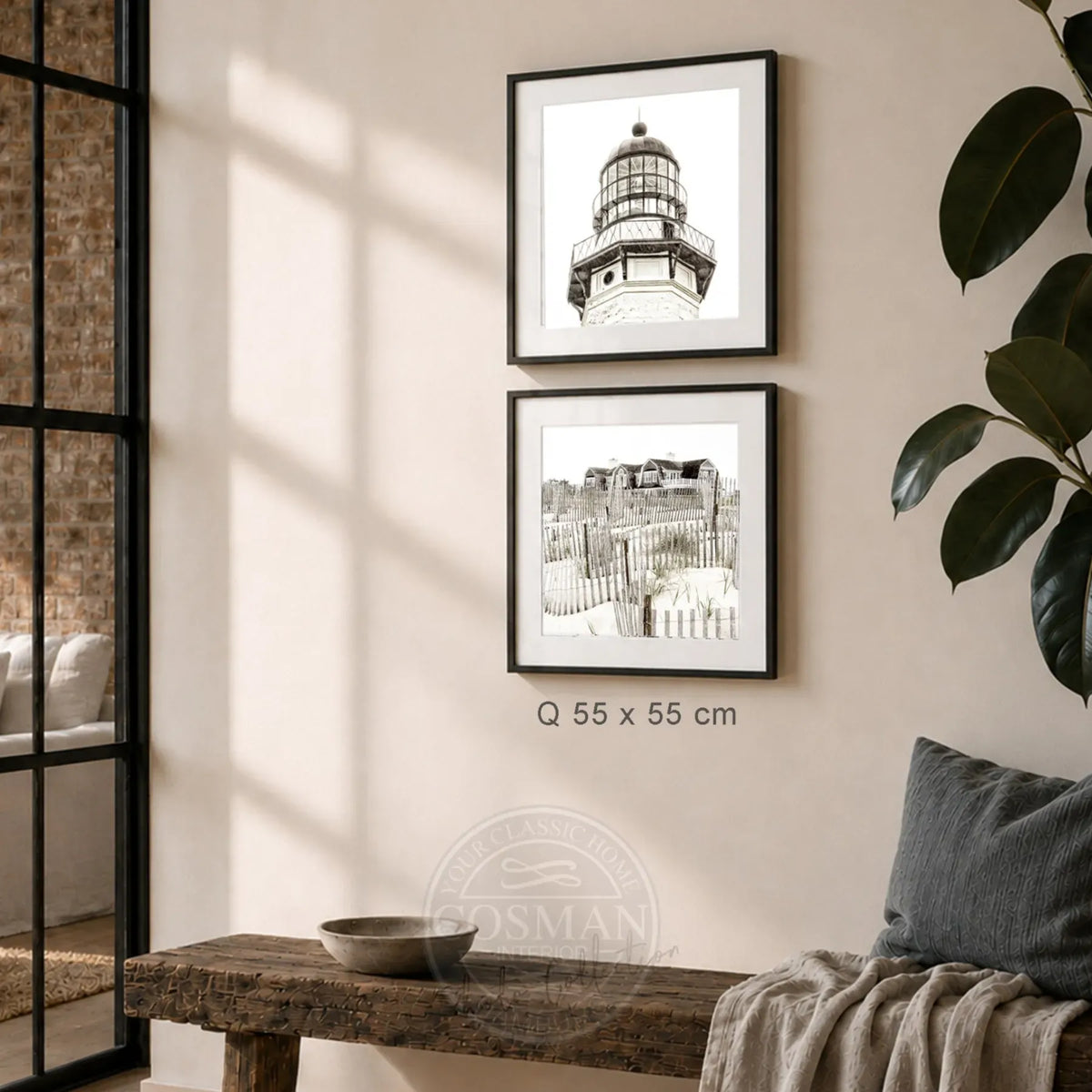
In narrow rooms or hallways, portrait-format images emphasize the room height. A vertical photograph of dunes, a lighthouse This effect is particularly effective when used near beach access. Horizontal formats, on the other hand, work exceptionally well above seating and long sideboards because they echo the horizontal lines of the furniture. Panoramic formats are ideal when the horizon itself is intended to be the central design element.
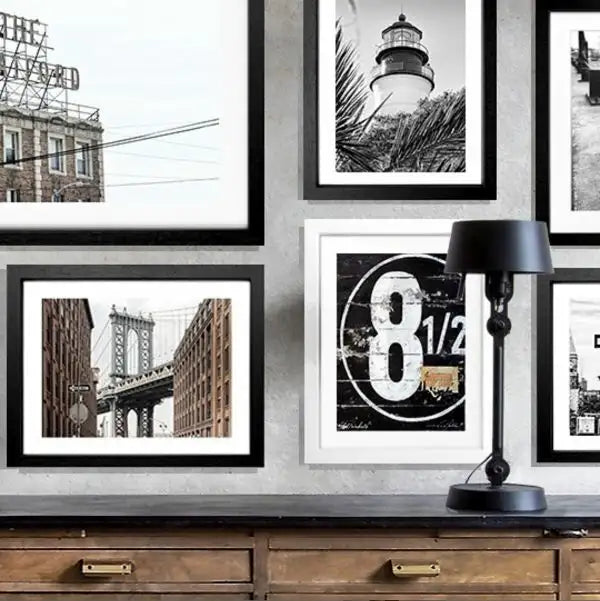
For very large walls, a series of images might be the better choice. Two or three motifs from the same coastal landscape create rhythm without appearing chaotic. A unifying element is important: similar color temperatures, an identical frame, or a recurring perspective. Different motifs can work together if they appear as a deliberately curated sequence and not as randomly added vacation snapshots.
Frame and glass: The design makes the difference
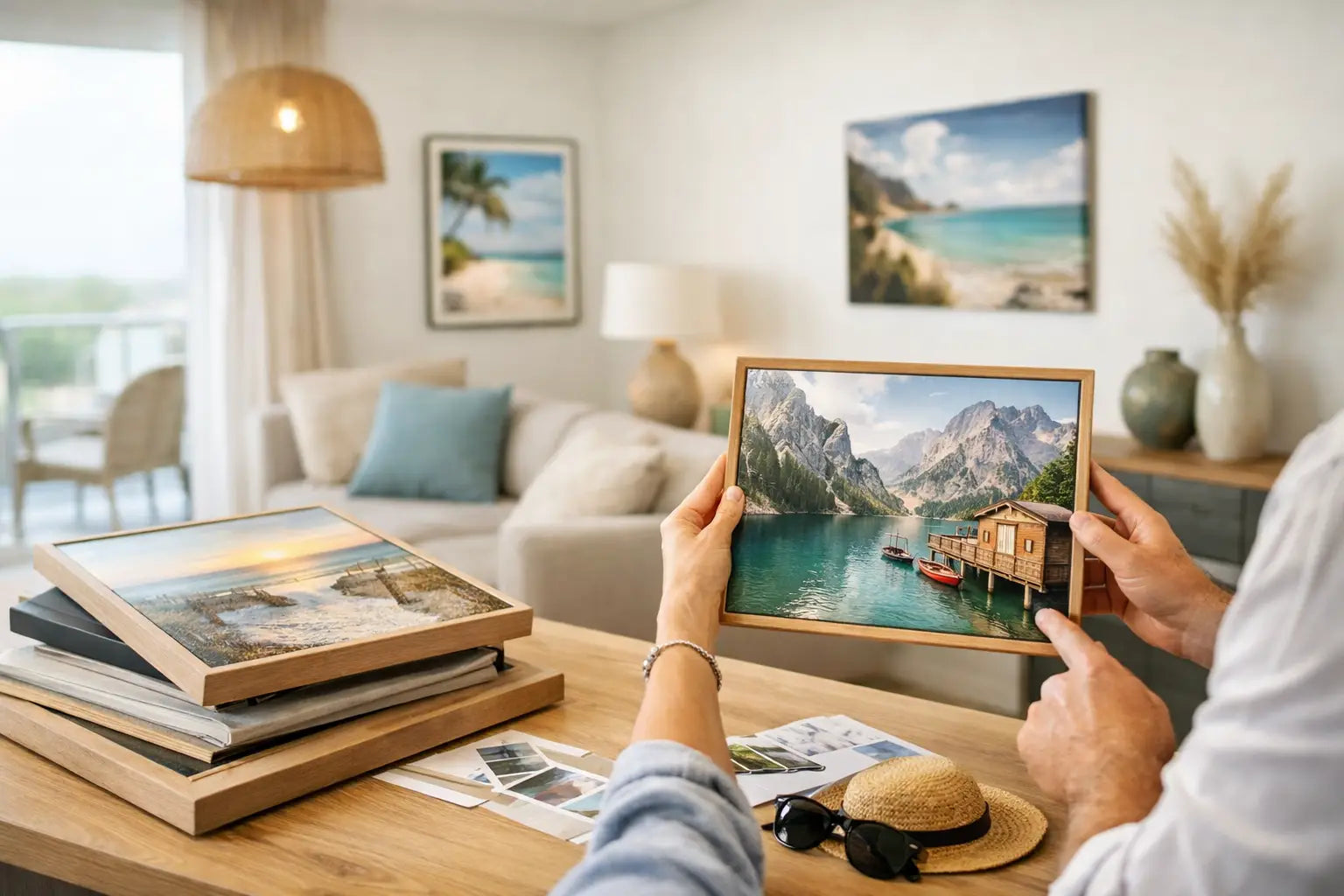
A coastal scene only truly comes to life with the right frame. The frame determines whether the photograph appears airy, graphic, warm, or particularly elegant. A light wood frame complements natural sand, cream, and beige tones and suits relaxed, Scandinavian-inspired living spaces. Black or dark frames create a stark contrast and lend even light beach scenes a more architectural presence.
White frames are a good choice when you want the picture and wall to blend together seamlessly and harmoniously. They are particularly suitable for bright rooms and motifs with lots of sky or delicate pastel shades. Gold or warmer-toned frames can work very well with sunny coastal scenes, Mediterranean architecture, and sand-colored interiors. However, they require a deliberate repetition within the room, for example, through lighting fixtures, hardware, or accessories.
Acrylic glass gives a framed photo print a clear, high-quality surface and protects the image in everyday use. This is particularly useful in the living room, where light, proximity, and use are more prevalent than in a purely decorative secondary room. However, direct, intense sunlight should still be avoided when placing the print. Not all window light is problematic, but a different location might be a better long-term choice for a wall that receives consistently strong sunlight.
The practical advantage of a pre-framed picture is obvious: print, frame, protection, and hanging hardware are all perfectly coordinated. Instead of having to organize paper quality, matting, glass, and mounting hardware separately, you receive a ready-to-hang artwork. This saves time and ensures a harmonious presentation from the very first moment.
Pick up colors from the picture in the living room
A coastal scene doesn't need to exactly replicate the existing colors. It's much more elegant to subtly incorporate individual nuances. For example, cushions, ceramics, or a blanket in off-blue would complement a picture of a gray-blue sea. With a dune motif, sand, cognac, cream, and warm gray can be continued throughout the room.
The balance is key. If the picture already features strong turquoise or blue tones, it doesn't need several more nautical accessories. A striking piece of wall art should take center stage. The surroundings should frame it, not imitate it. This is precisely what makes a living room feel sophisticated rather than simply decorated with a theme.
In rooms with many neutral surfaces, a vibrant coastal scene can create a striking energy. Conversely, a more understated photograph can soothe a living room where rugs, artwork, or furniture already dominate the visual landscape. Ultimately, it's less about whether a motif is spectacular and more about what the room needs.
The right height for a harmonious overall look
Hang the picture so that its center point is roughly at eye level. In living rooms, this is usually around 145 to 155 centimeters from the floor, depending on the ceiling height and furniture. Above a sofa or sideboard, the relationship to the piece of furniture is also important: the picture should clearly be part of it and not appear to be suspended too high above it.
When working on a series of prints, it helps to first lay out all the formats on the floor or test them on the wall with paper cutouts. This allows you to assess spacing and overall width before hanging the prints. A little planning makes a noticeable difference.
Why high-quality workmanship matters in coastal photography
Coastal scenes thrive on subtle transitions: the mist over the water, the texture of dune grass, reflections on a wave, or the gradations of an evening sky. These details are rendered with clarity on high-quality photographic paper.Careful framing also gives the picture the value that a central place in the living room demands.
Cosman Photocollection produces photographs on high-quality photo paper, frames them by hand, and delivers them with suitable hanging hardware. The selection of various frames and special formats makes it easy to choose a motif not only according to taste but also to suit the specific wall. This is particularly helpful when a large area above the sofa or a narrow section of wall in the entryway needs to be transformed into a striking design element.
A coastal image can evoke memories of a favorite place, but it doesn't have to be tied to a specific trip. Sometimes the serene line of the horizon is enough to make a room feel more spacious. Choose a scene that makes you want to pause for a moment when you walk by – that's where good wall decor begins.