Choose the best pictures for old building walls
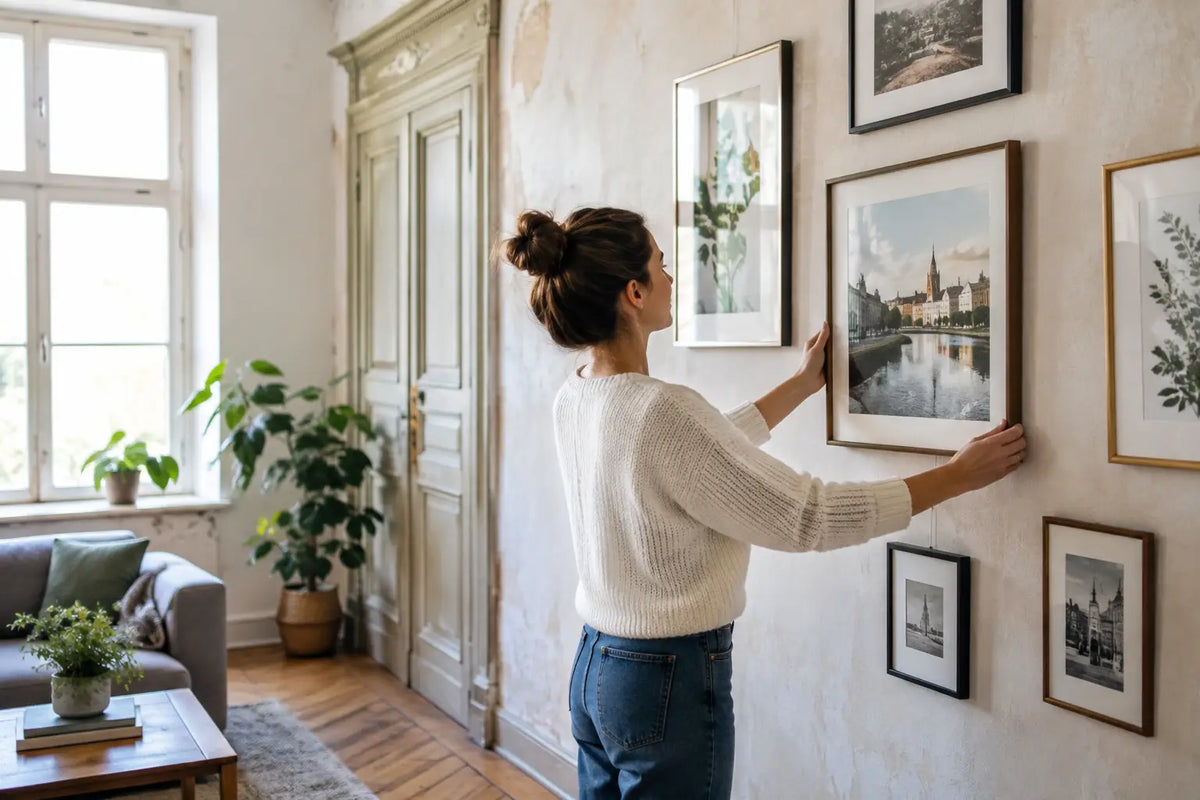
A high ceiling, a stucco wall and a herringbone floor already create a strong atmosphere. This is precisely why the best pictures for old building walls should not be chosen arbitrarily: they can show character without competing for attention with the existing details. The right mural takes up the proportions, light and materiality of the room - and turns a beautiful old building wall into a consciously designed eye-catcher.
Old apartments do not automatically require historical motifs or heavy gold frames. The interaction is crucial. A large-format photograph from Hamburg, a light-flooded coastal moment or a reduced abstract motif can look extremely contemporary next to stucco and paneled doors. It's less about a specific furnishing style than about a selection that leaves space for the architecture.
Why old building walls need other pictures
Old building walls are rarely a neutral surface. High rooms, windows with deep reveals, door frames, floorboards, stucco rosettes or individual wall reflections create a backdrop that is present even without decoration. An image that is too small will be lost in it. An overloaded motif, on the other hand, can quickly create unrest, especially if wallpaper, furniture and historical details already provide a lot of impressions.
The best choice takes the spaciousness of the space seriously. Instead of randomly distributing several small images, a concise work in a suitable format often has a stronger effect. It creates a clear point of calm and contrasts the architecture with something independent. Wall art can be visible in an old building - it doesn't have to apologize.
The light also deserves attention. Large windows allow colors to appear different during the day than in modern, more compact rooms. Bright coastal photographs, soft sandy tones, blue and gray nuances or subjects with clear horizon lines capture natural light particularly beautifully. With darker walls or a north-facing location, sunny landscapes, Mediterranean scenes and warm accents can visually open up the room.
Best pictures for old building walls: motifs with impact
Photographic city motifs are a convincing choice if you want the old building to appear urban, clear and personal. A Hamburg harbor scene, architecture from New York or a quiet street scene connects history with the present. This mix works particularly well in living and dining rooms: the old building structure gives depth, the motif brings in a modern perspective.
Travel and coastal motifs are ideal for rooms with lots of natural light. The sea off Sylt, the light colors of the Hamptons, the warmth of Saint-Tropez or Californian palm trees create space without visually weighing down the room. They go well with light-colored old buildings with floorboards, linen fabrics and natural wood, but can also form a contrast to dark parquet or classic furniture.
Abstract wall art is ideal if the room itself already tells many stories. A reduced image with a calm color surface, graphic lines or a subtle structure does not distract from the stucco and historical doors. It creates balance. Not every abstraction is automatically suitable: very small-scale, high-contrast compositions can quickly appear restless next to ornamented ceilings. Generous shapes and a clearly recognizable color scheme are usually the more elegant solution.
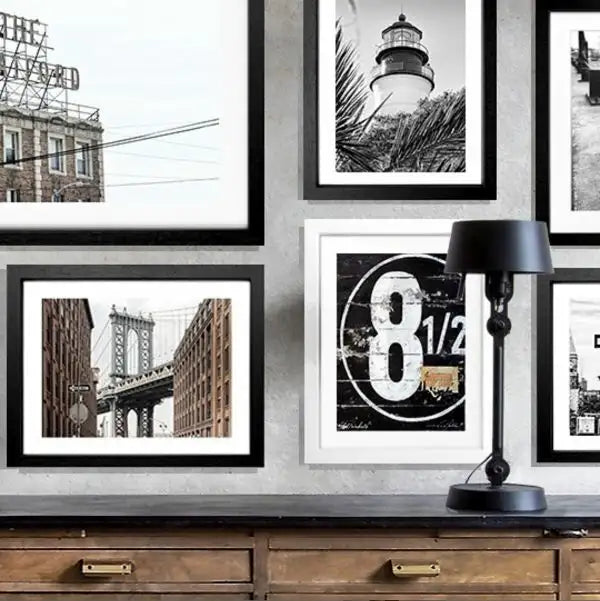
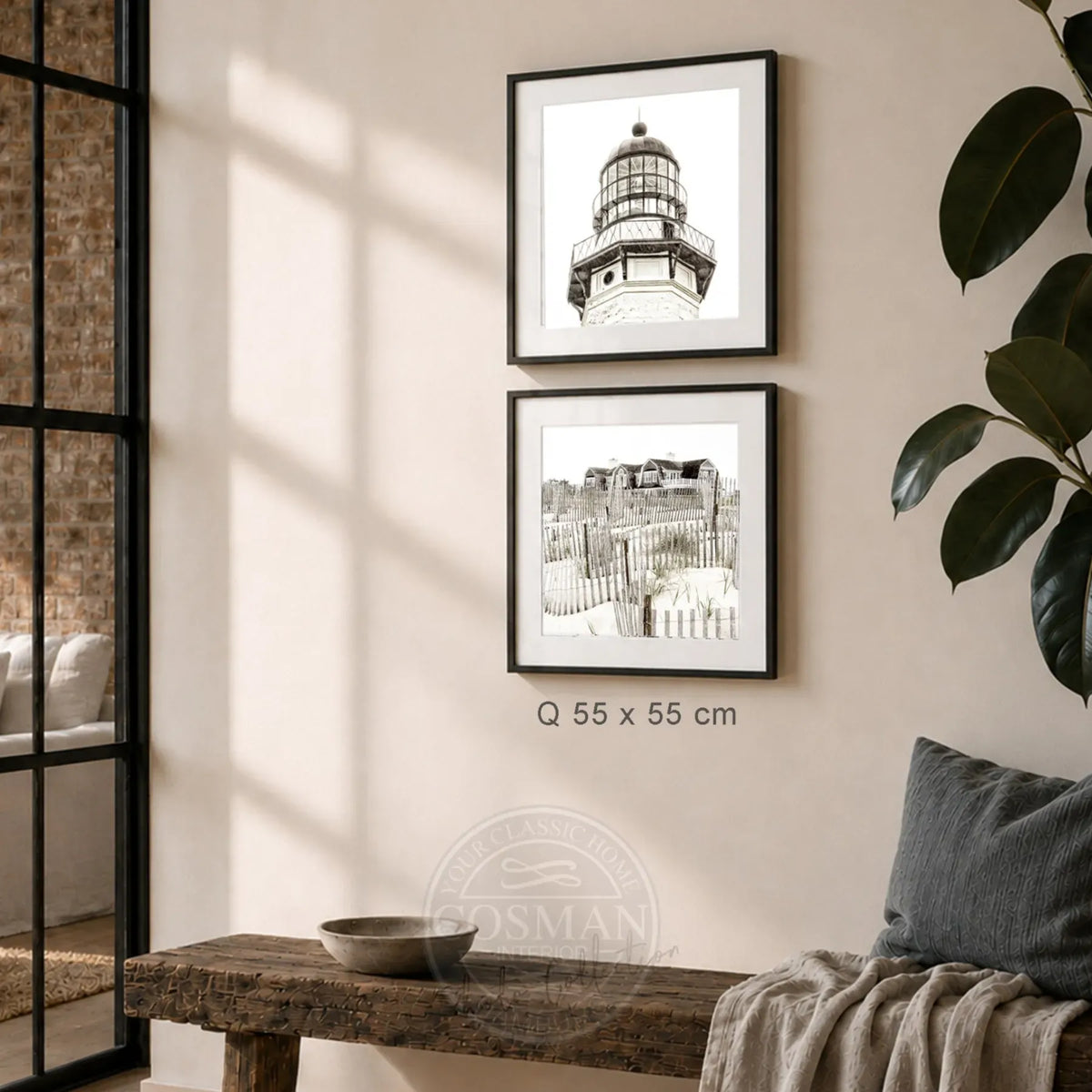
Black and white photography has its place in old buildings, especially in rooms with classic elements. It appears precise, calm and lasting. However, their effect depends heavily on the frame and the wall color. On a white wall, a black or dark wooden frame can give the picture the necessary contour. In a colored room, a light frame can make the composition appear lighter.
The format must match the wall and the height of the room
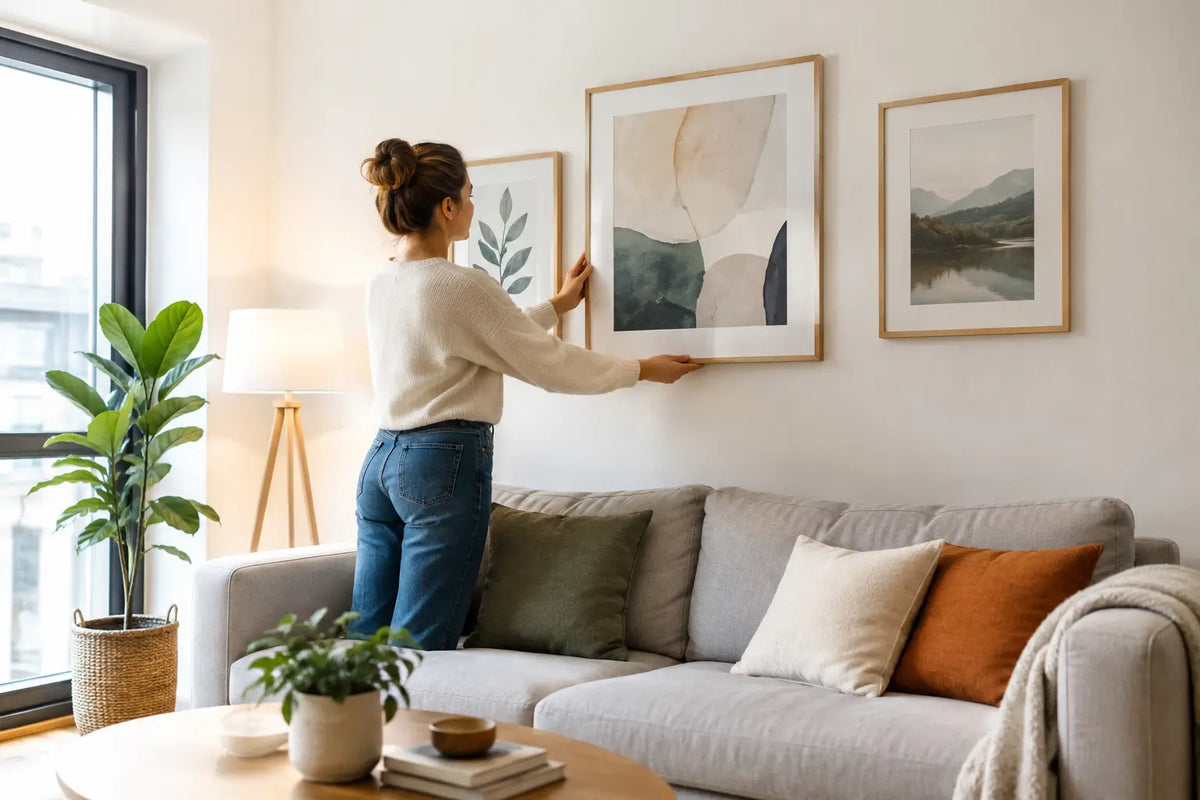
When it comes to old building walls, the size is often more important than the motif itself. A picture that hangs over a sofa, sideboard or bed should be based on the width of the piece of furniture. As a rough guide, a work looks harmonious if it takes up around two thirds of the width of the furniture underneath. The picture can clearly show its presence above a 180 centimeter wide sofa.
High walls make it tempting to hang pictures very high up. However, this quickly seems distant. The center of the picture should usually be approximately at eye level in the living area. If a high ceiling and a stucco rosette above it leave a lot of free space, that's not a mistake - it gives the room air and keeps the furnishings cozy.
Portrait formats emphasize vertical architecture and fit well between two tall windows, next to a double door or in narrow wall sections. Landscape formats, on the other hand, create calm across sofas, consoles and sideboards. A panorama of the sea, skyline or horizon can emphasize the width of a wall and visually balance a long room.
For very spacious areas, a single one is required large format image often the more confident solution than a picture wall. A gallery can look wonderful, but it requires a clear concept: a unifying theme, similar frameworks and sufficient distance. In a detailed old building it should not appear like a hodgepodge.
The frame connects image and architecture
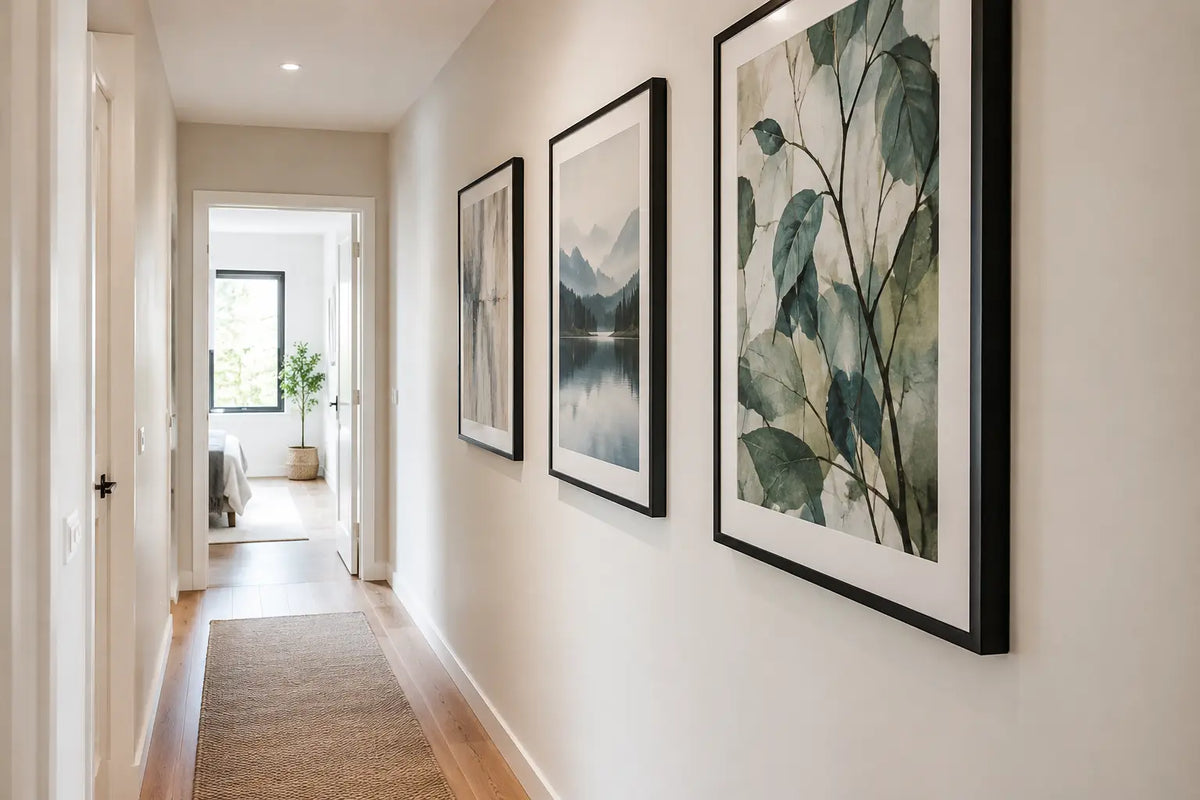
The frame determines whether a modern motif works naturally in an old building. It is not just a conclusion, but the transition between wall, picture and furnishings. A narrow black frame gives photographs with clear contrasts a graphic, modern effect. Natural wood brings warmth to rooms with floorboards, beige and sandy tones. White frames look fresh and light, especially on colored walls.
Gold-colored or classic frames can incorporate stucco and historical elements, but should be used consciously. Too much shine can quickly make a picture appear decorative instead of high-quality. A restrained, carefully crafted frame is usually the better choice if furniture, lights or fittings already set classic accents.
The surface in front of the image is just as important. Acrylic glass protects the print and ensures a clear, high-quality presentation. In rooms with many windows, the position should still be considered so that light sources are not reflected directly in the image. Sometimes a small offset on the wall solves this issue.
Use wall color, patina and contrasts consciously
White old building walls offer maximum freedom, but can also make large pictures appear very contrasting. A frame then sets the desired limit. For warm wall colors such as greige, taupe, rosé or muted green, motifs that pick up a tone of the wall without becoming toned work particularly well. A hint of sand in the image, a deep blue or a fine black line are often enough to tie everything together.
Patinated walls and visible structures require a clear visual language. There, calm photographs, architectural shots and abstract works with larger areas of color have a stronger effect than very delicate prints. The wall remains part of the production, but the picture still has its own stage.
If you are looking for a conscious contrast, you can choose exactly the opposite: a precisely framed, minimalist motif in front of an old wall with traces of time. This tension appears high-quality when it is repeated - for example through a modern lamp, a clear coffee table or reduced textiles.
Quality and suspension are not an afterthought in old buildings
Uneven walls, older layers of plaster and high ceilings make good preparation useful. Not only measure the free wall area, but also the distances to doors, radiators, switches and moldings. For larger formats, determine how high the picture should hang in relation to the furniture and seat height before drilling.
A cleanly made, ready-to-hang mural is at least as important. High-quality photo paper, a hand-made frame, acrylic glass and a pre-assembled suspension save several individual steps and ensure a harmonious result. At Cosman Photocollection, motifs and frames are thought of as a finished unit - a practical solution if you don't want wall art to become a weekend project.
An old building does not have to be set up as a museum. Choose a picture that fits your everyday life, your travels or your idea of home, give it a generous format and a frame with attitude. Then the character of the rooms remains noticeable - and receives exactly the contemporary accent that it deserves.