Can you have pictures made to measure?
A narrow wall next to the window, the high ceiling in an old building, or the spacious sofa in a new living room all raise the same question: Can you create custom-sized images? Have them custom-made to perfectly fit the room? Yes. And often a custom format is a more harmonious solution than a standard poster, which either looks lost or doesn't make good use of the available space.
The size of the print isn't the only crucial factor. It's the interplay of the motif, aspect ratio, frame, and position on the wall that transforms a picture into a defining element of interior design. Choosing custom-made wall art allows for deliberate proportions, resulting in a solution that complements the room rather than appearing haphazardly.
When custom-made pictures are the better choice
Standard formats are practical, but rooms rarely adhere to standard dimensions. A small, vertically oriented picture can appear too delicate above a wide sideboard. In a narrow hallway, on the other hand, a vertical picture is often needed to create a sense of height without visually narrowing the passage. Niches, staircases, or walls between two windows also require a more precisely tailored size.
Custom-made artwork offers particular advantages where a wall already has clear lines. This could be the width of a bed, a dining table, or a bench. A picture that follows this axis creates a sense of calm and makes the furnishings appear intentionally planned. In open-plan living areas, a large-format piece can also visually connect different zones, such as the living and dining areas.
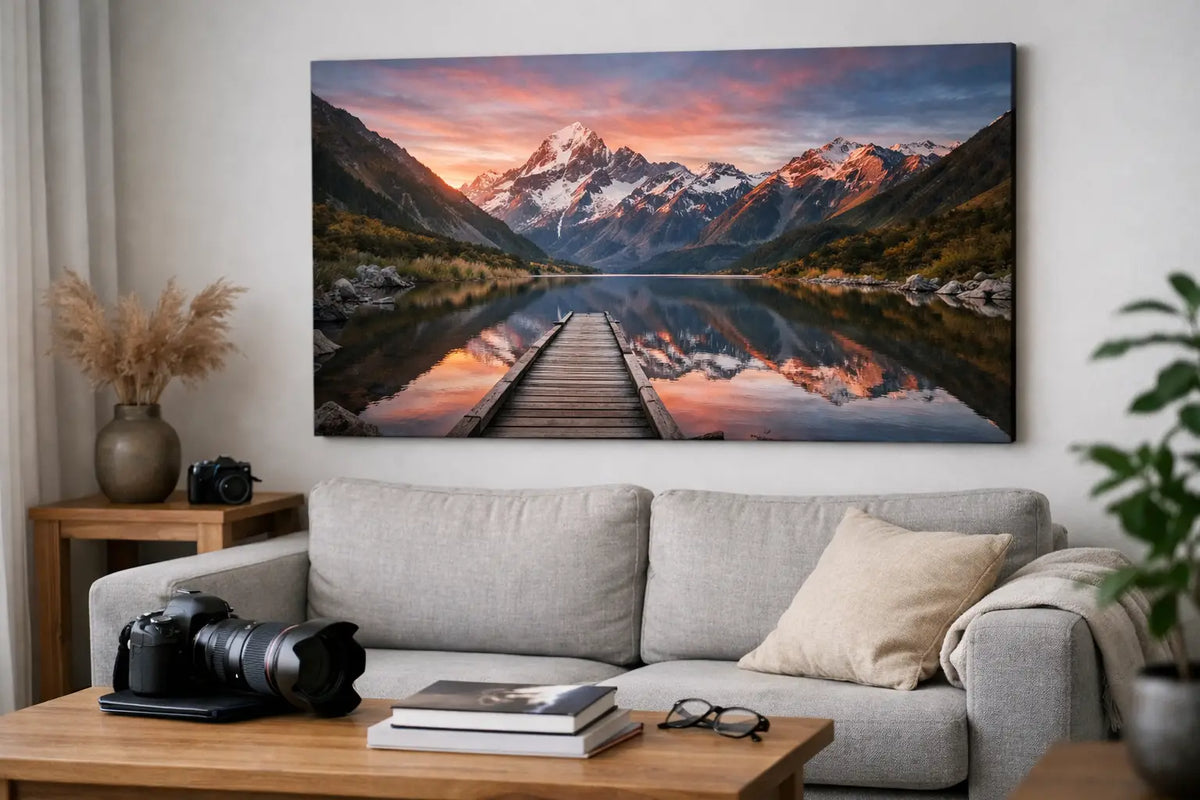
Custom-made doesn't mean that every conceivable size is suitable. An appropriate format always depends on the impact of the subject matter. A sweeping coastal shot from Sylt or California usually wins out. in landscape format. Architecture from Hamburg or New York can be particularly striking in portrait format, depending on the perspective. Abstract motifs offer more creative freedom, but also require a size in which areas of color and texture can fully develop their presence.
Determine the right size for your wall
Before choosing a picture, it's worth taking a quick look at the available space. Don't just measure the wall from edge to edge, but the area the picture will actually occupy. Sockets, lights, doors, radiators, and furniture all affect the usable space.
Wall art above furniture usually looks balanced when it occupies roughly two-thirds to three-quarters of the furniture's width. Above a 180-centimeter-wide sofa, a framed picture with a total width of approximately 120 to 135 centimeters can therefore look very harmonious. This isn't a hard and fast rule, however: A particularly airy room can handle a larger piece, while a wall with many other details calls for a more understated solution.
The distance also matters. A gap of 15 to 25 centimeters between the piece of furniture and the bottom of the frame is often comfortable. If a picture hangs significantly higher, it quickly creates the impression that the furniture and wall art have nothing to do with each other. On a freestanding wall, the center of the picture is best positioned at a viewing height of approximately 145 to 155 centimeters. In dining areas or above a low sideboard, this line can be placed slightly lower.
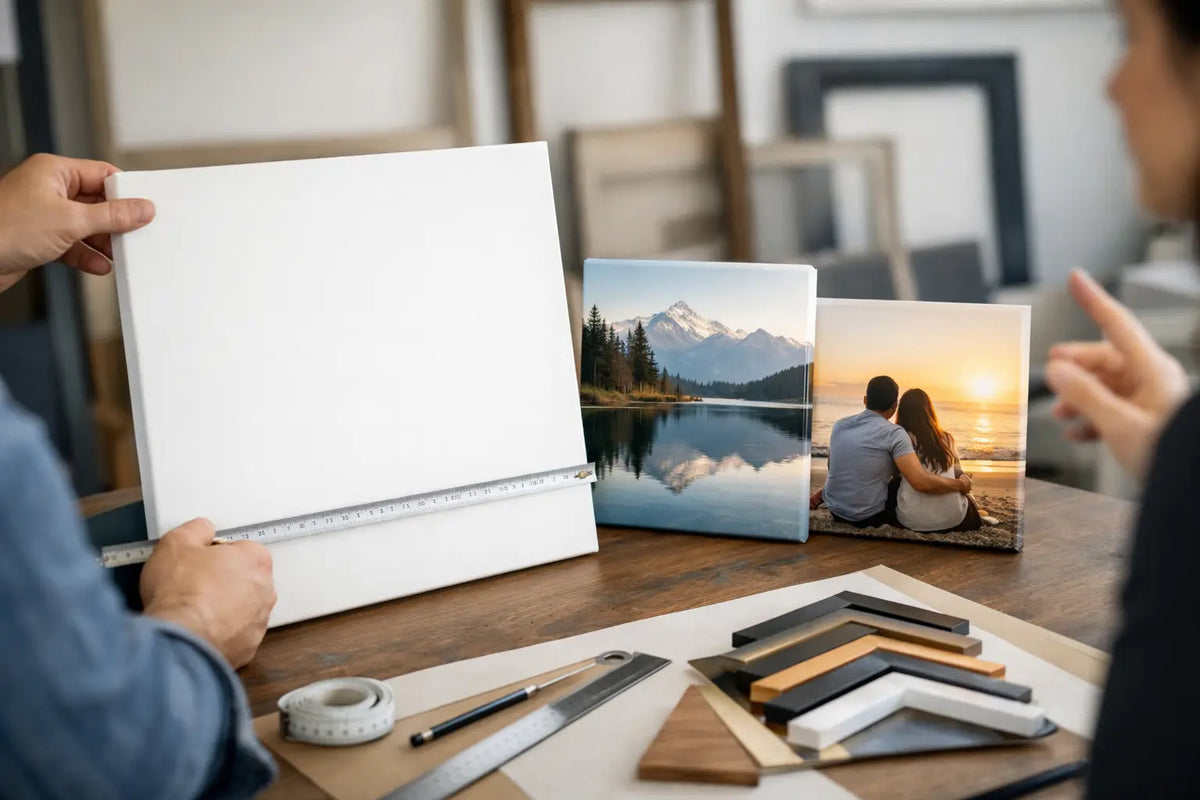
A simple test prevents mistakes: Stick the planned dimensions to the wall with painter's tape or lay out several sheets of paper. This way, you can see from a normal sitting and standing distance whether the format works in the room. This step is particularly valuable with large images, because dimensions often appear smaller on a screen than they do on your own wall.
Do not confuse pressure dimension and external dimension.
For framed wall art, the print size describes the size of the visible image before framing. The outer dimensions include the frame and, if applicable, a mat.The external dimensions are crucial for planning on the wall.
A slim frame can frame a modern photograph in a clear and minimalist way. A wider or textured frame, on the other hand, emphasizes a more immersive depth. Both options alter the overall effect and require corresponding space. Therefore, anyone ordering custom-sized pictures should always clarify which dimensions the specification refers to.
The aspect ratio must suit the subject.
A special format shouldn't force a subject into an unflattering shape. If a photo is cropped too much, the horizon, architecture, or important image elements can lose their impact. This is particularly relevant for travel photography: the vastness of a beach, the symmetry of a facade, or the dynamism of a street scene often rely on their original composition.
Horizontal formats are a compelling choice for wide, uncluttered walls. They accentuate landscapes, coastlines, and panoramas and are ideal above sofas, consoles, or long dining tables. Vertical formats draw the eye upward and are suitable for narrow wall sections, entryways, or the sides of a bed. A square format creates a focused and modern look, for example, with abstract works or graphic motifs.
If a particular wall size only works with an unusual aspect ratio, individual consultation is worthwhile. Sometimes it's better to adjust the dimensions slightly than to crop the desired image too much. Alternatively, a second, smaller picture can complement the space without compromising the composition of the main image.
Frame, acrylic glass and paper as part of the overall impression
A custom-printed image deserves a finish that does justice to its impact. High-quality photo paper ensures crisp details, nuanced colors, and a surface that preserves subtle moods within the image. This quality is particularly noticeable with subjects featuring water, sky, architecture, or soft color gradients.
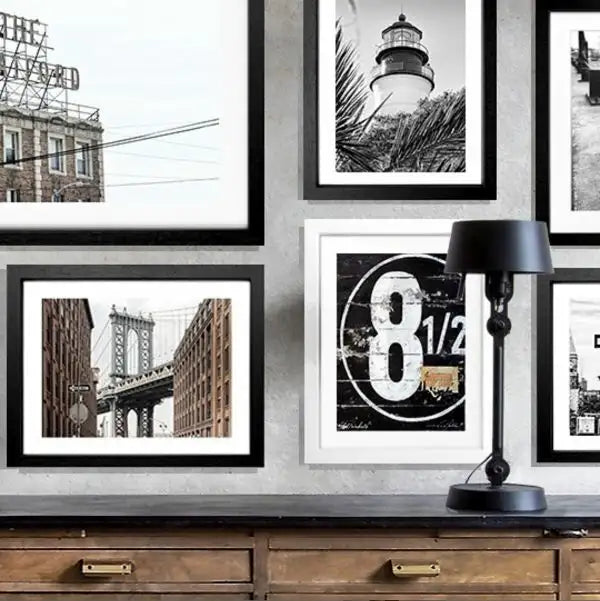
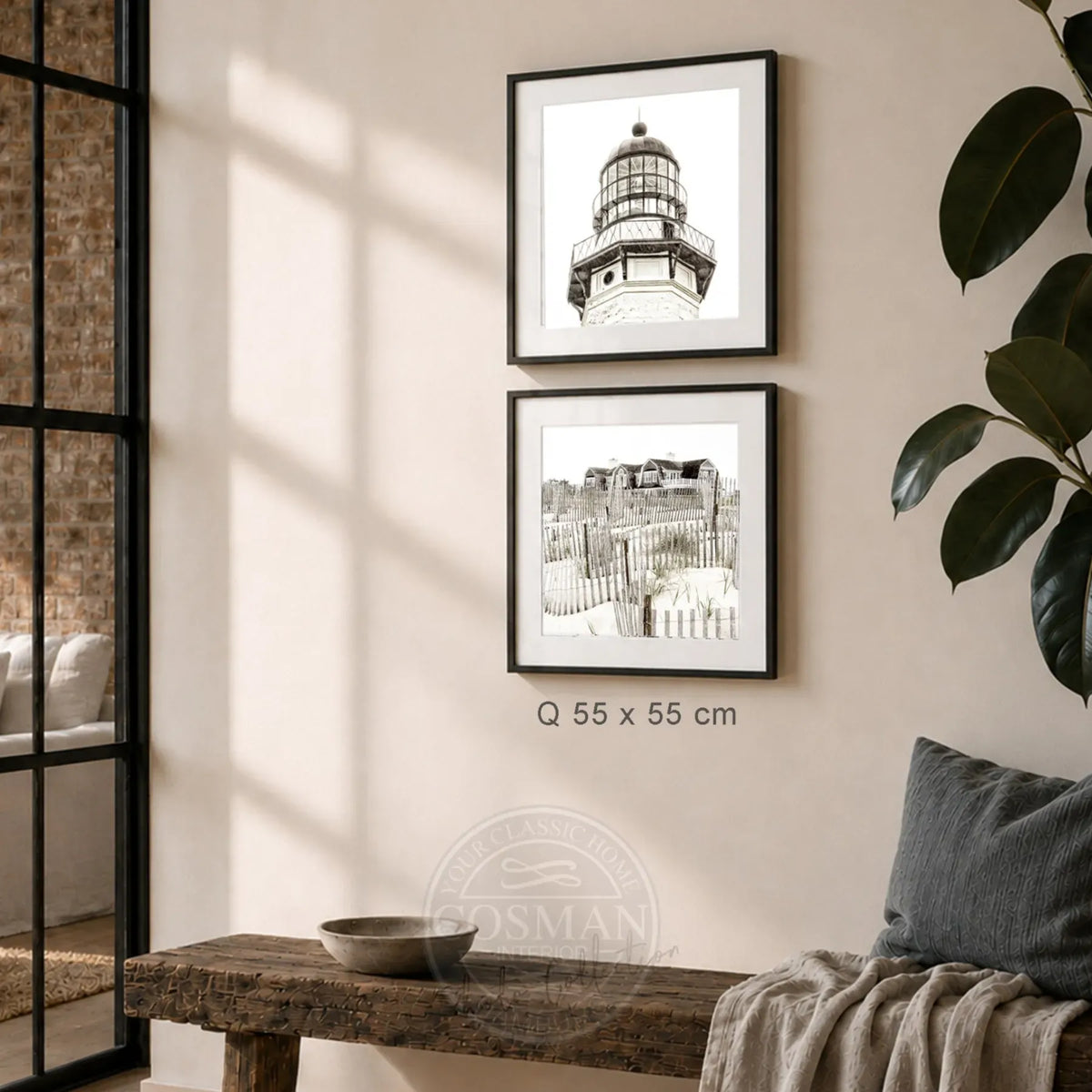
The frame brings the artwork into the room. Black creates a graphic and urban feel, while white is light and understated. Natural wood can add warmth to a bright, inviting interior, while darker wood or metal finishes lend the image more depth. The goal isn't to exactly replicate every existing surface. A deliberate contrast can be just as elegant, as long as it echoes the materials present in the room.
Acrylic glass protects the print and gives the presentation a clear, high-quality look. Compared to unframed posters or self-assembled solutions, it creates a finished, cohesive image. This is especially relevant when the wall art is intended to be a focal point and not just fill a gap.
Custom-made without the added stress of furnishing
The real strength of custom-made wall art lies in its convenience. Instead of organizing the print, frame, glass, and mounting separately, you receive a perfectly coordinated product. At Cosman Photocollection, selected images are printed on high-quality photo paper, framed by hand, and delivered with hanging hardware. This way, your wall art arrives ready to hang.
This not only saves time but also reduces typical uncertainties. Does the frame really suit the print? Is the glass suitable? Will the hanging mechanism hold? With a ready-to-hang framed picture, these decisions are already coordinated. This is just as convenient for rental apartments as it is for a vacation home, an office, or a practice where rooms should quickly acquire a personal, high-quality atmosphere.
Three details are particularly helpful when ordering: the desired overall effect on the wall, the preferred orientation, and the frame color.If you also consider a photo of the wall, the width of the furniture, and the ambient light, the selection becomes significantly easier. A sunny room can handle different contrasts than a dark hallway, and a vibrant motif can be more prominent in a calm setting than in a room that is already intensely colored.
Which motifs work particularly well in special formats
Large formats give space to motifs that possess a clear perspective or atmosphere. A coastal scene can visually open up a living room. A Hamburg motif It brings urban identity to a modern apartment. Photos from Saint-Tropez, the Hamptons, or Florida add a light, travel-loving touch without making the room feel thematically overloaded.
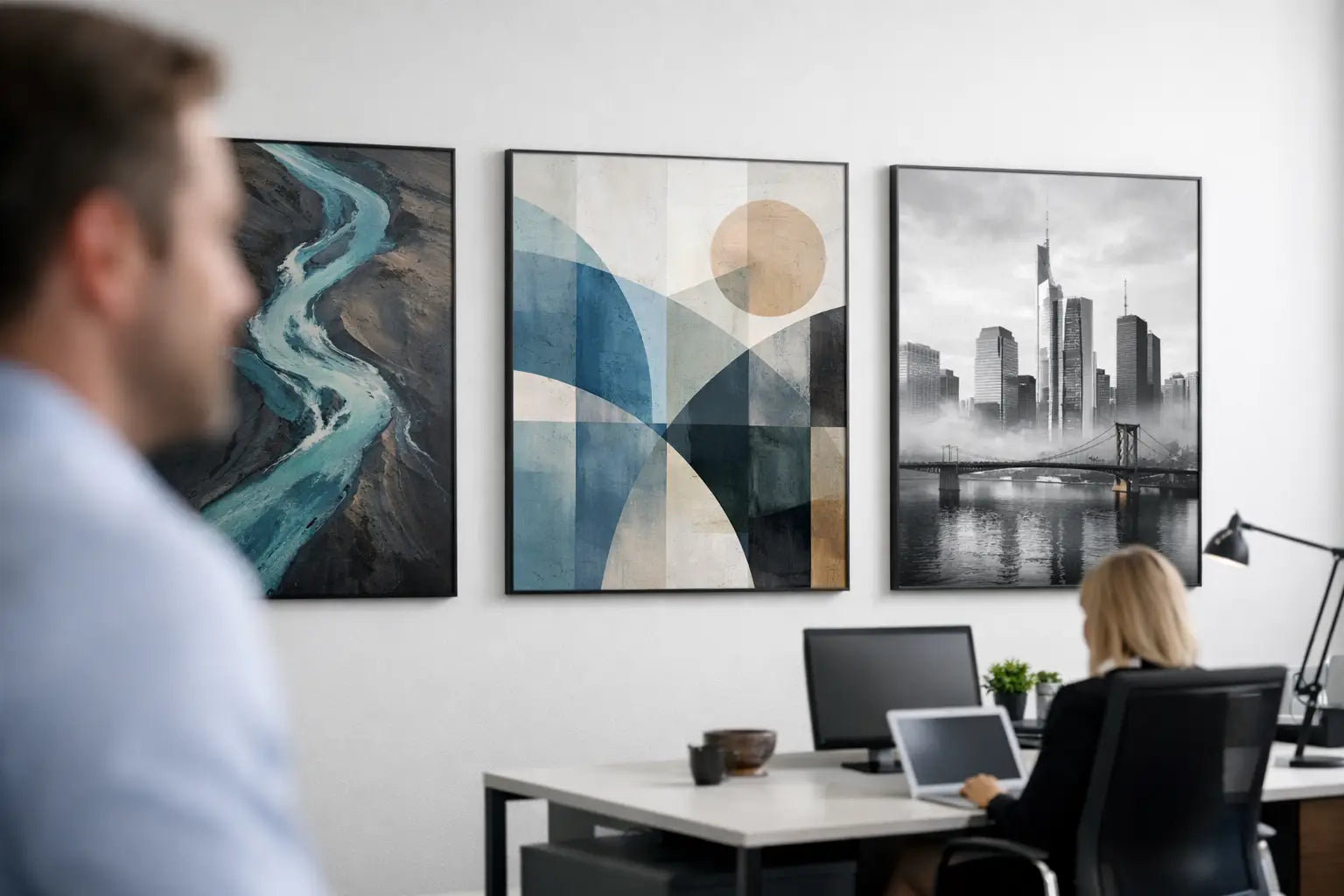
Abstract wall art Abstract designs are ideal when color and texture are more important than a specific location. They can echo the tones of a rug, armchair, or curtain, thus unifying an interior. For workspaces or commercial areas, abstract motifs are often a confident choice because they make a statement while remaining open to diverse tastes.
If you're unsure, choose not only the subject matter but also the desired mood: clean and urban, bright and coastal, warm and relaxed, or graphic and minimalist. The right size will then reinforce this mood. A picture doesn't have to fill the entire wall to make an impression. It simply needs to be proportioned so that it appears natural – as if this exact spot had been intended for this image from the very beginning.