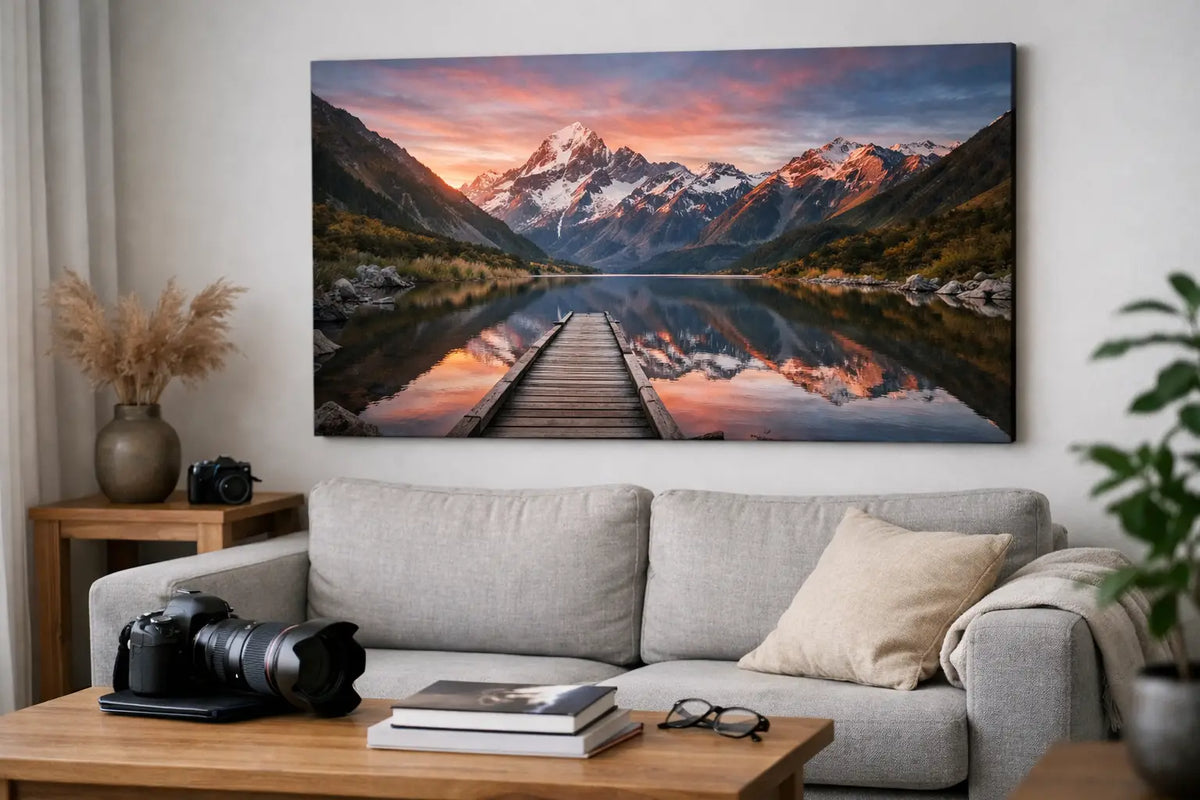
Guide to large format photo art at home
A large wall above the sofa, in the dining area, or in the entryway rarely requires many small details. Often, a single, carefully chosen picture is enough to give the room direction. Guide to large-format photographic art It helps to combine motifs, dimensions and frames in such a way that a blank space becomes a harmonious furnishing element.
Large-format photographic art is more than just decoration. It creates depth, draws the eye, and tells a story about the places, colors, and moods that are important to you. A tranquil coastal scene can make a bedroom feel lighter, a New York photograph lends presence to an urban living space, and abstract photography unites different materials into a cohesive whole.
Why great photographic art transforms a room
Small pictures can easily get lost on large walls. They then appear more randomly placed than deliberately arranged. A large-format image, on the other hand, creates a clear visual anchor. This is particularly valuable in rooms with minimal furnishings, high ceilings, wide sofas, or long dining tables.
Big doesn't necessarily mean loud. A spacious Beach on Sylt, The understated facades of the Hamptons or a tranquil body of water can appear serene even in large format. The interplay of subject, color, and surroundings is crucial. High-contrast cityscapes release energy, while soft blue, sand, and cream tones bring more calm to the room.
Even for rented apartments, a large framed picture is a compelling solution: it noticeably changes the feel of a room without requiring any structural modifications. Those who decorate selectively rather than excessively achieve a more sophisticated and uncluttered result.
Find the perfect design for your interior style
The best starting point is not what's currently popular, but rather what kind of atmosphere a room should have. Photographic art works particularly well when it incorporates existing colors or deliberately creates a contrasting element.
Coastal motifs, architectural photographs and tranquil landscapes fit perfectly into a bright, natural living space. Photographs of Saint-Tropez, Florida or California bring light, open spaces, and a relaxed travel feel. They complement linen, wood, rattan, and light upholstery without cluttering the room.
For modern city apartments, motifs can be more graphic. Hamburg harbor view, Clean lines of New York architecture or abstract forms lend structure to concrete, glass, metal, and darker woods. If the room already contains many colors, patterns, or personal objects, a minimalist motif is usually the stronger choice. In a minimalist environment, on the other hand, a picture with intense color can deliberately create a focal point.
Pay attention to the direction of view in the image. A subject with a horizon, street, or coastline can visually guide the eye into the room. This works particularly well above a sofa, especially if open spaces or calm areas of the image point towards the center of the room. With multiple seating areas, a striking photograph can help to clearly prioritize the most important area.
Guide to large-format photographic art: Finding the right measure
Size determines whether a picture looks natural or too small. As a guideline, a single picture above a sofa should occupy approximately two-thirds to three-quarters of the furniture's width. Therefore, on a 240-centimeter-wide sofa, a framed picture with a width of about 160 to 180 centimeters usually looks well-balanced.
Above a sideboard or console, the artwork can be somewhat narrower, but it should not look like a small accessory.As a rough guide, allow for at least half the width of the furniture. On a blank wall without furniture, the format can be even more generous. Photographic art truly shines in such situations, when it has ample space and isn't surrounded by too much empty space.
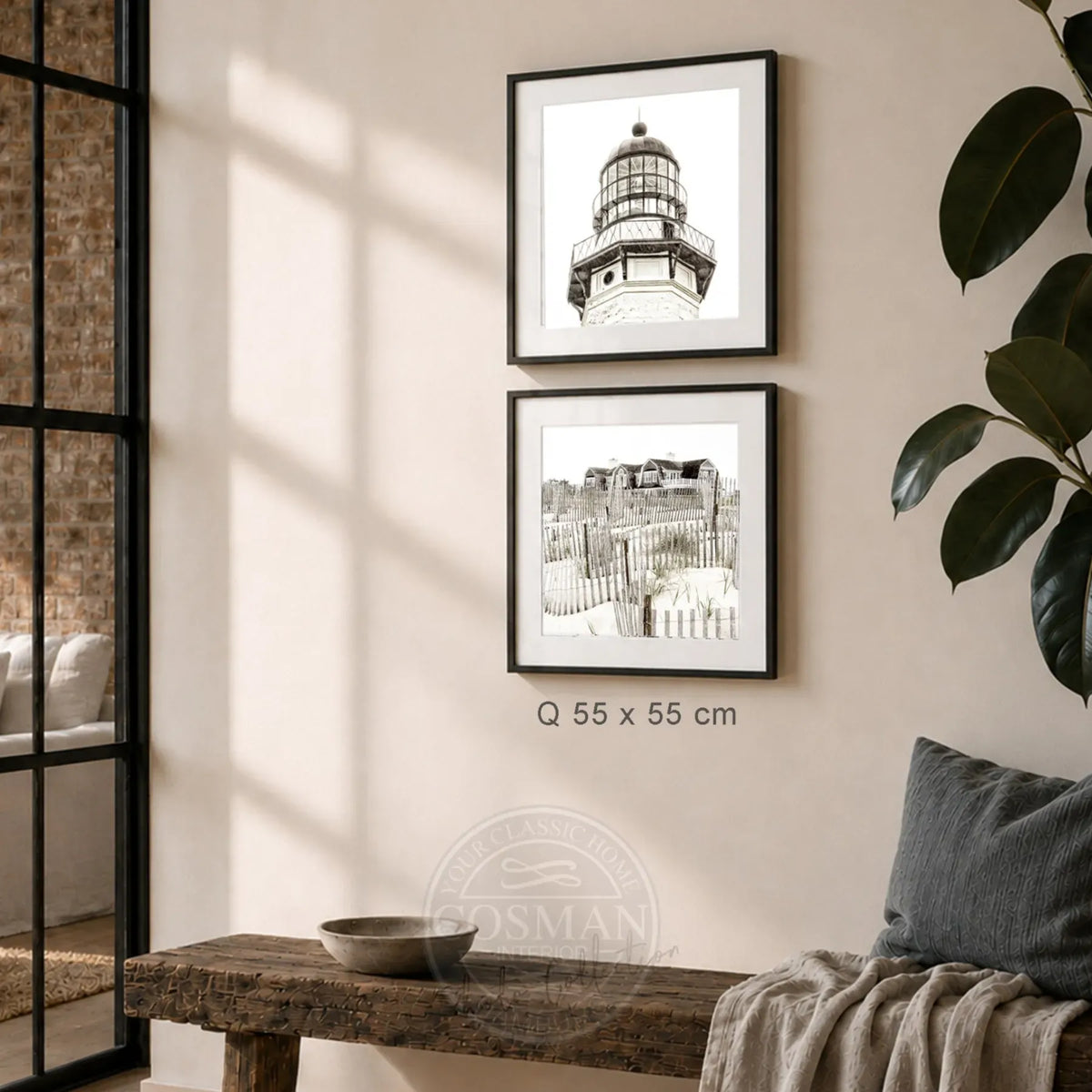
Landscape format works particularly well above long pieces of furniture, beds, and dining tables. It emphasizes the horizontal and makes rooms appear larger. Portrait formats visually lengthen a wall and are suitable for narrow spaces, stairwells, hallways, or wall areas between windows. A square format creates a calm and architectural effect, for example, above a compact chest of drawers or in a simply furnished bedroom.
The distance to the furniture is also crucial. A good guideline is about 15 to 25 centimeters between the top of the sofa, sideboard, or headboard and the bottom of the frame. If the picture hangs significantly higher, it loses its connection to the furniture and appears isolated. In most rooms, the center of the picture should be roughly at eye level. However, when hanging art above a sofa, the relationship to the furniture is more important than a rigid rule of thumb.
The frame transforms a print into a piece of furniture.
A high-quality photo print gains significantly in presence through the right frame. The frame not only protects the image but also defines how it is perceived in the room: modern, classic, warm, or graphic. Therefore, it should always be part of the decision when framing large-format photographic art.
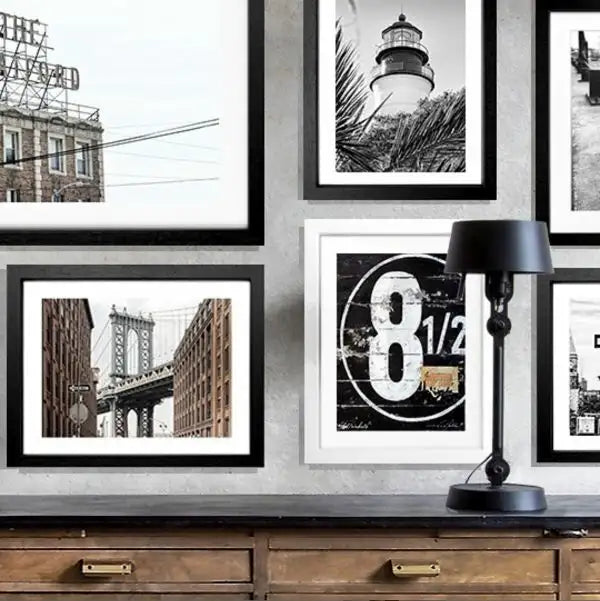
A black frame creates clean lines and is suitable for architectural photography, black and white photography, and modern interiors with dark accents. White-framed images appear light and fresh, especially on light walls or in Nordic-inspired rooms. Natural wood adds warmth to the combination and complements organic materials. A dark wood tone or a subtle metal frame, on the other hand, can add depth to elegant, urban spaces.
Acrylic glass is a practical and aesthetically pleasing choice for large formats. It protects the surface, is lighter than traditional glass, and allows the image to stand out clearly. This is a particularly useful advantage in living areas, hallways, or vacation properties. Clean, precise workmanship is essential: with large images, uneven edges, unstable frames, or simple poster hangers are immediately noticeable.
This is precisely the difference between a loose poster and ready-framed wall art. A picture printed on high-quality photo paper, hand-framed, and with a suitable hanging system arrives as a complete solution. At Cosman Photocollection, motifs are produced to order in various formats and frame styles, ensuring that the print, frame, and mounting are perfectly coordinated from the start.
Placement: A picture needs space to have an effect.
Large photographic artwork doesn't always have to hang in the center of the largest wall. A slightly offset placement can be effective if a sofa, lamp, or window defines the room's axis. However, the artwork shouldn't clash with the existing decor. Use existing lines such as furniture edges, door frames, or the direction of a rug as a guide.
In the living room, a single large picture above the sofa often creates a calmer atmosphere than a gallery wall. In the dining room, it creates a clean and uncluttered feel above a sideboard or at the end of the table. In the bedroom, a simple horizontal print above the bed is an elegant alternative to numerous small decorations. For hallways, vertical prints with architectural motifs are ideal, as they don't make the space feel even smaller.
Light significantly alters the effect. Direct, intense sunlight should be avoided as much as possible to ensure colors remain vibrant in the long term.Indirect daylight and warm, directional artificial light, on the other hand, bring out details and contrasts exceptionally well. A wall opposite a window can work very well, provided strong reflections are taken into account.
Avoid common wrong decisions
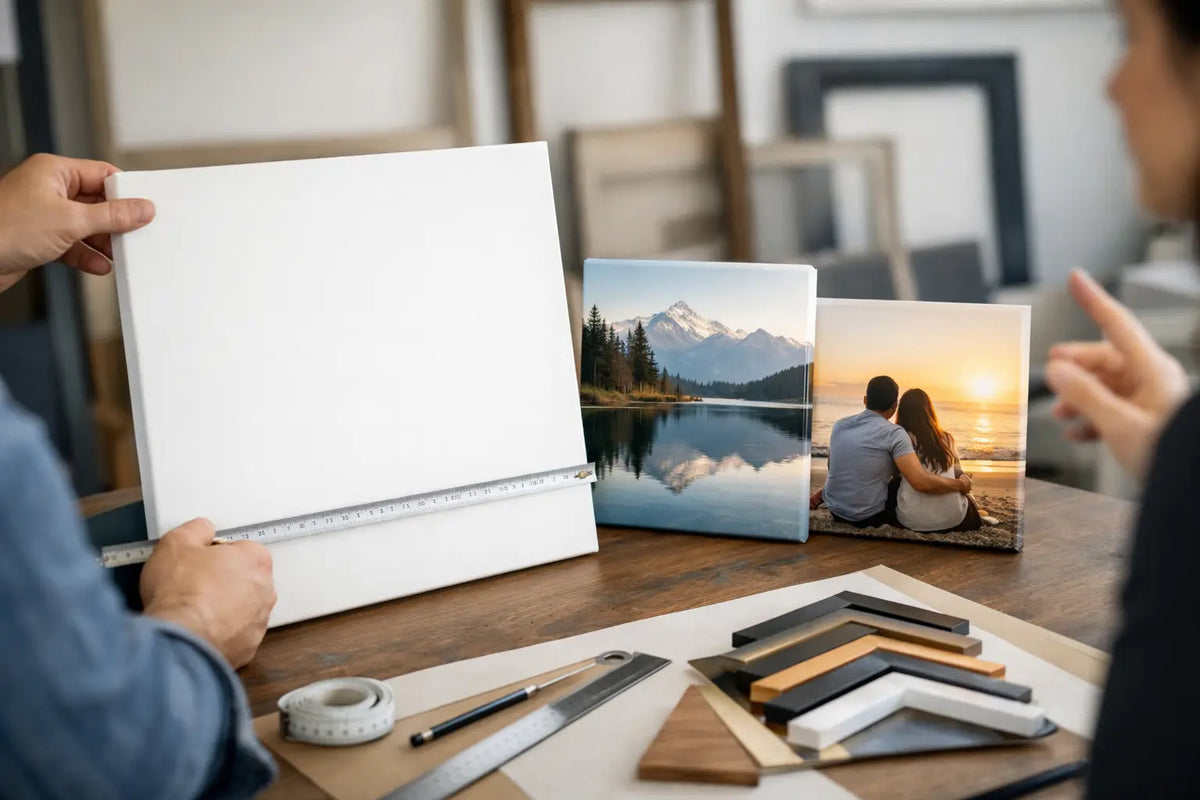
The most common mistake is choosing a frame that's too small. If you're unsure, you can mark the planned dimensions on the wall with masking tape. This will quickly show whether the picture fits the furniture and the room height. A second typical mistake is choosing a frame only after purchasing the artwork. Especially with large-format pictures, the frame influences the overall effect so much that it should be considered from the very beginning.
Too many competing focal points can also disrupt a room's sense of calm. If there's already a striking rug, patterned wallpaper, or a colorful sofa, the photographic artwork should be clear, but not excessively loud. Conversely, a more understated room sometimes needs precisely that expressive motif that gives it personality.
Before ordering, take a moment to consider your wall dimensions, furniture width, and desired atmosphere. Choosing the motif, format, and frame together transforms large-format photographic art from an afterthought into wall decoration, into a detail that gives a room its unique character.