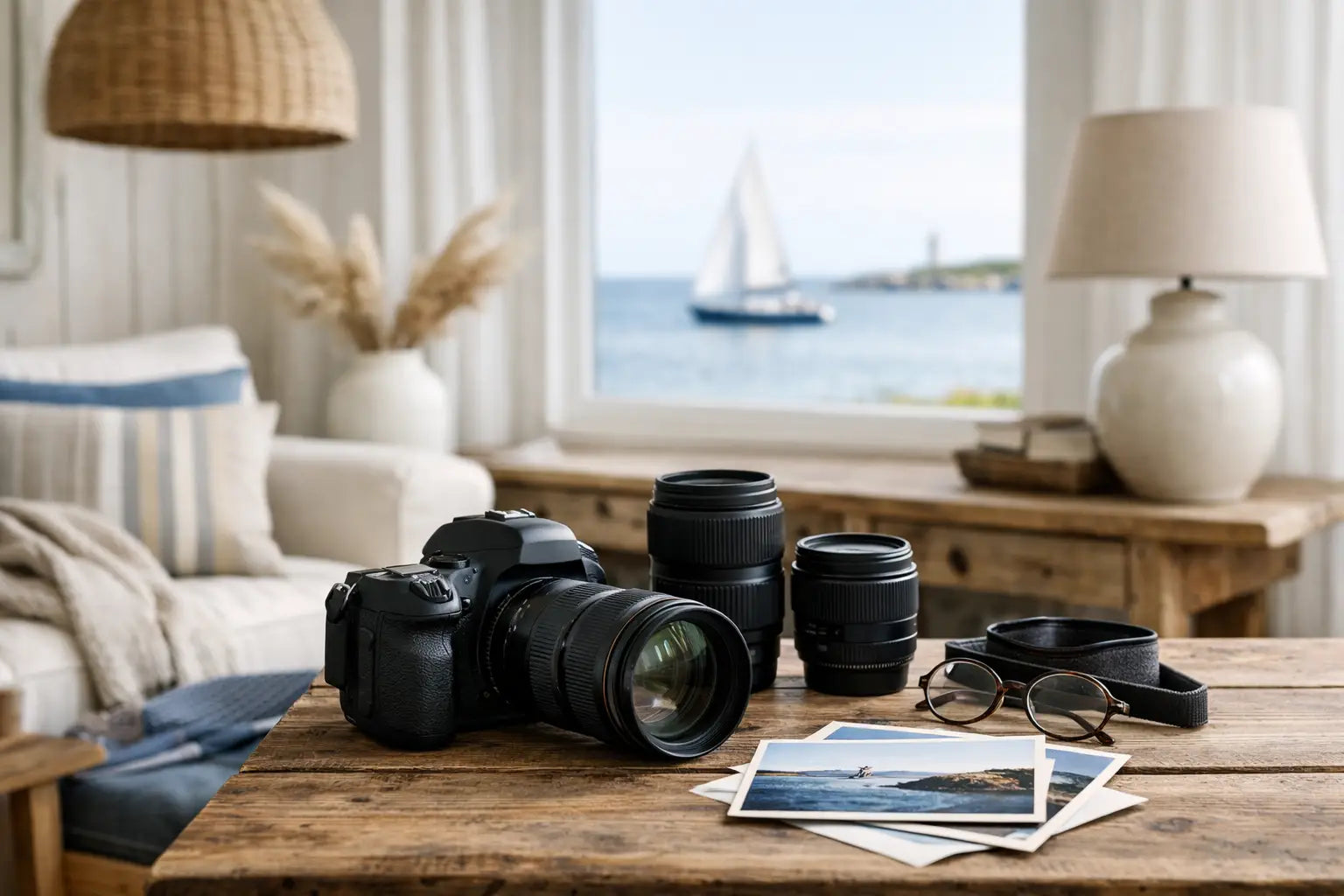
North German interior design style with photography
A room doesn't feel North German just because there's an anchor in it or the cushions are striped. What's crucial is the calm, naturalness created by light, natural materials, and clear sightlines. North German interior design style with photography This attitude is exactly what it brings to the wall: vastness, coastline, architecture or travel moments give rooms character without overloading them.
Especially in Hamburg, along the coast, and in modern city apartments, this style suits people who appreciate high quality, a relaxed atmosphere, and a personal touch. The art lies not in decorating for the sake of decorating, but in a few carefully chosen elements. A large-format, professionally framed photograph can create more atmosphere than many small accessories.
What defines the North German style
Northern German living is bright, uncluttered, and materially conscious. White, sand, off-white, warm gray, and understated blue often form the basis. These are complemented by wood, linen, ceramics, natural stone, and glass. This combination never feels cold, provided the surfaces have a tangible sense of quality and the room isn't cluttered.
The style can be modern, but it doesn't have to be strictly minimalist. An old building with stucco, a house by the water, or a pared-down new apartment can all have a distinctly North German feel. The key is the interplay between lightness and substance: furniture can have clean lines, textiles add warmth, and wall art provides a personal touch.
Photography fits particularly well into this environment because it doesn't artificially stage the space. A dune scene, a view of the Elbe River, or a light-filled facade tells stories of places and memories. At the same time, an urban scene from New York or a sunny coastal moment from California creates a deliberate contrast to the understated furnishings. The result is not a themed room, but a home with character.
North German interior design style with photography: Choosing the right motifs
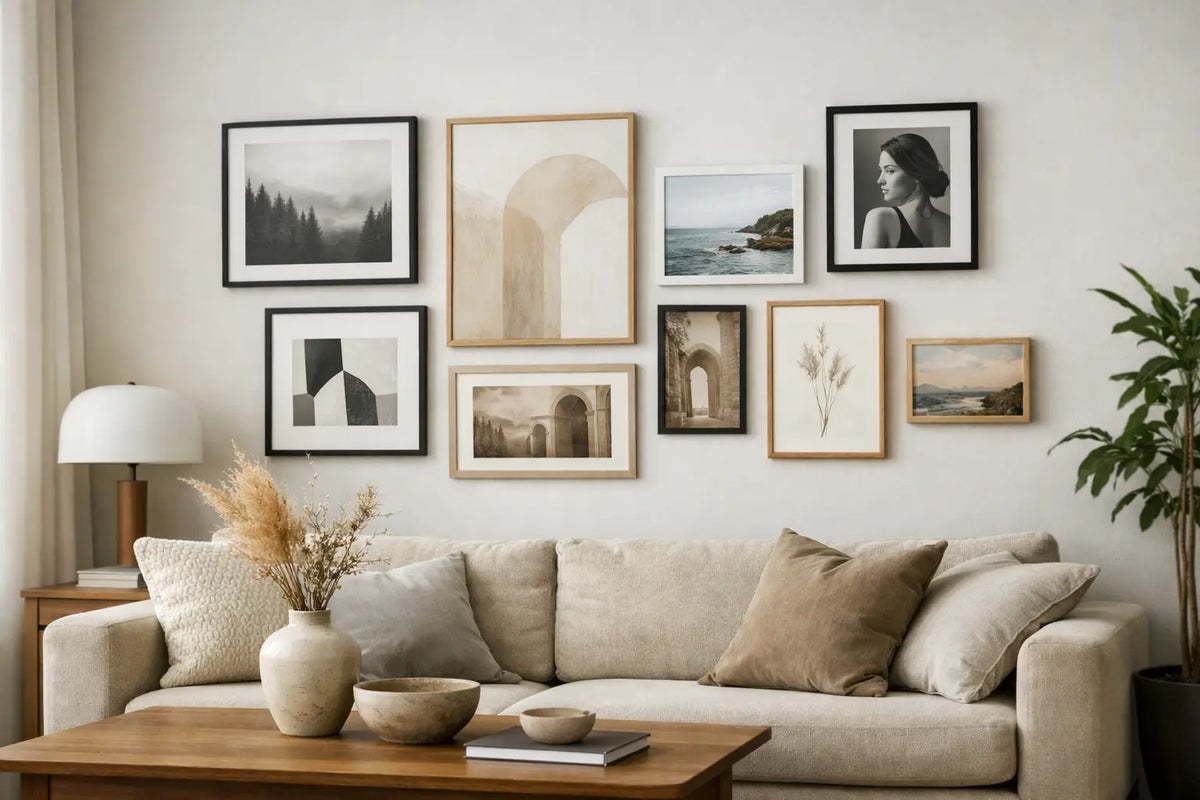
The best wall art doesn't necessarily have to incorporate every color in the room. What's more important is that it enhances the room's atmosphere. In a living room with light wood, linen, and sand-colored upholstery, images of the beach, sea, clouds, or architecture work particularly well. Motifs with a wide horizon visually open up the space and maintain the tranquil effect that characterizes the style.
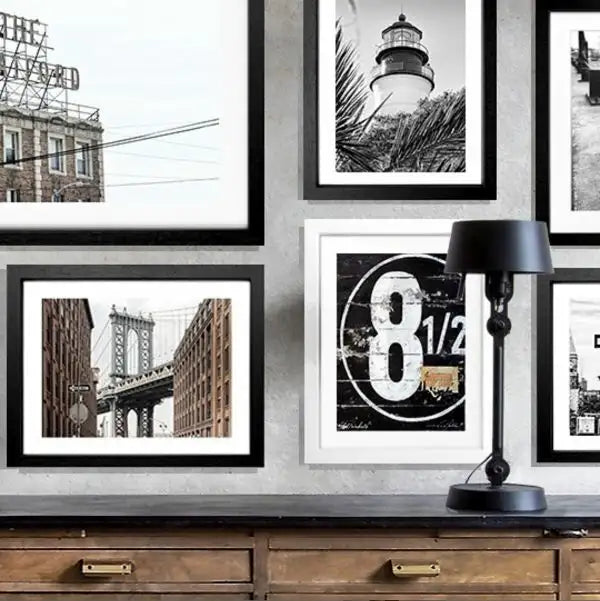
For spaces in the city, there are Hamburg harbor views, Striking buildings or minimalist street photography are good choices. They give a neutral interior a local feel without appearing touristy. Black and white photography can be a very elegant option, especially alongside dark wood, leather, or graphite-colored details. However, it shouldn't be used too prominently if the room already receives little natural light.
Color photography brings warmth and vibrancy. Image from Saint-Tropez, Florida or the Hamptons, with their bright facades, water, and sunshine, can harmonize beautifully with the natural tones of northern Germany. The common denominator lies not in the geographical location, but in the atmosphere: spacious, relaxed, and timeless. With bold colors, a single larger picture is recommended rather than a busy gallery wall.
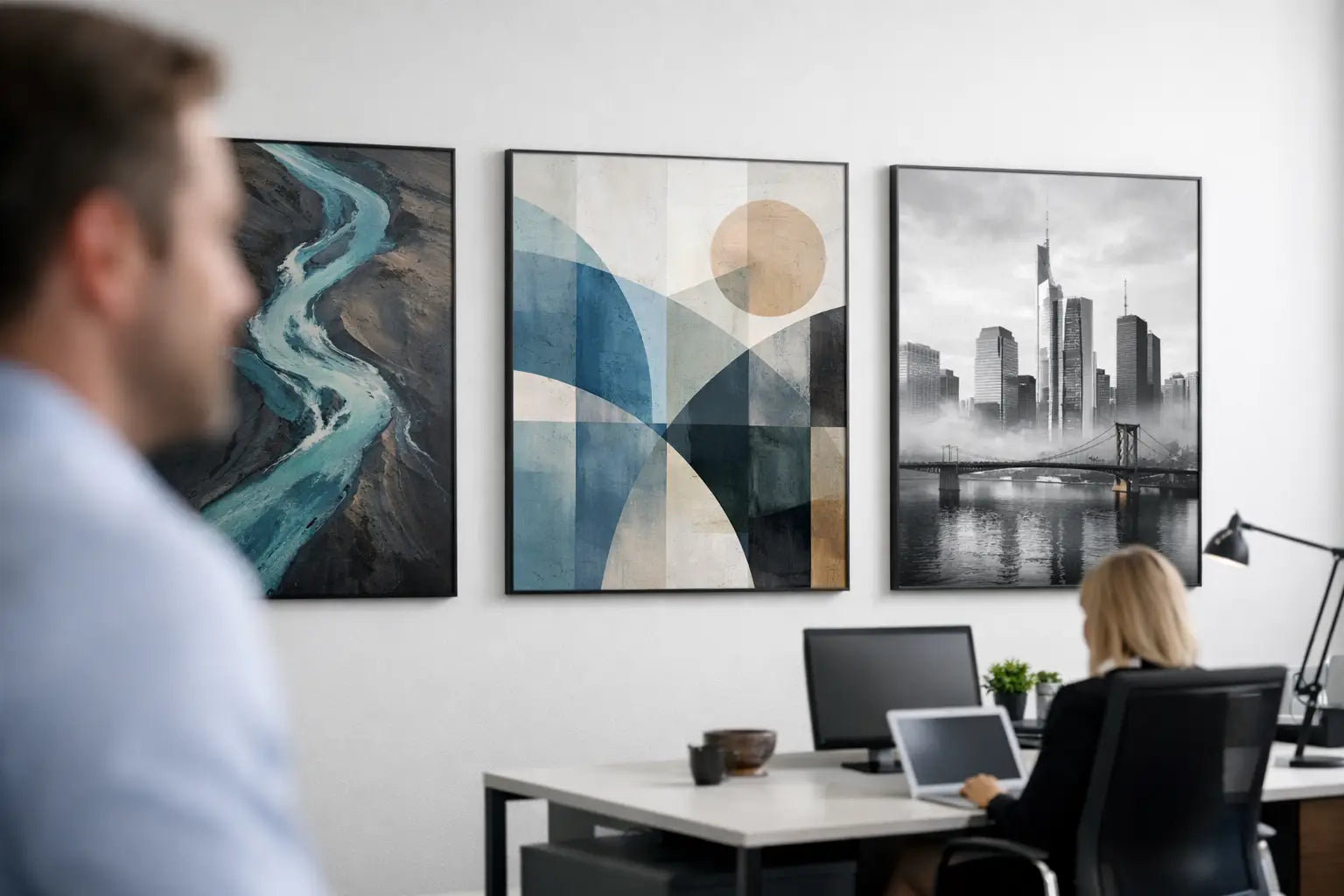
Abstract motifs are a suitable alternative if you prefer not to work with specific locations. Gentle color gradients, graphic structures, or tranquil compositions complement modern architecture and create depth. However, photography often appears more approachable in a very natural, rural interior because it establishes a more direct connection to the landscape and the light.
The right format determines the impact.
A common mistake: The image is chosen to be too small.Wall art above a sofa, sideboard, or dining table needs sufficient presence to unify the room. A small format can easily get lost on a large, light-colored wall and make the decor look unfinished.
As a guideline, a single image above a piece of furniture should occupy approximately two-thirds to three-quarters of its width. Therefore, above a 200-centimeter-wide sofa, a large horizontal print usually looks more harmonious than several smaller prints. With high ceilings or narrow wall sections, a vertical format can elegantly emphasize the vertical line.
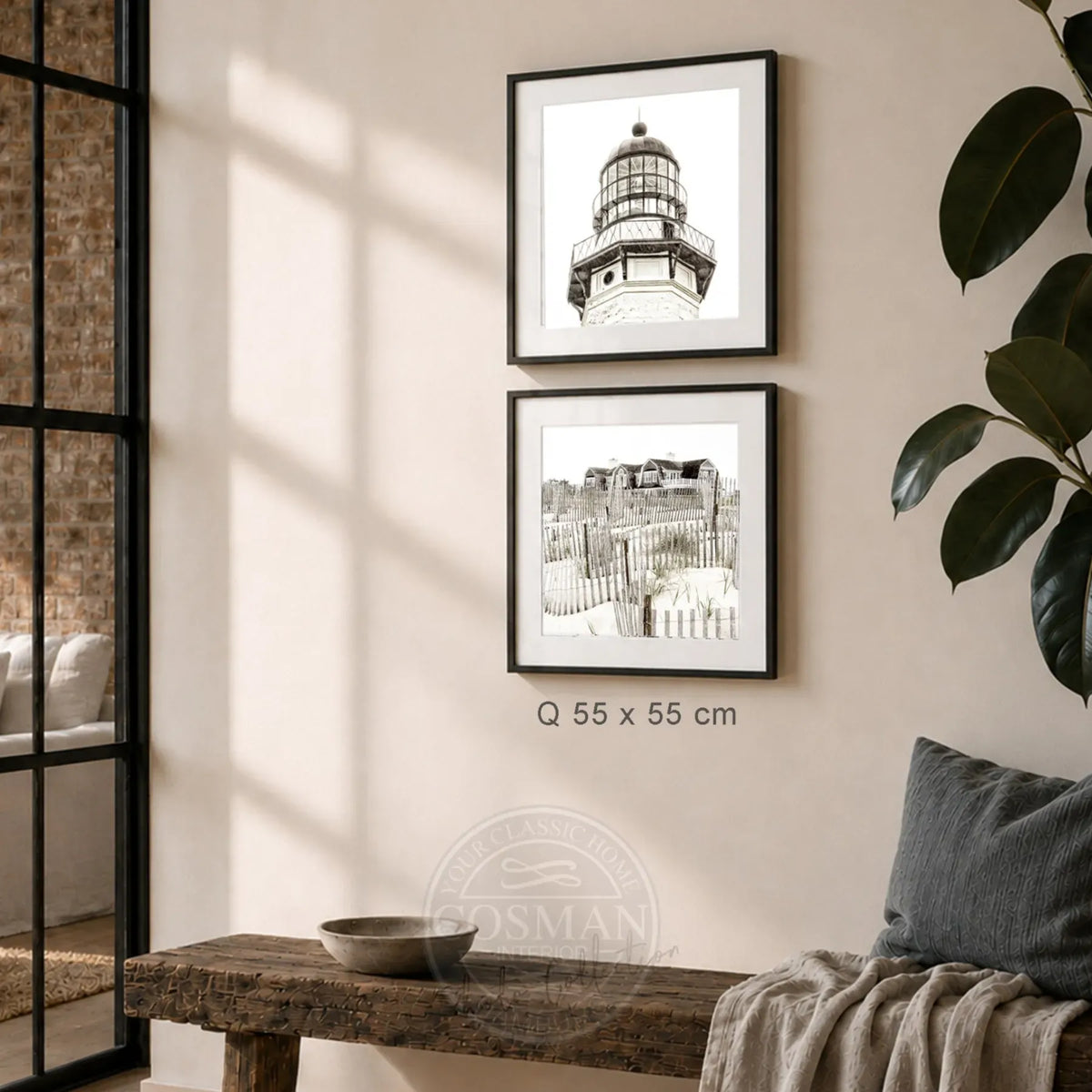
There are exceptions, however. A series of two or three related motifs can create a very sophisticated effect in long hallways, above a sideboard, or in spacious stairwells. In such cases, the formats, frames, and spacing should be deliberately consistent. The North German style thrives on tranquility—different frame colors, overly close hanging, and a mix of motifs without a common thread quickly disrupt this tranquility.
Distance matters, too. Don't hang a picture far above the furniture like a standalone object, but rather as part of a larger composition. A distance of about 15 to 25 centimeters between the top of the sofa or sideboard and the bottom of the frame is often sufficient. In most living spaces, the center of the picture is comfortably at eye level. In a dining area, it can be positioned slightly higher, since one primarily perceives the room while standing.
Frame as a unifying design element
In North German interiors, the frame is not an afterthought. It determines whether a picture appears casual, elegant, or overly decorative. Light wood frames absorb the warmth of oak, ash, and linen. They are a perfect match for coastal scenes, bright architectural photographs, and rooms with many natural materials.
Black or dark brown frames, on the other hand, create a precise outline. They give black and white photos, urban photography, and abstract designs more depth. In a bright room, a dark frame can provide the necessary contrast. Those who prefer a particularly understated look can choose a narrow frame in white, beige, or a soft natural tone—especially if the walls and furnishings are already very tonal.
Acrylic glass is a compelling choice for everyday use because it's lightweight and preserves photographic brilliance. This is especially practical in family homes, vacation apartments, or high-traffic areas. Furthermore, high-quality framing shouldn't turn into a DIY project: when the print, frame, and hanging hardware are already coordinated, more time remains for the actual decision—which picture truly enhances the room.
Cosman Photocollection prints images on high-quality photo paper, frames them by hand, and delivers them ready to hang. This makes it easier to choose a suitable format, even for larger walls, without having to organize the print, frame, and mounting hardware separately.
This is how wall art looks harmonious in any room.
In the living room, photography can be the focal point. Choose a subject that works from different seating positions and complements the room's color scheme rather than exactly copying it. A coastal shot with a lot of sky can visually raise a low ceiling, while a structured architectural photograph gives more definition to an open living area.
In the bedroom, calming imagery is usually the better choice. Misty beaches, gentle horizons, understated landscapes, or abstract compositions create a relaxed atmosphere. High-contrast cityscapes can look striking there, but they suit an urban, minimalist bedroom better than a soft linen bed and warm wood tones.
The hallway is often underestimated. Yet it's the first room you and your guests see.A vertical photograph in a suitable frame instantly adds a touch of elegance to narrow entryways. Pay attention to good lighting: indirect, warm light makes the paper, frame, and depth of the image stand out much better than a harsh ceiling spotlight.
In holiday properties, wall art can reflect the location without becoming mere scenery. On the North Sea coast, a single high-quality piece of wall art works particularly well. Dune or sea motif Often more powerful than numerous maritime symbols. In a city apartment by the water, a scene from Hamburg can subtly establish the connection. The best choice is usually an image that suits not only the location but also you.
Less decoration, more impact
The North German style rewards good choices rather than many. If a picture is large enough, carefully framed, and truly relates to the room's atmosphere, the wall needs little further embellishment. A vase, a lamp, or a single object on the sideboard is often sufficient.
This doesn't mean everything has to remain neutral. A striking photograph can actually give personality to a subdued room. The important thing is to give it space. Therefore, first choose the picture you would truly enjoy looking at every day – and then let the room around it breathe.