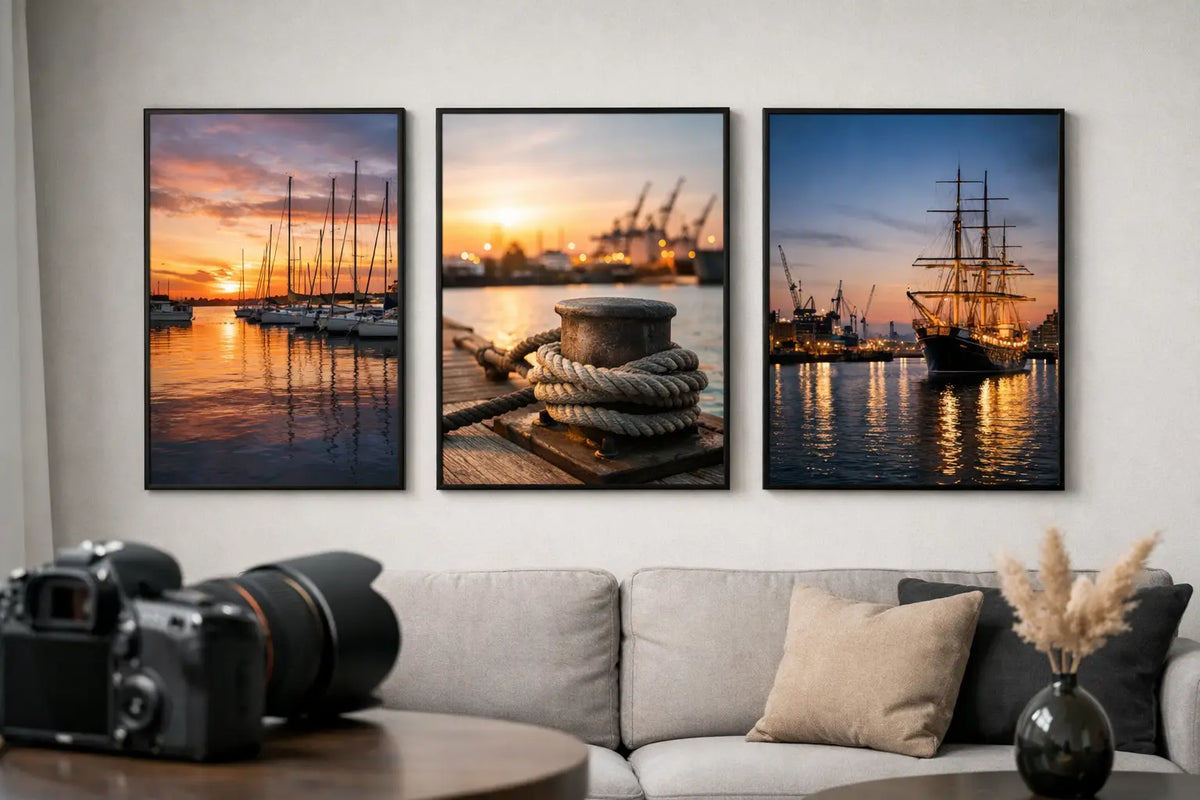
The most beautiful harbor photographs as wall art
A container crane against a bright sky, sailing masts backlit by the sun, or a tranquil pier in the early morning: the most beautiful harbor photographs as wall art give rooms a sense of direction. They don't simply bring a travel destination to the wall, but rather combine architecture, water, light, and a feeling of departure into an image that remains interesting for a long time. Especially in sparsely furnished apartments, harbor motifs add a sophisticated touch without overwhelming the space.
Why harbor photographs fit so well in modern spaces
Harbors are places of contrasts. Steel meets water, historic warehouses meet modern yachts, bustling quays meet a wide horizon. It is precisely this tension that makes photographic harbor scenes so diverse. A picture of Port of Hamburg It can appear urban and striking, a shot from Saint-Tropez brings lightness and Mediterranean elegance, while a quiet coastal port creates a relaxed, almost private atmosphere.
Unlike purely decorative patterns, harbor photographs always tell a little story. You can sense the wind, the movement, and the distance, without the scene becoming cluttered. This is particularly valuable for spaces that are meant to have more personality: the living room, a spacious hallway, a home office, or a vacation apartment. The image creates a sense of presence, but leaves enough room for the furnishings.
The location alone doesn't determine the effect. A black-and-white photograph with clean lines suits a minimalist interior with wood, leather, and dark metals. Colorful coastal scenes with turquoise water, sand-colored facades, or warm evening light complement bright, inviting rooms. It depends on whether the wall art is intended to exude tranquility, evoke travel memories, or deliberately create a focal point.
Select the most beautiful harbor photographs as wall art
A successful harbor photograph isn't defined by the number of details it contains. What matters is that the subject, perspective, and lighting create a clear and compelling effect. A wide-angle shot with a horizon line can visually open up a small wall. Conversely, a closer look at boats, ropes, or harbor architecture adds a precise, graphic emphasis.
Spaciousness for airy living areas
Panoramic harbor views work particularly well above a sofa, sideboard, or dining table. Water and sky give the room visual depth. Those wishing to emphasize a spacious feel should choose a motif with plenty of open space and a calm composition. A single boat, lighthouse, or pier can have a stronger impact than a densely populated scene.
In open-plan living areas, the format can be correspondingly bold. A picture that is too small quickly loses its impact above a wide piece of furniture. As a guideline, wall art should ideally occupy about two-thirds of the furniture's width. With a sofa width of 240 centimeters, a picture or a coordinated group of pictures with a total width of around 150 to 180 centimeters usually looks harmonious.
Architecture for an urban character
Port cities offer a unique blend of water and architectural heritage. Brick facades, bridges, quays, and cranes create lines that can structure spaces. Such motifs work very well in city apartments, studies, or reception areas. They appear clean, sophisticated, and less seasonal than a classic beach scene.
Hamburg is an obvious example: the Speicherstadt warehouse district, the Elbphilharmonie concert hall, the Landungsbrücken piers, and the view of the Elbe River all possess a unique atmosphere. Those wishing to express regional ties will find a motif with personal relevance here. At the same time, the visual language remains international enough to complement modern design and understated interiors.
Boats and yachts for a relaxed travel experience
Sailboats, marinas, and sunny shores bring a different energy to the wall. They evoke memories of days off, long summer evenings, and life by the water. These motifs work particularly well in bedrooms, vacation homes, or bright dining areas. The color palette is key: soft shades of blue and sand blend in easily, while bold azure, red, or yellow can be used to create striking accents.
A glamorous Port of Saint-Tropez A Hamptons-inspired or similar imagery can lend a room an elegant, travel-loving feel. For a more Nordic ambiance, motifs with subdued light, clouds, and muted colors are more suitable. Both styles can create a sophisticated look—they simply tell different stories.
Format and placement determine the effect
Even the best photograph loses its impact if it's hung in the wrong place. Before choosing a subject, it's worth considering wall width, sight lines, and furniture. The picture shouldn't be hung too high above the sofa or bed. A distance of about 15 to 25 centimeters from the top edge of the furniture ensures that the wall art and furnishings are perceived as a unified whole.
Vertical formats are a compelling choice for narrow wall sections, such as next to a door, in a hallway, or between two windows. A vertical image featuring sailing masts, a lighthouse, or a striking harbor facade utilizes the room's height and creates an elegant effect. Horizontal formats, on the other hand, emphasize the natural horizon line of water photographs and are ideal for hanging above wide furniture.
A special format can also be useful. In older apartments with high ceilings, in spacious stairwells, or above a long sideboard, a standard size doesn't always need to be prominently displayed. Custom-made wall art It can be tailored to the architecture of the room, instead of making compromises in proportions and effect.
The perfect frame for harbor motifs
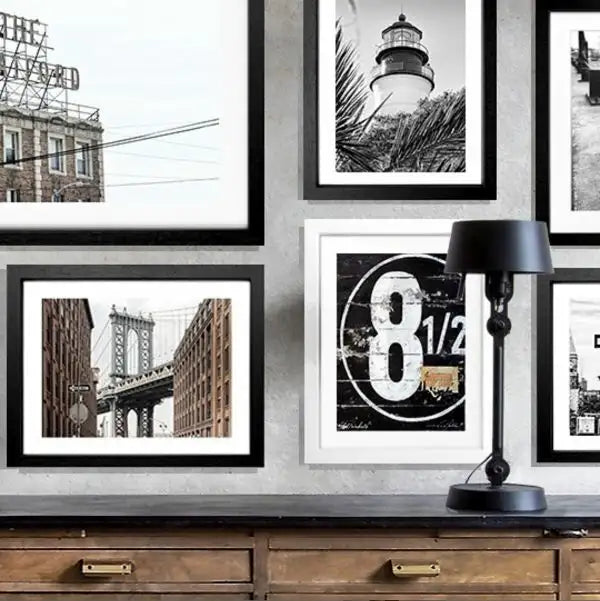
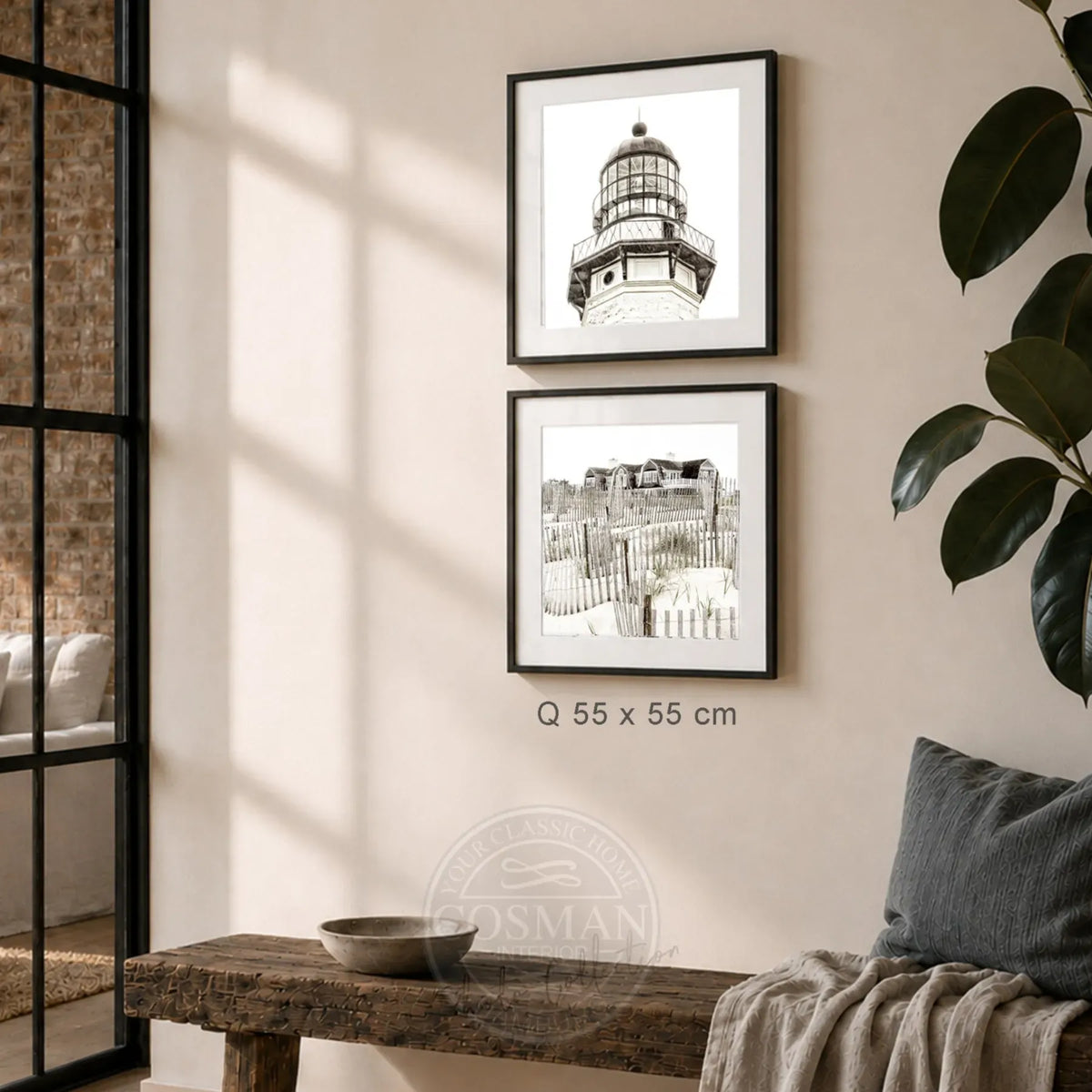
The frame is not a minor detail. It plays a crucial role in determining whether a photograph appears graphic, warm, or particularly elegant. A narrow black frame accentuates high-contrast architecture, monochrome images, and urban harbor scenes. It gives the image a precise outline and complements modern furniture, dark lighting, or clean lines.
White or light-colored frames make images featuring skies, water, and sandy coastal hues appear light and airy. They are well-suited to Scandinavian-inspired rooms, light-colored walls, and a relaxed interior design. Wooden frames add warmth and create a beautiful connection to natural materials such as oak, linen, rattan, or leather.
Acrylic glass gives photographs a clear, high-quality surface and protects the subject. Especially with images featuring subtle light reflections on water or numerous architectural details, a clean presentation makes a noticeable difference. Therefore, the choice of frame should not only match the wall color but also the materials in the room and the visual style of the subject.
High-quality workmanship saves time and reduces uncertainty.
When choosing wall art, nobody wants to coordinate multiple steps: ordering the file, assessing print quality, finding a suitable frame, and then acquiring mounting hardware. Especially with large formats, this can quickly lead to unnecessary compromises. A ready-to-hang framed picture takes this work off your hands and ensures that the photograph, frame, and hanging hardware truly complement each other.
Cosman Photocollection produces photographs on high-quality photo paper, frames them by hand and supplies them with suitable hanging devices.This is what makes the difference between a short-term decoration and a wall mural that blends seamlessly into the decor. This is just as practical for rental apartments as it is for a new house, a vacation home, or commercial spaces where a harmonious first impression is crucial.
Quality is also evident in the close-up view. Fine details of a ship's hull, reflections in the harbor basin, or the texture of old brick facades should remain clearly visible. A carefully crafted frame lends the subject the serenity and sophistication that a good photograph deserves.
Designing the wall as part of the journey
Harbor photographs don't have to be hung only where water is immediately associated. A scene from California can add warmth to a simple dining area, a Hamburg harbor scene can lend character to a study, and a tranquil marina can give a bedroom a calm, personal touch. The crucial point is that the picture isn't chosen as a mere filler, but rather as a deliberate element of the decor.
Before making a decision, take a moment to consider the wall: What colors are already present? How does the light fall? What should be the first thing you notice when entering the room? If the subject, size, and frame answer these questions, an empty surface becomes a focal point with atmosphere. A good harbor picture doesn't just bring a place home—it makes the room feel more expansive than its four walls.