Are wall pictures delivered ready to assemble?
A beautiful print alone won't transform a blank wall. Only the right frame, careful craftsmanship, and easy hanging system turn it into a picture that truly makes an impact in the room. Are wall murals delivered ready for installation? For high-quality framed wall art, the answer is: yes - provided that the picture is produced as a fully prepared product and not just sent as a loose print.
For many interior design situations, this is precisely what matters. For example, someone who wants a calm coastal motif for their bedroom, a New York photograph Whether you're choosing a piece of art for your home office or a large-format abstract painting for your living room, you don't want to have to search for a separate frame, check dimensions, and gather mounting hardware afterward. A wall mural delivered ready to hang takes care of all these steps and gets your artwork on the wall much faster.
What "ready to mount" really means for wall art
The term isn't used consistently by every supplier. Sometimes it simply means that a poster comes with a basic adhesive strip. For a framed wall art piece, "ready to hang" should encompass significantly more: a pre-framed print, suitable protective material on the front, and a hanging device already attached to the frame.
At Cosman Photocollection, the images are printed on high-quality photo paper, framed by hand, and prepared with a hanging device. Acrylic glass protects the image surface and gives the presentation a clear, sophisticated look. The wall art thus arrives not as a project, but as a finished piece of interior design.
The difference is particularly noticeable with larger formats. An unframed print might look convincing on screen, but at home it requires proper framing, precise alignment, and secure mounting. Once all of that is taken care of, the only remaining task after unpacking is choosing the perfect spot on the wall.
Are wall murals delivered ready for installation – and what else is missing?
Even a ready-to-hang picture needs to be attached to the wall. The hanging hardware is already attached to the frame, but the type of screw, nail, or wall plug used will depend on the type of wall in your home. This isn't a lack of service, but rather a practical consideration: Old brick walls, concrete walls, drywall, or wood walls all require different solutions.
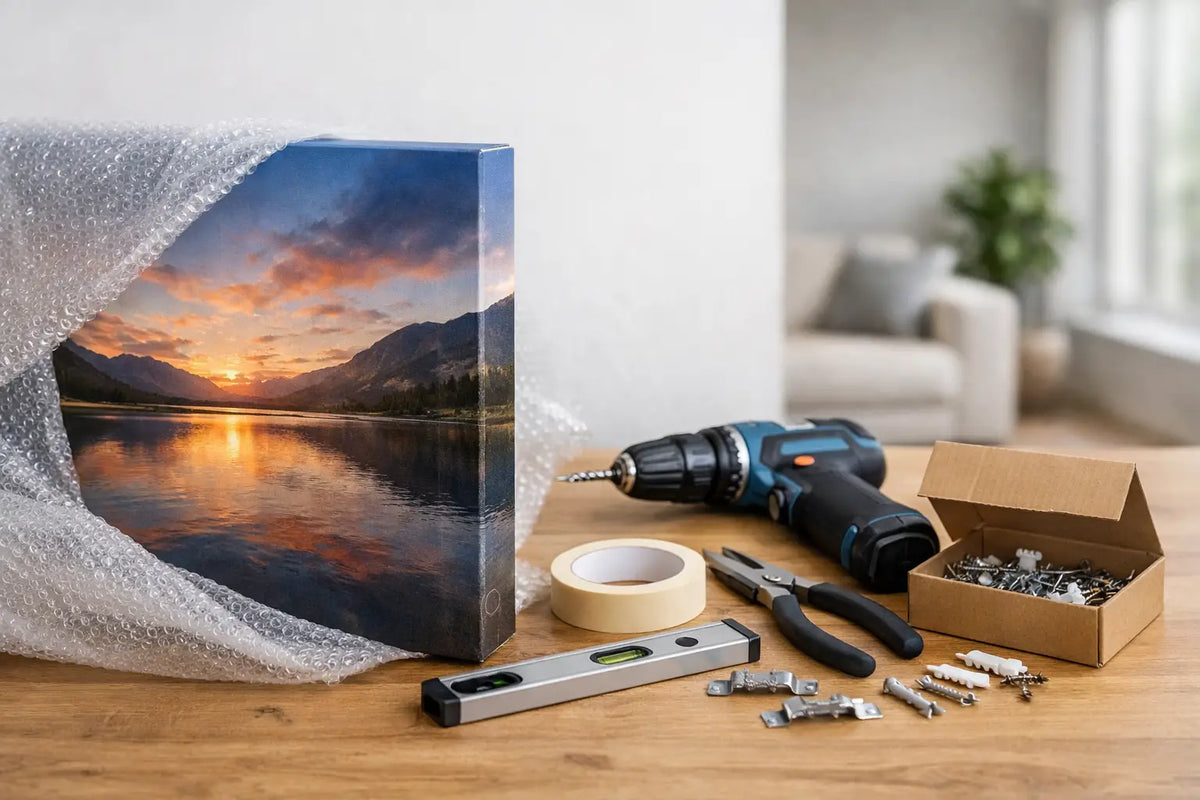
Ready to mount means you don't need to print, frame, or attach picture hangers. For the actual wall mounting, choose the appropriate material based on the weight and type of wall. A sturdy picture hook may suffice for lightweight pictures. For large, framed works, a screw and wall plug combination is usually the more reliable choice.
Before hanging, quickly check for any pipes or cables and carefully measure the position. A spirit level or a tape measure will ensure that the image appears straight and precise. Especially with crisp architectural shots, calm beach scenes, or graphic designs, a crooked hanging is immediately noticeable.
The wall determines the mounting method.
For solid walls made of concrete or brick, wall plugs and screws provide a secure hold. For drywall, special cavity wall anchors are the better choice, especially for larger frames. In rented apartments, it's advisable to check beforehand which fasteners are permitted and whether small drill holes can be neatly filled later.
When hanging a single picture, the center of the image can be positioned at approximately eye level. A common guideline is 145 to 155 centimeters from the floor to the center of the picture.This rule is not mandatory: Above a sideboard, sofa or bed, the wall picture can be positioned significantly lower so that it remains visually connected to the piece of furniture.
Why the frame is part of the assembly
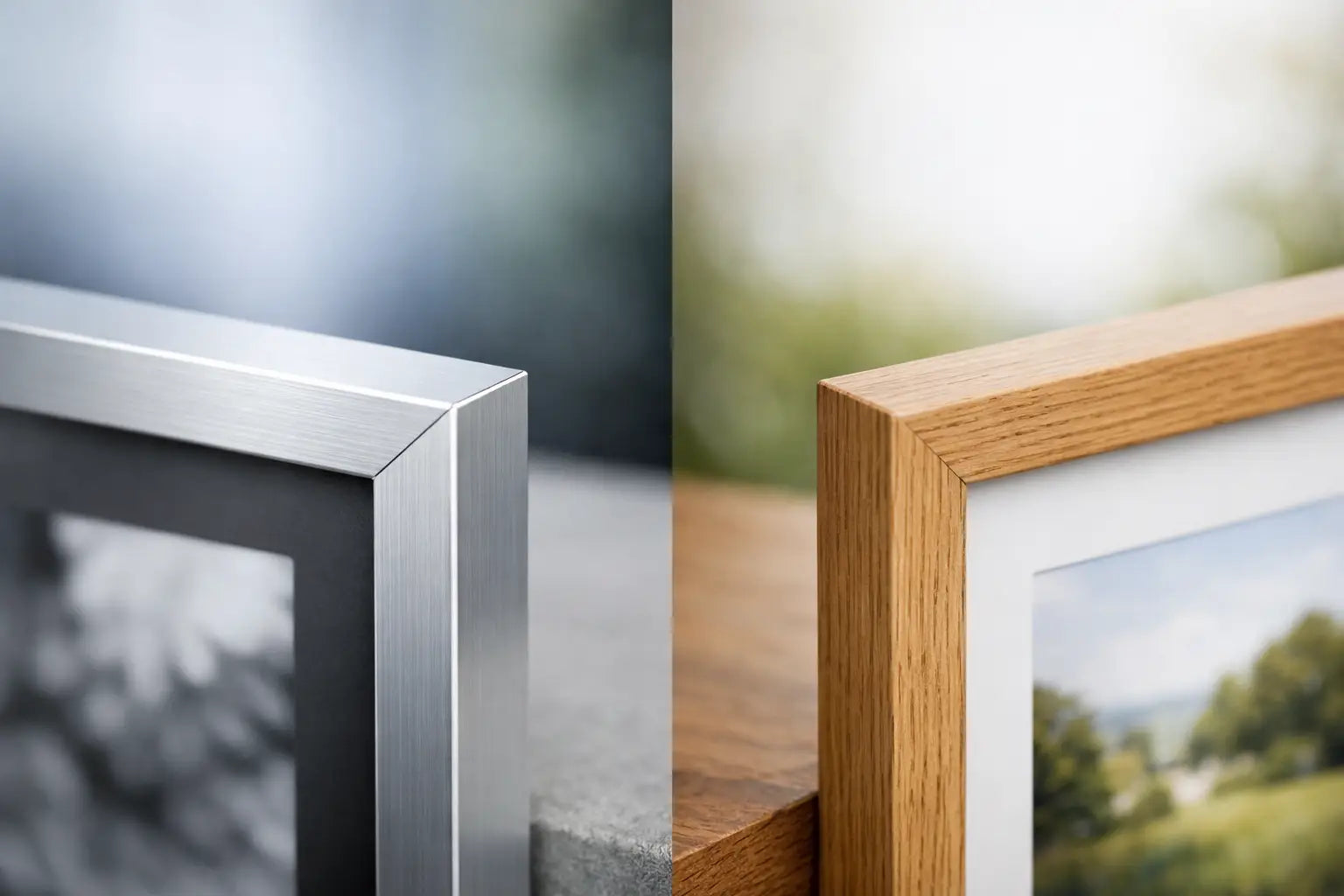
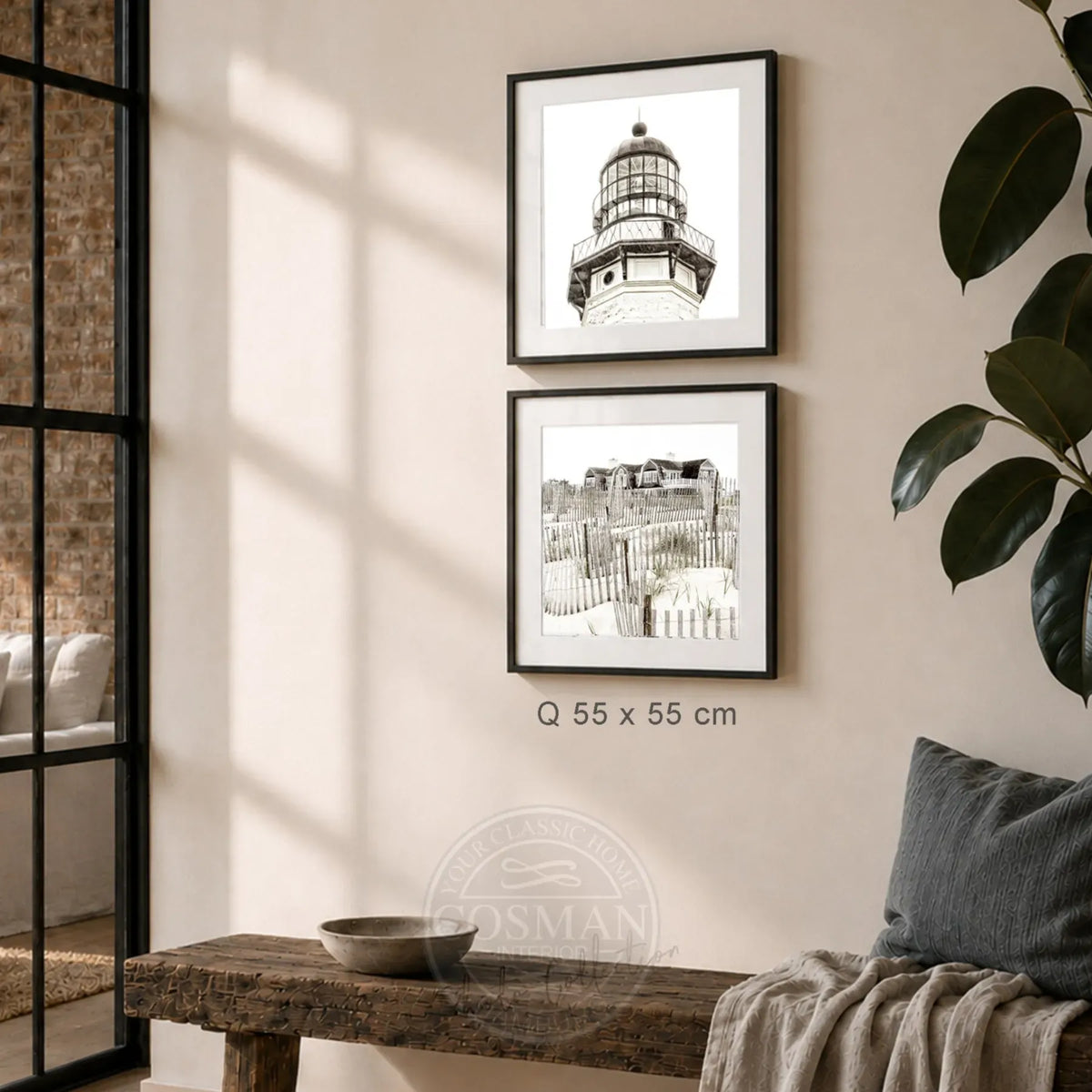
A frame is more than just a border. It gives the picture stability, protects the print, and influences its impact in the room. A slim black frame is particularly effective in urban settings. Motifs from Hamburg or Manhattan, adding a clear, modern touch. Light wood tones appear soft and natural, for example, with coastal photographs, linen fabrics, and bright living spaces. A white frame makes intensely colored images appear airy and can blend into understated interiors.
It is crucial that the frame, glass, print, and hanging hardware are planned as a single unit. Purchasing these components separately often leads to small but noticeable compromises: the picture doesn't sit flush in the frame, the hangers aren't strong enough for the weight, or the proportions appear too small on the wall. Professional, handcrafted framing prevents these issues and preserves the desired impact of the artwork.
Acrylic glass is a practical choice for living spaces. It protects the photograph from dust and handling without compromising the look of a framed picture. A protected finish is particularly advantageous in hallways, vacation homes, or commercial spaces where pictures are frequently moved and exposed to light.
Choose the right format for effortless assembly
The simplest installation starts with choosing the right size. A picture that's too small will get lost above a wide sofa, while an oversized one will quickly overwhelm a narrow hallway. Measure the available wall space, taking furniture, light fixtures, and door frames into account.
A wall picture often works particularly well above a sideboard or sofa when it spans roughly two-thirds to three-quarters of the furniture's width. On a blank wall, the picture can be more generously sized, as long as there is sufficient space around it. Large formats transform a single photograph into a striking focal point. Smaller formats are ideal for accentuating niches, entryways, or the wall next to a reading chair.
The orientation of the artwork also shapes the room. Horizontal formats complement wide furniture and create a broad perspective when photographing landscapes, coastlines, or skylines. Vertical formats visually lengthen rooms and fit well between two windows, on narrow wall sections, or in hallways. Square formats appear balanced and lend a calm presence to abstract motifs or detailed travel photographs.
Single image or group of images?
A framed picture, ready to hang, is particularly convenient when used as a standalone piece. A large image above the sofa can unify an entire seating area without the need for further wall decoration. For rooms with multiple free surfaces, however, a motif concept can also be repeated: for example, coastal scenes in a bright holiday home or cityscapes in a modern workspace.
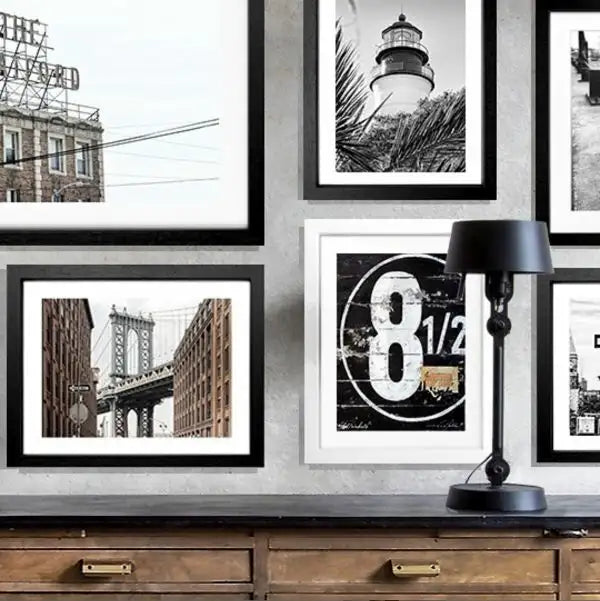
When creating a group of images, consistent spacing and a common visual element are crucial. This could be achieved through identical frame colors, similar formats, or motifs from the same destination. First, lay the arrangement out on the floor or discreetly mark the outer edges with painter's tape. This way, you can see whether the composition has the desired balance before drilling the first hole.
Before hanging: three minutes worth taking
Carefully remove the wall art from the packaging and check the frame, acrylic glass, and hanging hardware on the back. Only remove all protective films completely when you are ready to hang the artwork.A soft, dry microfiber cloth is sufficient later to remove dust from the acrylic glass and frame.
First, have someone hold the picture in the intended location, especially with larger formats. Take a few steps back and observe how it looks from your usual viewing angle: from the dining table, the sofa, or when entering the room. This brief assessment is more valuable than making a decision right in front of the wall.
Also consider the lighting. Direct, very strong sunlight can fade colors over time, while sidelight beautifully highlights the texture and depth of a photographic subject. In the evening, a nearby floor or wall lamp can subtly illuminate the frame without making the image appear over-staged.
Frequently asked questions about ready-to-hang wall art
Do I need to order a frame separately?
Not if you opt for a pre-framed, ready-to-mount wall art print. The print is produced to fit the chosen frame and delivered ready for installation. This not only saves time but also ensures that the size and frame are a perfect match.
Is the hanging hardware already attached to the picture?
For framed wall art delivered ready to hang, the hanging hardware should be pre-mounted on the back. You then only need a suitable wall mount and to align the picture.
Can I hang a large wall painting by myself?
It depends on the size, weight, and wall type. Small to medium-sized frames can often be mounted alone. For large frames, a second person is recommended – for secure holding, precise alignment, and to avoid having to drill into the wall multiple times unnecessarily.
A high-quality, professionally prepared wall mural creates space for the pleasant decision: Which motif tells the right story here? Whether it's Sylt in the bedroom, California in the living area or an urban scene in the entrance area - if the print, frame and hanging are already right, a blank wall can be transformed into a personal space with just a few simple steps.