
Aluminum frames versus wooden frames in comparison
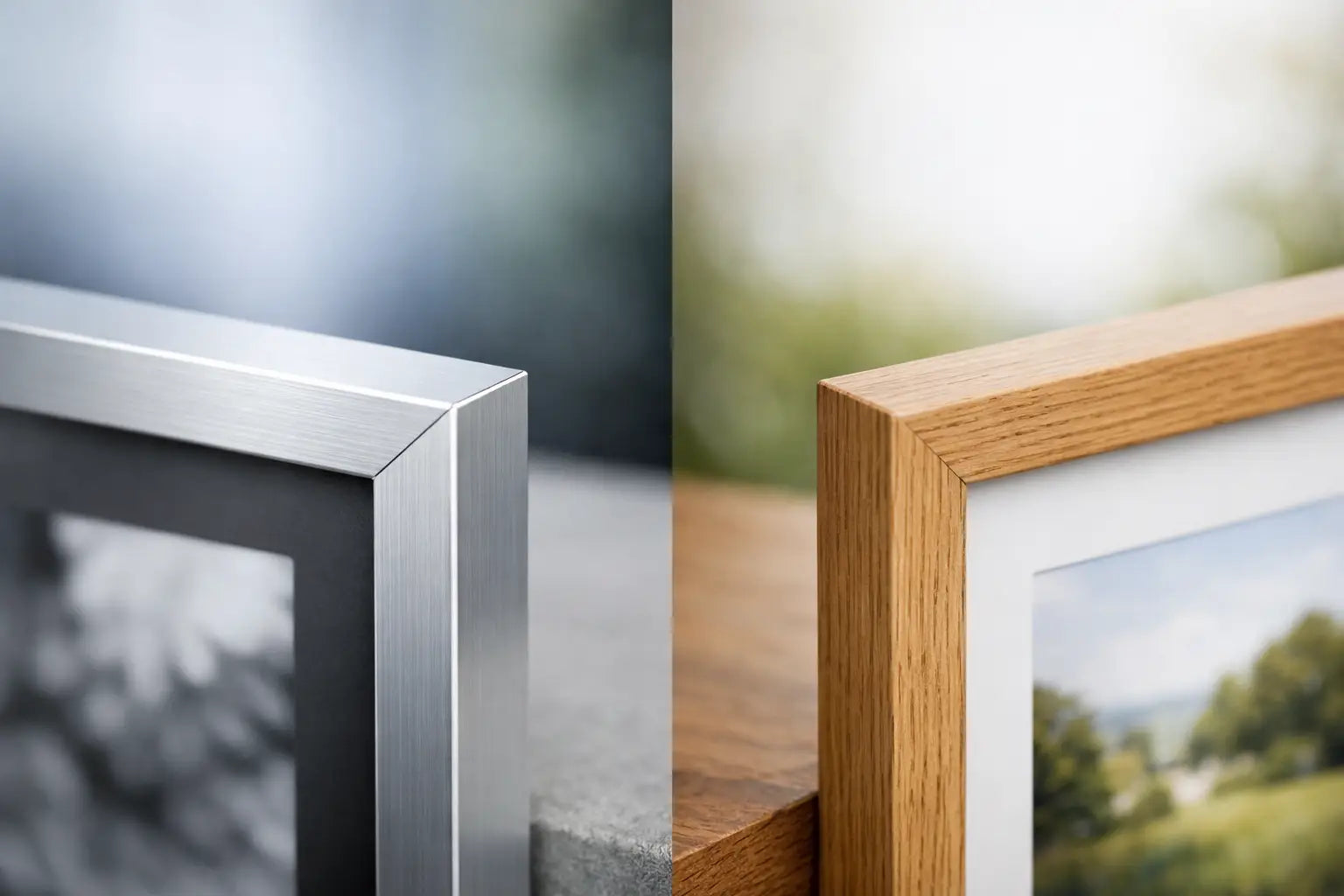
A Hamptons scene can appear almost graphic with a slim aluminum frame, while the same art print in a wooden frame instantly seems warmer and more inviting. That's precisely where the decision lies. Aluminum frame versus wooden frameIt's not just about the material, but about the atmosphere your wall art should create in the room. Both types of frames can look high-quality – if they are consciously coordinated with the motif, size, and furnishings.
Aluminum frames versus wooden frames: The difference at a glance
Aluminum exudes precision, modernity, and understated elegance. The clean lines of a metal frame lend photographs, abstract designs, and architectural shots a sophisticated contour without being obtrusive. This creates a particularly uncluttered and contemporary impression with large-format wall art. A black aluminum frame adds contrast and depth, while silver or light metallic tones convey a light and urban feel.
Wood, on the other hand, brings visible or tangible warmth to the wall. Even simply painted wooden frames convey a softer, more homely effect than metal. They are a perfect match for travel photographs, coastal scenes, landscapes, and pictures intended to create a personal atmosphere. Depending on the color, wood can look Scandinavian clean, classically elegant, or relaxed Mediterranean.
The better choice is therefore rarely a question of right or wrong. What matters is the role the picture should play in your interior: Should it add a modern touch, calm a room, or deliberately create a sense of comfort?
When an aluminum frame is the right choice
An aluminum frame is recommended when lines, contrasts, and a minimalist design are the focus. Photographs of New York, Hamburg architectureMinimalist facades or abstract compositions benefit from its clear edging. The material enhances the visual impact without adding an extra decorative layer.
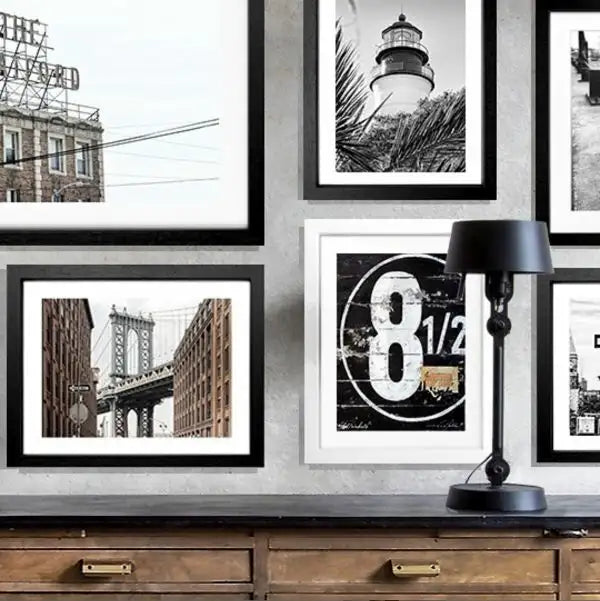
Aluminum blends seamlessly into interiors featuring a lot of glass, steel, concrete, smooth surfaces, or dark accents. In a modern city apartment, for example, a large-format black and white print with a black aluminum frame can create a calm, professional focal point. In offices, reception areas, or stylish vacation homes, this solution conveys a sense of order and sophistication.
Another advantage becomes apparent with very large formats. Aluminum frames appear visually slim and thus retain a light appearance, even though the wall art covers a large area. This is ideal if a single motif is to be displayed above a sofa, sideboard, or dining table without making the room feel heavier.
Black, silver, or a light metallic look?
Black is the most striking choice. It frames bright subjects, black and white photographs, and images with strong contrasts particularly well. A black frame can also work with dark walls if the image itself is sufficiently bright.
Silver or lighter-colored aluminum frames have a more understated look. They go well with light walls, cool color schemes, and interiors in white, gray, sand, or blue. For beach photos from Florida or California, a light metal frame can emphasize the airy feel of the image without creating a harsh edge.
What speaks in favor of a wooden frame
A wooden frame has a special quality: it connects a picture more strongly with the living space. While aluminum tends to define contours, wood creates transitions. This makes it a compelling choice for living rooms, bedrooms, hallways, and rooms where textiles, carpets, natural materials, or warm wall colors set the tone.
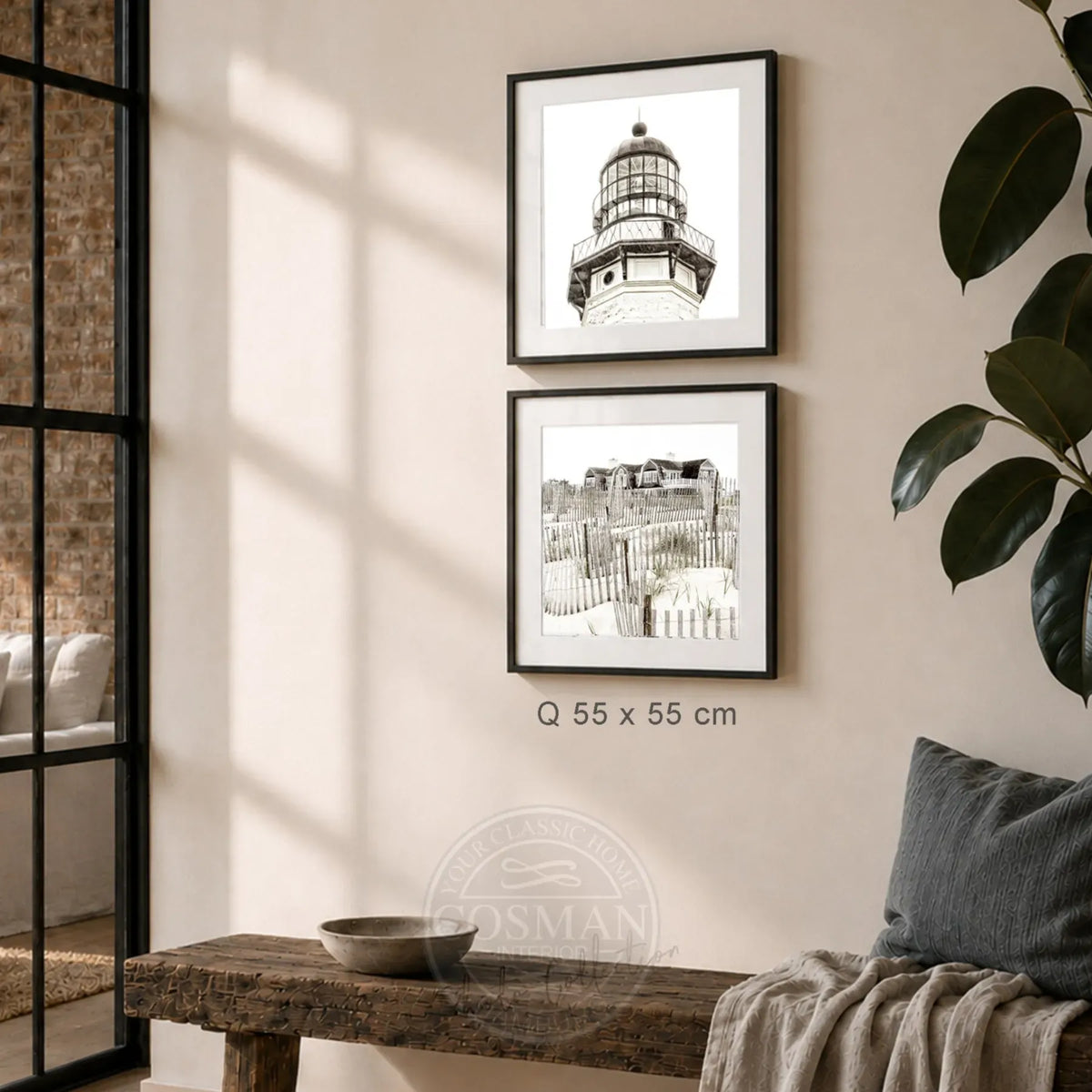
Light wood frames complement linen, bouclé, oak, rattan, and Nordic-inspired decor. They soften the starkness of a precise photograph and make modern art appear more approachable. Coastal scene of Sylt This gives it a relaxed, high-quality presence - more of a boutique hotel than a gallery hall.
Dark wood frames, on the other hand, add depth and classic elegance. They harmonize with walnut, dark sideboards, velvet, brass details, or period features. For color-intensive travel photographs and atmospheric landscape shots, a dark wood tone can ground the colors and give the image more weight.
Wood is not automatically rustic
The concern that wooden frames always look traditional or rustic is unfounded. What matters are the profile, width, and surface finish. A narrow, cleanly crafted wooden frame can be decidedly modern. It's a good choice if you like clean lines but want to give your room more warmth than a metal frame can provide.
Conversely, a very wide, heavily grained profile can be a deliberately decorative statement. This suits select interiors but shouldn't be chosen haphazardly. With a delicate cityscape or a small abstract print, an overly dominant frame can disrupt the balance.
Consider motif, format and wall color together
Choosing the right frame becomes much easier if you consider more than just the style of the room. The subject matter and its format also provide a clear direction. Architecture, graphic art, and black-and-white photography often look particularly striking in aluminum frames. Travel photos, coastal landscapes, color photography, and softer abstract works, on the other hand, often benefit from wood.
There are deliberate exceptions to this rule. A vibrant Miami scene in a black aluminum frame can look exceptionally elegant, precisely because the frame controls the color. A minimalist photograph of Hamburg, framed in light wood, can provide just the warmth that an otherwise very minimalist room lacks.
Wall color also matters. On white or very light beige walls, you have a lot of freedom: black aluminum adds a graphic accent, while light wood creates a soft, cozy atmosphere. Light frames often look particularly good against dark blue, olive, or anthracite walls. A dark frame can also work well there if the picture and passe-partout create a clear contrast.
At a picture wall Not every frame should be identical. A mix of wood and aluminum can look striking, but it needs a unifying element. This could be a uniform frame color, a recurring imagery, or a clear separation between the artworks. Without this common thread, the wall quickly appears random rather than curated.
The effect in the room: understated or inviting?
Aluminum frames are ideal when the image itself is meant to be the main focus. They create a subtle, defined line around the artwork and are particularly well-suited to rooms with a deliberately minimalist design. Those who prefer clean lines of sight, a limited color palette, and modern furniture will often find aluminum frames to be a safe choice.
Wooden frames are a good choice when wall art is meant not only to complement the room but also to visibly connect with it. They reference furniture, flooring, and natural materials. In a room with white walls and understated furnishings, a wooden frame can also prevent a picture from appearing too cold or distant.
For open-plan living areas, it's worth considering the entire sequence of rooms. If there's already a picture with a black aluminum frame in the dining area, a second large-format piece in the living room with a similar frame can create a sense of calm. Conversely, if several pieces of wooden furniture dominate the room, a wooden frame might be a more harmonious repetition. Uniformity doesn't have to be boring—it can be what gives a room its natural feel.
Workmanship and protection are just as important as appearance.
A beautiful frame serves more than just a decorative purpose. It protects the print, neatly encloses it, and transforms a photograph into a finished piece of wall art. High-quality photo paper, careful framing, and acrylic glass all contribute to vibrant colors and ensure the image remains protected in everyday use.
Acrylic glass is a particularly practical choice for larger formats and in households with children or pets because it is lighter and shatter-resistant than conventional glass. To ensure a framed picture lasts a long time, it should not be permanently exposed to direct sunlight or high humidity. For bathrooms, kitchens, or very sunny conservatories, individual advice on placement is recommended.
Equally crucial is the hanging system. A picture that arrives ready to mount with the appropriate hardware saves time and prevents improvised solutions. At Cosman Photocollection, high-quality prints are hand-framed and prepared for hanging – so that after unpacking, the focus is on the overall feel of the room, not on searching for accessories.
This is how you make a safe decision
If you're undecided between the two materials, ask yourself three specific questions. Should the frame exude graphic clarity or warmth? Does it echo a material already present in the room? And should your picture appear more like a precisely placed accent or as a natural part of the decor?
For a modern, urban feel, aluminum is usually the most direct choice. For a softer, more personal, and homeier effect, wood offers many possibilities. If you've chosen a subject that reminds you of a favorite place, the frame can reinforce this memory: cool and elegant for a skyline, light and relaxed for a coastal scene, dark and expressive for a photograph with depth.
Before ordering, take a moment to consider the wall itself. A photo of the room, the color of your furniture, and the intended picture size often provide a clearer answer than any material sample. The right frame transforms wall art from mere decoration into a sight that feels right every single day.