Buy murals in special formats with style
A narrow wall next to the window, the high ceiling above the sofa, or a spacious hallway rarely call for a standard size. Those who want to buy wall art in custom formats aren't opting for a makeshift solution, but rather for a design that truly reflects the space. The right format creates a sense of calm, lends weight to a piece of furniture, and allows a chosen motif to have its full effect precisely where it's meant to be seen.
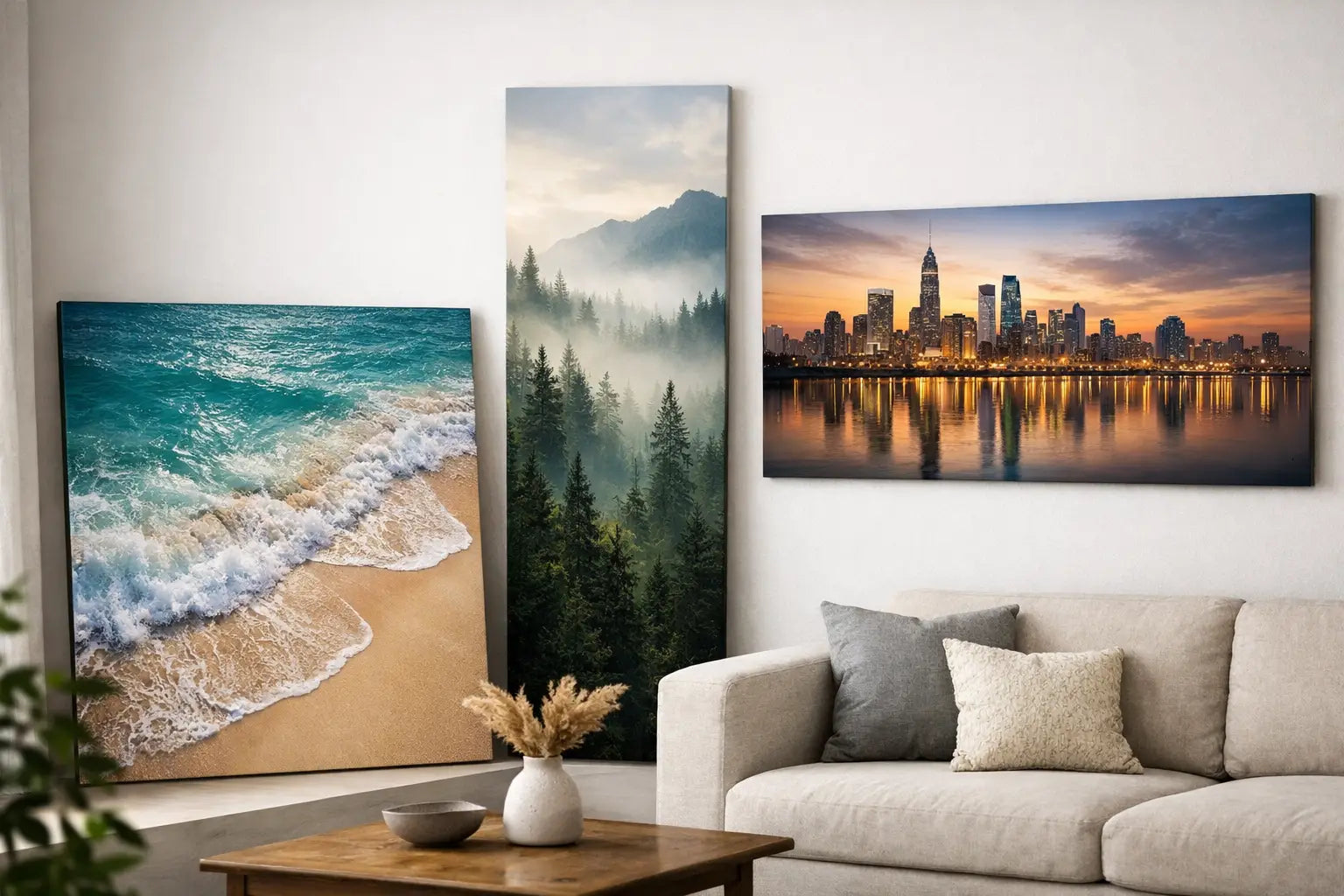
Especially with high-quality photographs and art prints, the subject matter alone does not determine the effect. Size, proportion, frame, and placement all play a role. Beach scene from Sylt A generous landscape format can emphasize the spaciousness of a living area. Architectural photograph from New York A tall, vertical format adds visual interest. And an abstract design can consciously define a narrow wall, rather than simply decorating it.
Why special formats can design a room more precisely
Standard sizes are practical, but they don't automatically follow the lines of a room. A picture that's too small often looks lost above a wide sideboard, even if the subject matter is compelling. Conversely, an oversized format above a compact console table can visually weigh down the space. Custom sizes allow for the art to be coordinated with the architecture – especially in older buildings, vacation homes, open-plan living areas, or commercial spaces with unusual wall dimensions.
A large mural doesn't have to be loud. A subtle coastal scene in sandy tones can elegantly divide a wide wall without dominating it. Conversely, a high-contrast cityscape can deliberately become a focal point. The crucial factor is the role the mural is meant to play in the room: creating atmosphere, defining an area, or setting a strong visual accent.
Special formats also make furniture arrangements more harmonious. A landscape format can echo the horizontal lines of a bed, sofa, or dining table. A portrait format visually elongates low rooms and fits perfectly between two windows, on stair landings, or next to tall cabinets. For a gallery wall, different formats help create a unique composition—provided the subject matter and framing work together to create a cohesive design.
Buy wall art in custom sizes: Finding the right dimensions
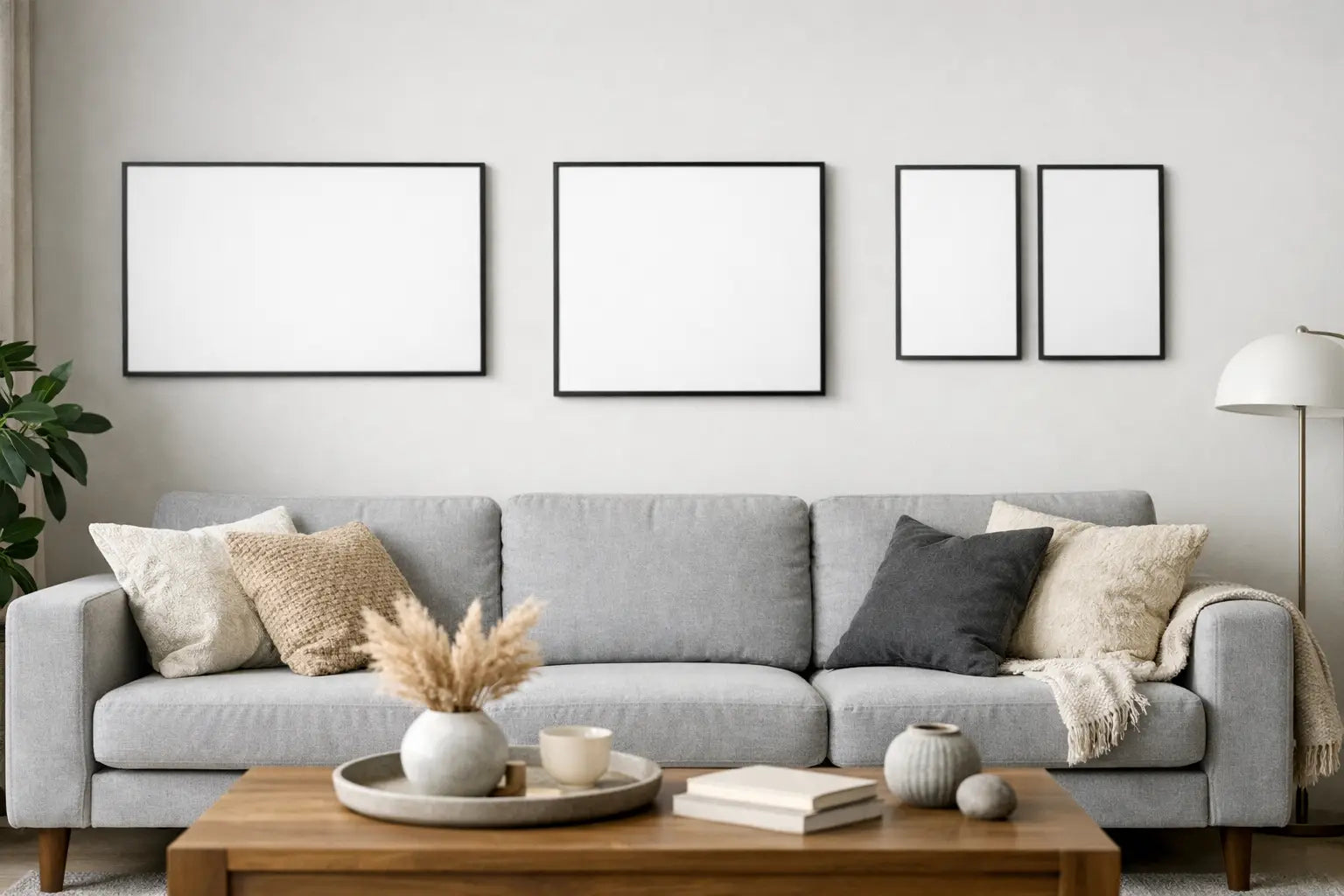
The best starting point is not the empty wall space, but rather the piece of furniture below or opposite it. If a picture hangs above a sofa, sideboard, or bed, it can, in many cases, occupy approximately two-thirds to three-quarters of the furniture's width. This orientation creates a balanced proportion without the picture appearing too short. With a blank wall, the format can be more generous, provided the room offers sufficient viewing distance.
Height is also important. In living rooms, the center of the picture is usually comfortably positioned at eye level. There should be some space between the edge of furniture and the frame so that the artwork stands on its own and doesn't appear to be sitting on top of the furniture. In rooms with high ceilings, it's tempting to hang pictures very high. However, a deliberately lower placement often creates a greater sense of intimacy and coziness.
Before ordering, it's worth doing a simple test with painter's tape or strips of paper. Stick the intended outer dimensions – including the frame – to the wall. Even from a few steps away, you'll see whether the format has the desired presence. Also, check the sight lines: What do you see when entering, from the dining table, or from the sofa? A wall mural's impact isn't limited to a frontal view; it's also noticeable from various perspectives in everyday life.
For subjects with a clear horizon line, such as shots from Florida, California or the Hamptons, a wide horizontal format supports the character of the photograph.Vertical subjects like facades, palm trees, or urban details benefit from height. Abstract works offer more flexibility but shouldn't appear arbitrarily cropped. The relationship between subject and format must remain compelling—not every image benefits from maximum width or height.
A single image or combining multiple formats?
A single large-format wall painting creates a calm, clear, and sophisticated effect. It is particularly well-suited to walls already defined by furniture, lighting, or materials. The painting gains space, and the eye immediately finds a focal point. In a minimalist interior, this very focus can create a particularly elegant effect.
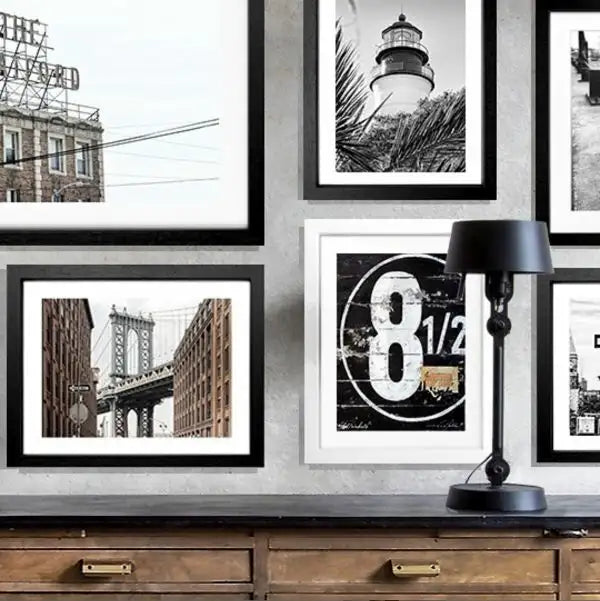
Multiple images, on the other hand, offer the opportunity to tell a story. A series of travel destinations, different coastal views, or coordinated abstract motifs create rhythm. To prevent the combination from becoming chaotic, a common framing language and a consistent spacing between the images are recommended. Different sizes are perfectly acceptable if the overall form is deliberately planned—for example, along an imaginary lower or middle line.
Bringing together motif, color and spatial sense
Wall art can evoke memories, but it should also suit the life in the room. Photography of Hamburg It brings urban clarity and North German atmosphere into a home. Sylt, Saint-Tropez, or the Hamptons convey lightness, light, and the serenity of a retreat. Californian scenes can appear modern and sun-drenched, while New York contributes architecture, energy, and graphic structure.
The color scheme determines how naturally a picture becomes part of the decor. Don't necessarily have to pick up every color from the carpet, cushions, or curtains. Often, a connection through a single nuance is enough: warm sandy tones with light wood, deep blue with dark accents, black and white with a clean, modern design. A picture can create contrast, as long as this contrast appears intentional.
In bedrooms, gentle coastal scenes, tranquil landscapes, and minimalist abstract works often create a more relaxing atmosphere than highly detailed cityscapes. In living or dining areas, wall art can be more prominent. For offices, medical practices, or vacation properties, motifs with a strong sense of place are particularly appealing because they lend a room personality without requiring extensive redecorating.
The frame is part of the format.
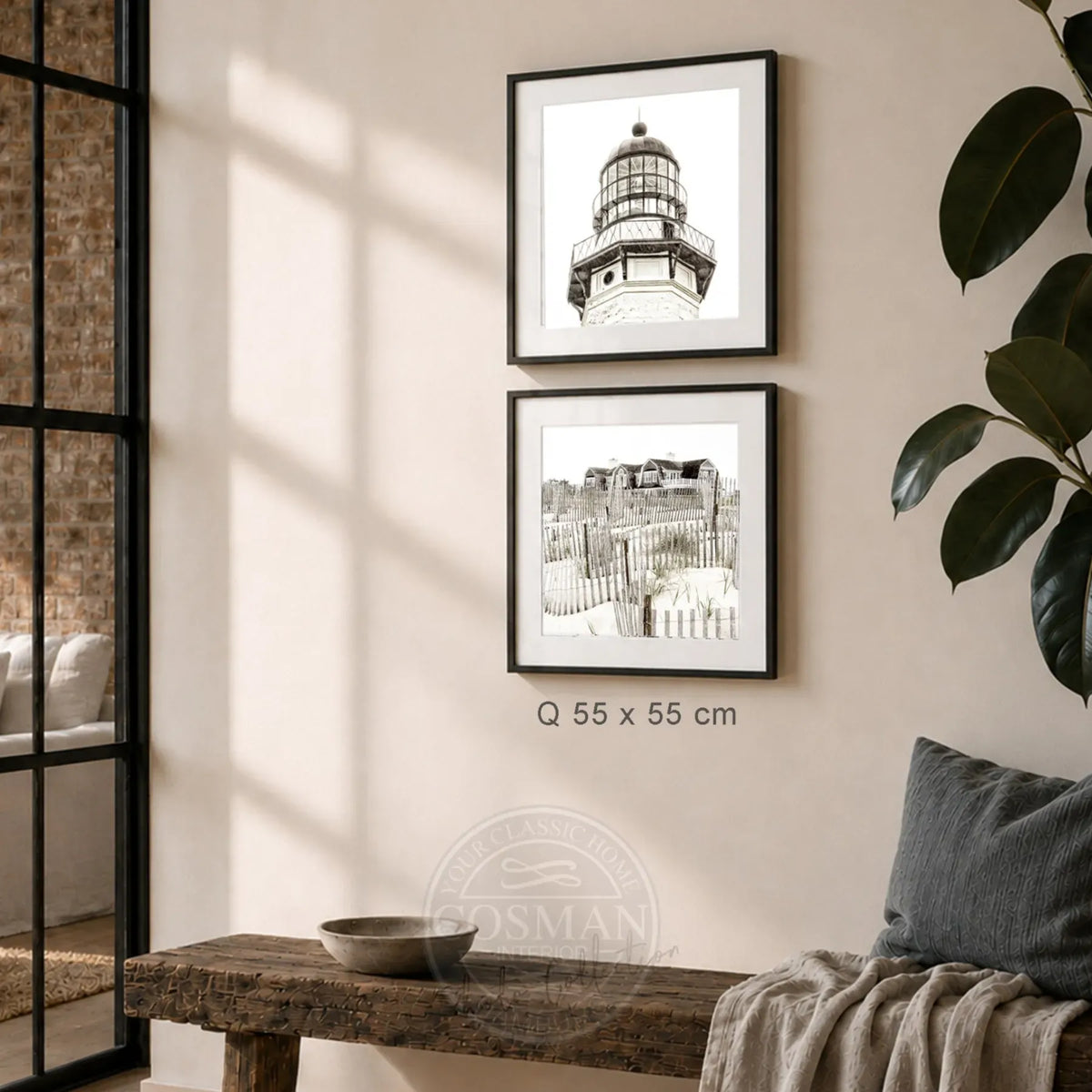
When ordering a custom-sized wall art piece, the decision doesn't end with the print dimensions. The frame determines the visible size, creates contrasts, and influences whether a motif appears modern, classic, or understated. A narrow black frame can frame photographs with a clear, graphic feel. Light or natural frame colors bring warmth to rooms with wood, linen, and soft tones. A wider frame gives the image more presence but also requires sufficient wall space.
Acrylic glass is a compelling choice for large-format images because it creates a high-quality, clear surface and can be lighter than traditional glass. This makes hanging the artwork much easier, especially with larger formats. However, meticulous craftsmanship remains essential: a high-quality print on photo paper, a well-made frame, and precise mounting ensure that the wall art looks perfect even up close.
This is the difference between a loose poster and a complete wall display. When printing, framing, protection, and hanging hardware are all integrated, there's no need to search for matching components. Cosman Photocollection produces images to order, frames them by hand, and delivers them ready to hang. This ensures planning security—especially when a custom size has been chosen precisely for a specific space.
Order ready to hang instead of improvising.
Hanging a large-format picture shouldn't become a project only after it's delivered. Check beforehand what kind of wall you're using: concrete or brick walls require different fixings than drywall. The appropriate wall plugs and screws depend on the wall material and the weight of the picture. Hanging the picture on the frame ensures it's ready to go, but the wall fixings must be suitable for the specific surface.
For particularly large formats, plan to unpack with two people. Place the picture on a clean, soft surface and avoid applying pressure to the front. A spirit level will help with alignment, but consider its relationship to furniture and door frames as well. In older buildings, ceilings and floors are not always perfectly level. In such cases, it often looks better to align the picture with the line of the sideboard or window rather than trying to align it mathematically with a sloping ceiling.
A custom format is successful when it doesn't look like a bespoke piece that needs explaining. It simply works: the image has space, the frame provides the perfect accent, and the wall gains a presence that suits the home, vacation property, or business. Take a moment to consider this decision – the effect will last far beyond the initial impression.