
Buy a framed mural with acrylic glass and choose the right one
A single piece of wall art can transform the atmosphere of a room more than a new piece of furniture, especially when the subject, size, and framing are visibly harmonious. Those who choose to buy acrylic glass wall art aren't just opting for a picture, but for a complete design solution: a high-quality photo print protected behind a clear surface, neatly framed, and ready to hang on the wall.
This difference is particularly important in living rooms, vacation homes, or stylish workspaces. Instead of having to select, frame, and mount a loose poster print, a ready-to-hang wall art piece arrives as a cohesive whole. This leaves more time for the important question: Which motif should define the room?
What makes a wall picture with acrylic glass so special
Acrylic glass lends photographic wall art a clean, modern presence. The smooth surface protects the print from dust and everyday handling, allowing colors, contrasts, and details to appear with precision. This results in a particularly high-quality visual effect, especially for travel photographs with wide horizons, shimmering water, or urban lights.
Unlike an unframed poster, an image behind acrylic glass appears cohesive and finished. It gains visual weight without being heavy or cluttered. Combined with a carefully chosen frame, it blends just as naturally into elegant period buildings as it does into a sleekly furnished new building or a modern office.
Acrylic glass is also lighter and less prone to breakage than traditional glass. This is a practical advantage in households with children, in vacation homes, and for larger formats. At the same time, the surface has a glossy, clear appearance. In rooms with many direct light sources, reflections may be visible. In such cases, it's advisable to consider the intended location and avoid hanging the picture directly opposite a large window or a strongly directional light source.
Buying wall art with acrylic glass: Pay attention to the image composition
The most beautiful photograph only truly shines when it complements the wall. Therefore, before buying, it's worth considering the distance, lighting, and existing materials in the room. A small, detailed image can work perfectly in a hallway or next to a reading chair. Above a sofa, sideboard, or dining table, however, a picture usually needs more space to avoid looking lost.
As a general guideline: Above a piece of furniture, the artwork should occupy approximately two-thirds to three-quarters of the furniture's width. Above a 180-centimeter-wide sofa, a single picture measuring about 100 to 130 centimeters in width usually looks well-balanced. This isn't a hard and fast rule, however. A high ceiling often accommodates a larger, vertical format, while a narrow wall benefits from a vertical motif.
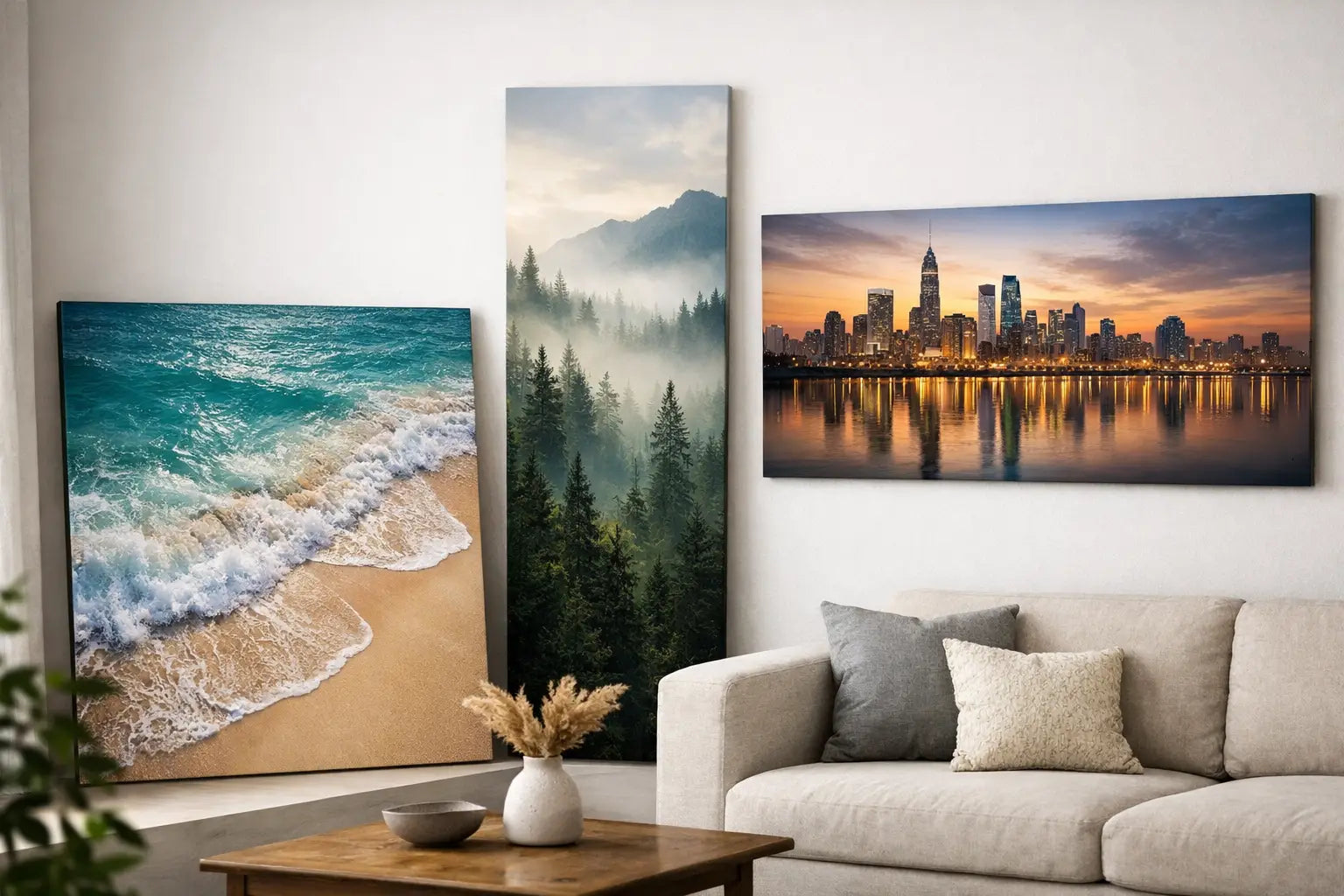
The framing of the image is also crucial. Architectural photographs with clean lines give structure to entrance areas and studies. Coastal scenes, dunes, and wide beaches create a sense of calm and brightness, especially in bedrooms or vacation apartments. Hamburg skyline Or, New York adds a confident touch to the living space. Abstract motifs are the right choice when color, form, and atmosphere are more important than a specific location.
Those who choose travel photography don't need to decorate the room thematically. Image from Saint-Tropez It doesn't require Mediterranean furniture, and California style works just as well next to a Nordic sideboard. The crucial thing is that the color scheme and imagery harmonize with the room. Sand, blue, off-white Warm, natural tones can be combined in many ways. Intense pink, orange, or turquoise tones can be deliberately used as eye-catchers.
The framing determines the character
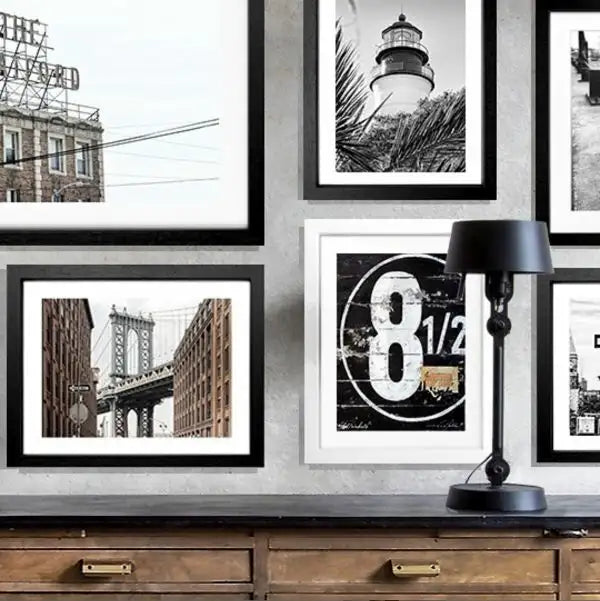
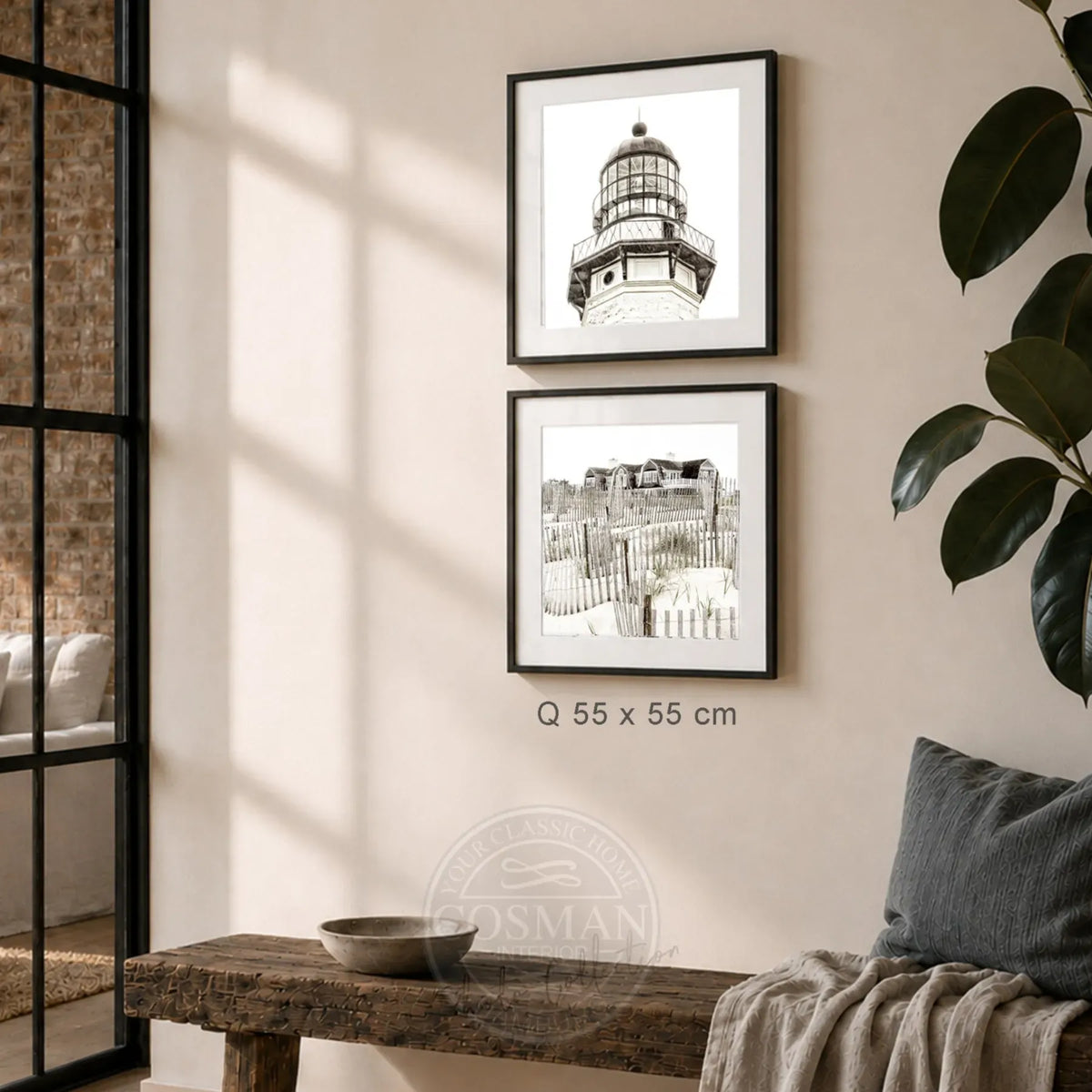
An acrylic glass print gains depth and tranquility from the right frame. The frame is not merely an accessory, but rather the link between the artwork and the interior design. A black frame gives high-contrast cityscapes, black-and-white photographs, and graphic designs a precise, modern outline. White makes bright coastal scenes appear airy and spacious. Wood tones bring warmth to rooms, complementing linen, oak, natural stone, or rattan.
For images with very vibrant colors, a subtle frame is often the better choice. This allows the subject matter to remain the focus. In contrast, for minimalist photographs or abstract designs, the frame can play a more prominent role. Here, a dark, striking frame can give the image the desired presence.
Pay attention to the effect from a distance. On a large wall, you first see the overall format, the color area, and the frame—only then do you notice the details within the image. A high-quality framed wall art piece therefore appears orderly and deliberately placed as soon as you enter the room. This effect isn't achieved through excessive decoration, but rather through correct proportions.
High-quality printing and handcrafted workmanship
In wall art, quality is primarily revealed in the interplay of its components. A meticulous print on high-quality photo paper preserves subtle transitions in the sky, the texture of water, and the depth of architectural details. Acrylic glass protects this surface and ensures a clear view. A well-crafted frame provides the image with stability and a sophisticated finish.
For buyers, the finished product is particularly convenient. There's no need to source prints, acrylic glass, frames, and hanging hardware from different suppliers. This prevents misunderstandings regarding formats and saves the time and effort of finding the right frame or suitable mounting material. At Cosman Photocollection, the images are produced on high-quality photo paper, framed by hand, and delivered with hanging hardware.
This doesn't mean that every wall can be hung without preparation. Before hanging, check what material the wall is made of. Different wall plugs and screws are needed for concrete, drywall, or walls in older buildings. The appropriate hanging hardware is already attached to the picture, but the mounting hardware should be suitable for the specific wall. For large-format artwork, it's a good idea to mark the position with painter's tape first. This allows you to check the height and distances between the walls before drilling.
For which rooms are acrylic glass pictures suitable?
In the living room, a large wall painting can set the tone. Above the sofa, a tranquil beach scene creates a sense of spaciousness, while a cityscape establishes a clean, cosmopolitan atmosphere. Choose a picture whose dominant color is subtly echoed in a cushion, rug, or vase. Everything doesn't have to be perfectly coordinated—often, a single decorative item is enough.
In the bedroom, motifs with open horizons, soft colors, and natural light are particularly harmonious. They give the room a relaxed focus without making the decor feel busy. In a hallway or entryway, striking architectural motifs and high-contrast photographs work well because they have an immediate impact even in a small space.
For offices, law firms, medical practices, or meeting rooms, a thoughtful selection is equally worthwhile. A high-quality framed picture conveys attention to detail and makes a functional space more personal. Abstract works appear professional and contemporary, while familiar places can spark conversation. In vacation rentals, coastal and travel motifs offer guests a feeling of arrival from the very first moment.
Check the correct size before ordering.
A common mistake is choosing a picture that's too small. On a wide, empty wall, a small format can quickly look like an afterthought. Measure the available space and take into account furniture, lighting, and the height of the baseboards. A picture should be integrated into the room, not appear to float in isolation on the wall.
A simple test using strips of paper or painter's tape in the desired format is helpful. View the surface from your usual sitting or walking position. If it still seems too understated, a larger format is probably the better choice. It's different with a gallery wall: several smaller formats can look very elegant, but they need clear spacing and a consistent visual style.
If a picture in a custom format suits the wall better, the framing should be considered from the outset. Panoramas above a sideboard or tall, narrow pictures between two windows, in particular, benefit from precisely fitting dimensions. Size and subject matter should complement each other, rather than limiting one another.
An acrylic glass wall mural is a good choice when it not only suits the room but also gives it a sense of direction. Therefore, take a moment to look at the empty wall before ordering: it usually reveals very clearly whether it needs tranquility, color, a touch of wanderlust, or a strong urban accent.