
Article: Choose wall pictures: This will make your room look harmonious

Choose wall pictures: This will make your room look harmonious
A blank wall is rarely just a blank wall. Above the sofa, it quickly feels incomplete; in the hallway, it remains impersonal; and in a home office, it often lacks precisely that focal point that gives the room character. Wall art doesn't simply provide decoration: it creates a visual focal point, incorporates colors, and gives living spaces a clear, personal touch.
The subject matter alone doesn't determine the effect. Format, framing, placement, and proportion to the furnishings all contribute to transforming a beautiful picture into a harmonious whole. Those who consciously make these decisions can transform empty spaces into atmospheric rooms without extensive redecorating.
Wall murals give the room a sense of direction
A mural can evoke a travel memory, echo a color scheme in the room, or create a deliberate contrast. A coastal scene with a wide horizon brings tranquility to a bedroom. An architectural cityscape can lend structure and urbanity to a dining area. Abstract motifs work particularly well when furniture, rugs, and lighting already have a distinct design language and the artwork shouldn't overwhelm them.
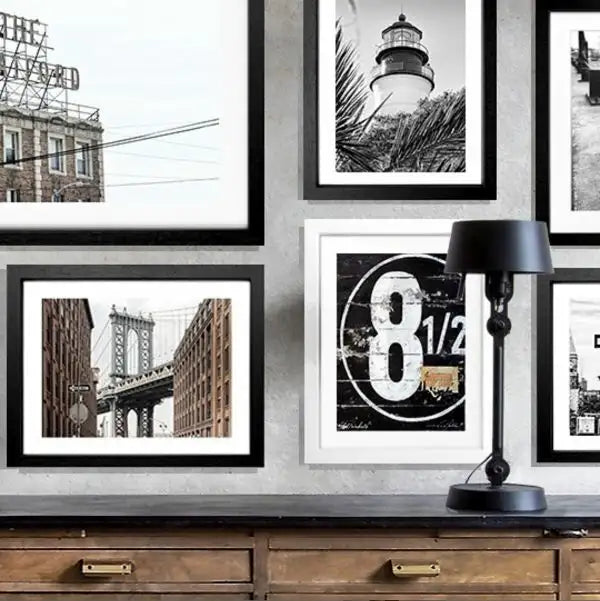
It's important not to view a motif in isolation. In a room with warm wood, linen, and natural tones, sunny beach scenes, soft blues, or understated photographs often harmonize more than a starkly contrasting black-and-white image. Conversely, this very same black-and-white image can create the desired precision in a modernly furnished room with clean lines.
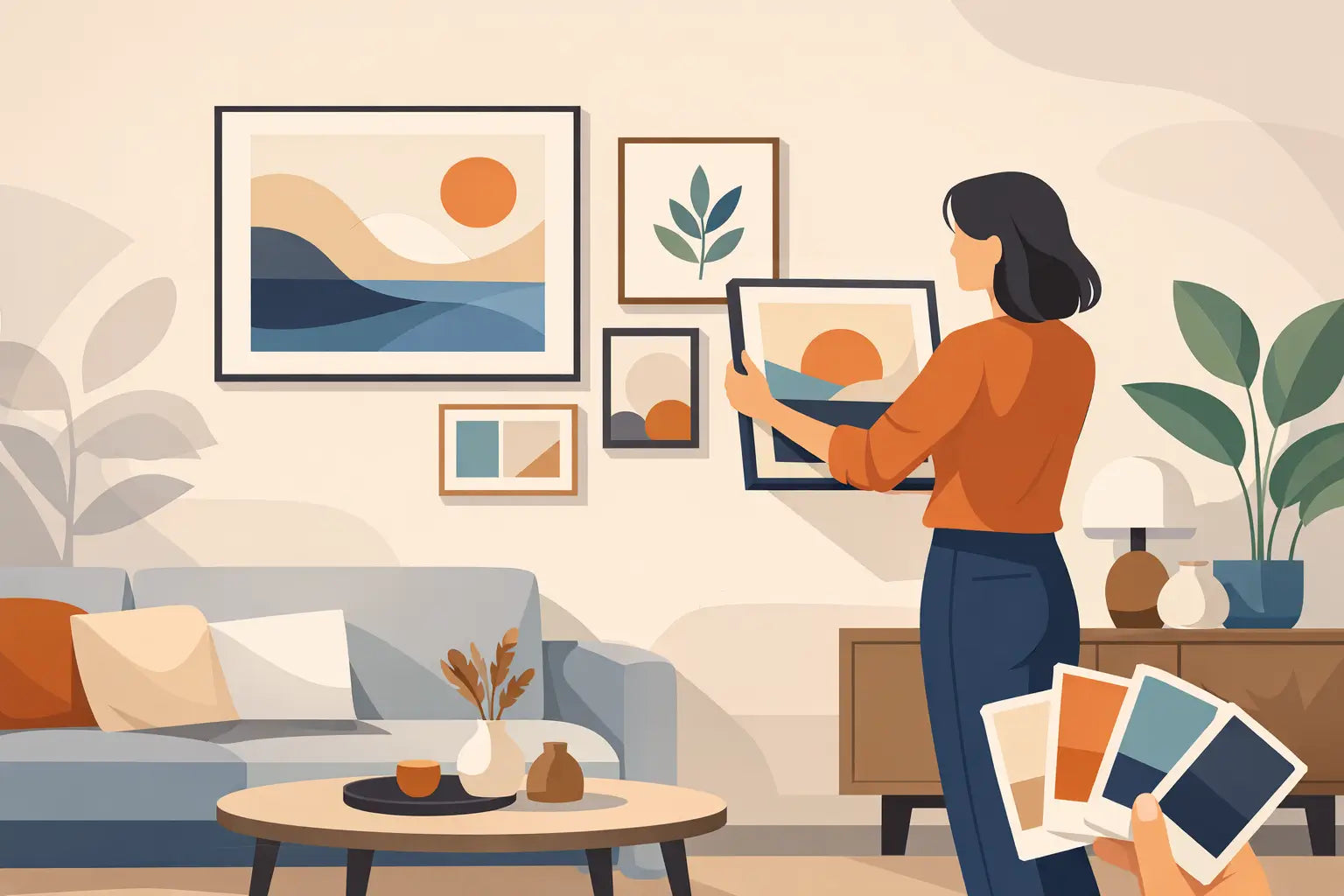
The goal is not to exactly replicate every color of the painting in the room. One or two unifying elements are usually sufficient: the blue of an armchair, the sandy tones of a rug, or a black accent in lamps and fittings. This makes the painting appear carefully chosen rather than randomly placed.
The perfect design for living room, bedroom and hallway
In the living room: Presence with personality
Wall art can be displayed above the sofa. A piece that's too small can easily get lost there, even if the image itself is appealing. As a guideline, a picture or group of pictures should occupy about two-thirds of the sofa's width. On a three-meter-wide sofa, a total width of approximately 180 to 220 centimeters creates a calm and pleasing balance.
Large format Images from Hamburg, new York or California They give the living room a distinct character. They are particularly well-suited to open floor plans and generous wall space. Those who prefer a more tranquil look can choose a photograph featuring a lot of sky, water, or architectural expansiveness. These motifs don't make the room appear smaller and still create a strong visual impact.
In the bedroom: tranquility amidst a wealth of detail.
A relaxed atmosphere is paramount in the bedroom. Motifs of Sylt, the Hamptons or Saint-Tropez They bring a light, elegant holiday atmosphere to the room without becoming overly themed. Photographs with subdued lighting, natural colors, and clear horizon lines are particularly beautiful.
The artwork above the bed should be neither too high nor too small. A single wide piece can elegantly unify the area above the headboard. Two coordinated pictures create a symmetrical, calmer solution. While very intricate gallery walls can be interesting, they can sometimes be too distracting in a room intended for relaxation.
In the hallway and home office: A first and a conscious impression
Hallways are often narrow, functional, and underestimated. A vertical wall mural can emphasize height and transform a passageway into a stylish space.Bright coastal scenes or airy architectural shots create visual depth, while a dark motif against a light wall creates a striking entrance.
When working from home, images should inspire without constantly demanding attention. Abstract wall art, graphic shapes, or a subtle cityscape are often a better choice than highly detailed photographs. Positioning is also crucial: those who frequently participate in video conferences can create a professional and personal atmosphere by placing a carefully framed picture in the background.
Size and format: The wall determines the size and format
The most common uncertainty when buying wall art concerns not the subject matter, but the size. Pictures that are too small can make even high-quality furnishings look unfinished. Too large, on the other hand, isn't automatically a bad thing. A generous format can surprisingly lend a room a sense of calm because it creates a clear focal point instead of having many small accents competing for attention.
Before ordering, a simple test can help: Mark the desired dimensions directly on the wall with painter's tape. Take a few steps back and check the effect from typical viewing angles, such as from the dining table, the door, or the sofa. This will show whether the format convincingly fills the space and whether it maintains sufficient distance from furniture, light fixtures, or doors.
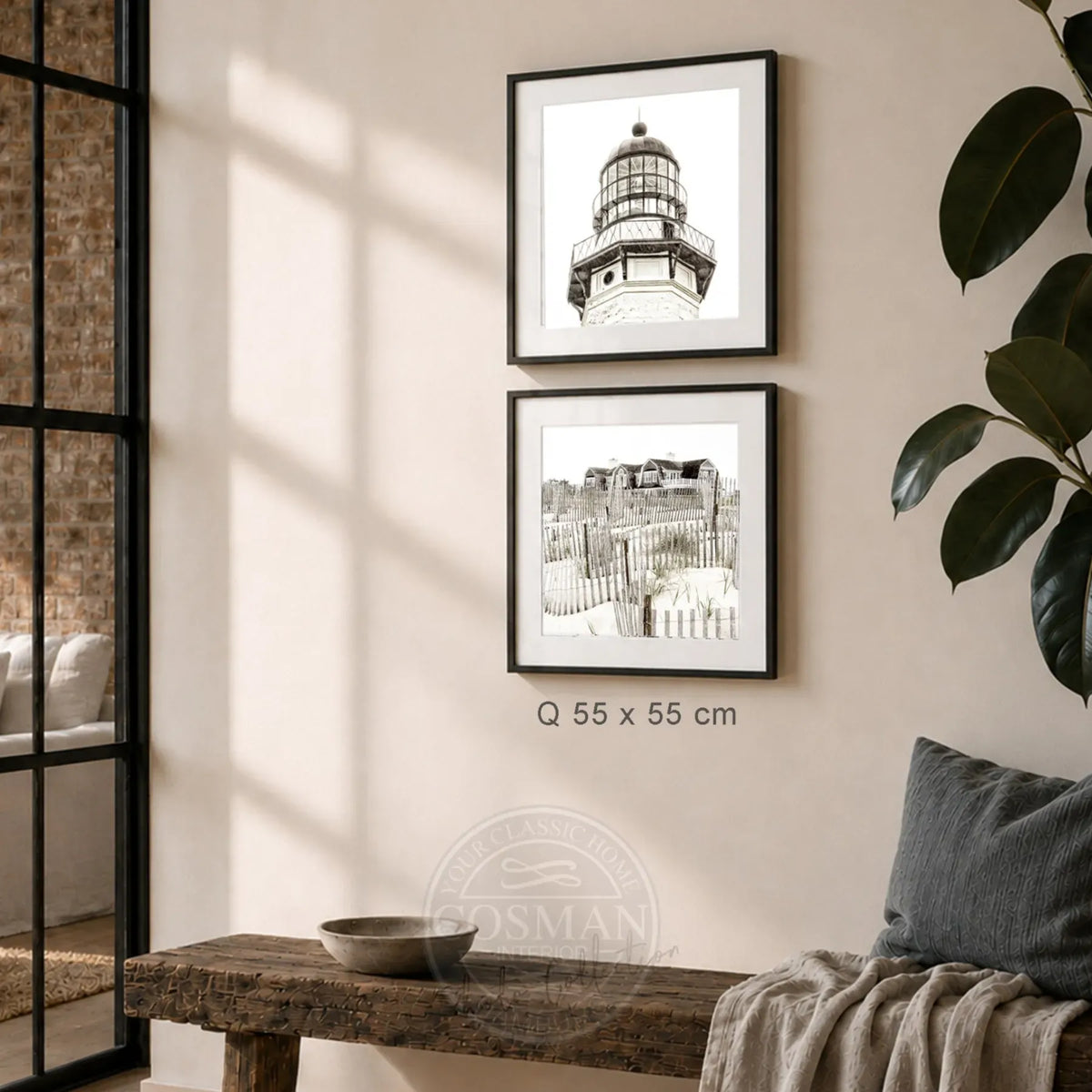
Vertical formats are suitable for narrow wall sections, next to doors, or between two windows. Horizontal formats emphasize the width of a sideboard, bed, or sofa. Square pictures appear calm and contemporary, especially as a single piece or in a pair. Panoramic formats are most effective above long pieces of furniture and are a perfect match for motifs featuring the sea, beach, skyline, or expansive landscapes.
When creating a gallery wall, it's less important that all the frames are identical, but rather that a unifying principle remains recognizable. This could be a common theme, such as coastlines and travel, a recurring color palette, or a consistent frame style. Different formats are welcome, provided the spacing is consistent and the grouping is conceived as a single composition.
Frames and acrylic glass make the difference
A high-quality print gains considerable presence through a suitable frame. The frame is not merely an edge, but connects the image to the interior. Black frames create precise contrasts and are well-suited to modern, urban spaces. Natural wood evokes a warm and inviting atmosphere. White frames make light-colored images appear airy and can deliberately recede into the background against colored walls.
The style of the subject also plays a role. A black and white photograph takes on a graphic, clean look with a narrow black frame. A sunny shot from Florida or the Côte d'Azur often appears particularly relaxed in a light or natural frame. For a calm, high-quality overall look, the frame color should complement existing materials, such as wood surfaces, metal accents, or door handles.
Acrylic glass protects the image surface and promotes a clean, modern presentation. This is a practical advantage, especially in frequently used living areas, hallways, or commercial spaces. At the same time, the subject remains the focus when the glass, mat, and frame are chosen in harmonious proportions.
Cosman Photocollection offers a complete, ready-to-hang product consisting of a photo print, handcrafted frame, acrylic glass, and hanging hardware. This eliminates the often underestimated search for a suitable frame, cutting, and mounting – and ensures that the finished product looks as good on the wall as the chosen image.
Position it correctly so that the image looks natural.
A good rule of thumb is that the center of the picture should hang at approximately eye level, often between 145 and 155 centimeters from the floor in living rooms. Above furniture, the picture can be hung slightly lower, as it forms a cohesive design with the sofa, sideboard, or bed. A distance of about 15 to 25 centimeters from the edge of the furniture often creates a balanced look.
When hanging multiple pictures, the center point of the entire group is crucial, not the center of each individual frame. First, lay the arrangement out on the floor or mark the outer edges on the wall with paper. This small preparatory step prevents uneven spacing and last-minute compromises when hanging the pictures.
Lighting also deserves attention. Direct sunlight can alter colors over time, while a well-placed spotlight or indirect wall light emphasizes depth and texture in the artwork. In very dark hallways, wall art particularly benefits from a focused light source – a good picture shouldn't just be there, it should be seen.
Therefore, don't choose the wall art that looks best on its own, but rather the one that provides a clear, fitting focal point for your room. When the motif, format, and frame work together, a wall surface becomes a part of your home that you'll want to linger over.