Wall art trends 2026 for stylish rooms
A generous picture above the sofa doesn't just change a free wall. It sets the direction of view in the room, gives colors a frame and tells something about the people who live here. The wall art trends of 2026 clearly show that what is needed are not just any gap fillers, but rather motifs with atmosphere, formats with presence and workmanship that does justice to the room.
It's not about following every development. A picture should still be convincing even if the pillowcases, lights or carpets change. The most beautiful current trends therefore combine contemporary design with motifs that permanently create a special atmosphere.
Wall art trends: More personality, less arbitrariness
The furnishings are put together in a calmer, more individual and more conscious manner. Instead of lots of small decorations, a striking mural takes center stage. It can evoke a memory of a beloved place, trigger wanderlust or add warmth to a clearly designed room. What is particularly in demand are shots that do not appear to be a quick snapshot, but rather capture a place in its characteristic lighting atmosphere.
Travel-inspired photo art fits this desire for personality. A wide coastline, a sunny pool in Florida, the architecture of New York or a familiar view of Hamburg bring a world of their own into the room. The selection is crucial: If you choose a motif that you have a real connection to, you will enjoy it for a much longer time than a picture that only follows a short-term color.
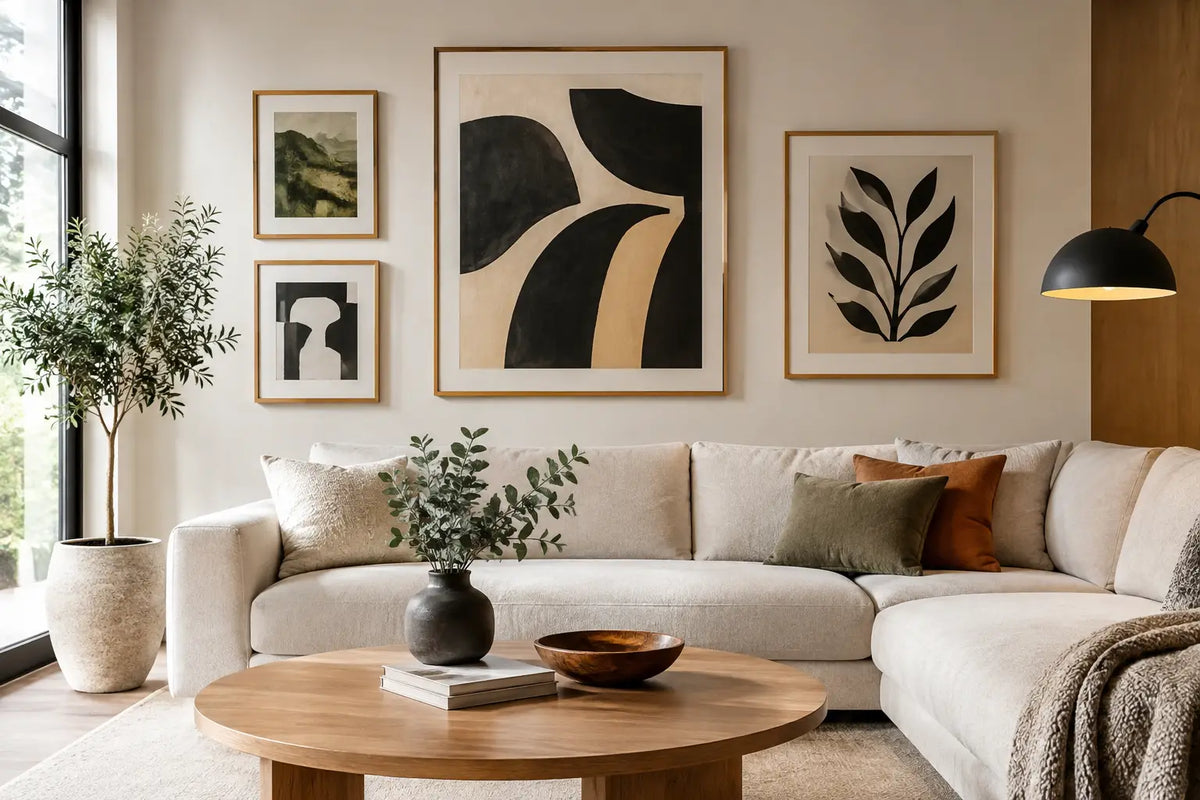
At the same time, abstract wall art remains relevant. It is the right choice if architecture, materials or furniture shapes are to be the focus. Soft surfaces, graphic structures and subtle contrasts complement modern rooms without competing with them. Abstract motifs work particularly well in dining areas, hallways and studies, where they create order and visual calm.
Large formats create an immediate impact
A clear trend is towards larger images. A single large-format work above a sideboard or sofa often appears to be of higher quality than several frames that are too small. It gives the wall something to do and makes even rooms with minimal furnishings appear complete.
As a guide, the image above a piece of furniture should be approximately two-thirds to three-quarters of its width. A mural that is around 160 to 180 centimeters wide can be very harmonious over a 240 centimeter wide sofa. This rule is not a must: in old buildings with high ceilings, a format can deliberately be narrower and higher. In compact rooms, however, a horizontal coastal motif creates visual space.
However, large formats require quality. Fine details, clear depths and balanced colors are more noticeable in a mural than in a small poster. High-quality photo paper, precise printing and acrylic glass ensure that motifs appear brilliantly and protected. Careful framing also gives the image the presence that a generous format requires.
One image as an eye-catcher or several as a composition
Individual hanging is ideal when a motif carries a strong story: a Beach house in the Hamptons, palm trees in front of Californian light or an urban skyline. It makes the picture work without the need for additional decoration.
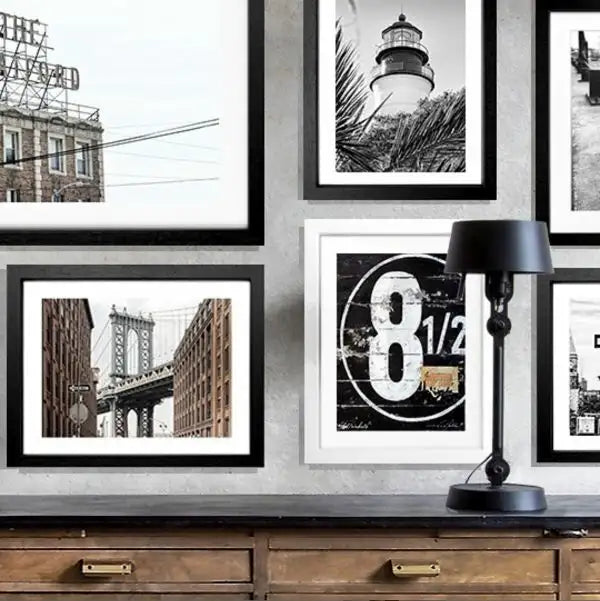
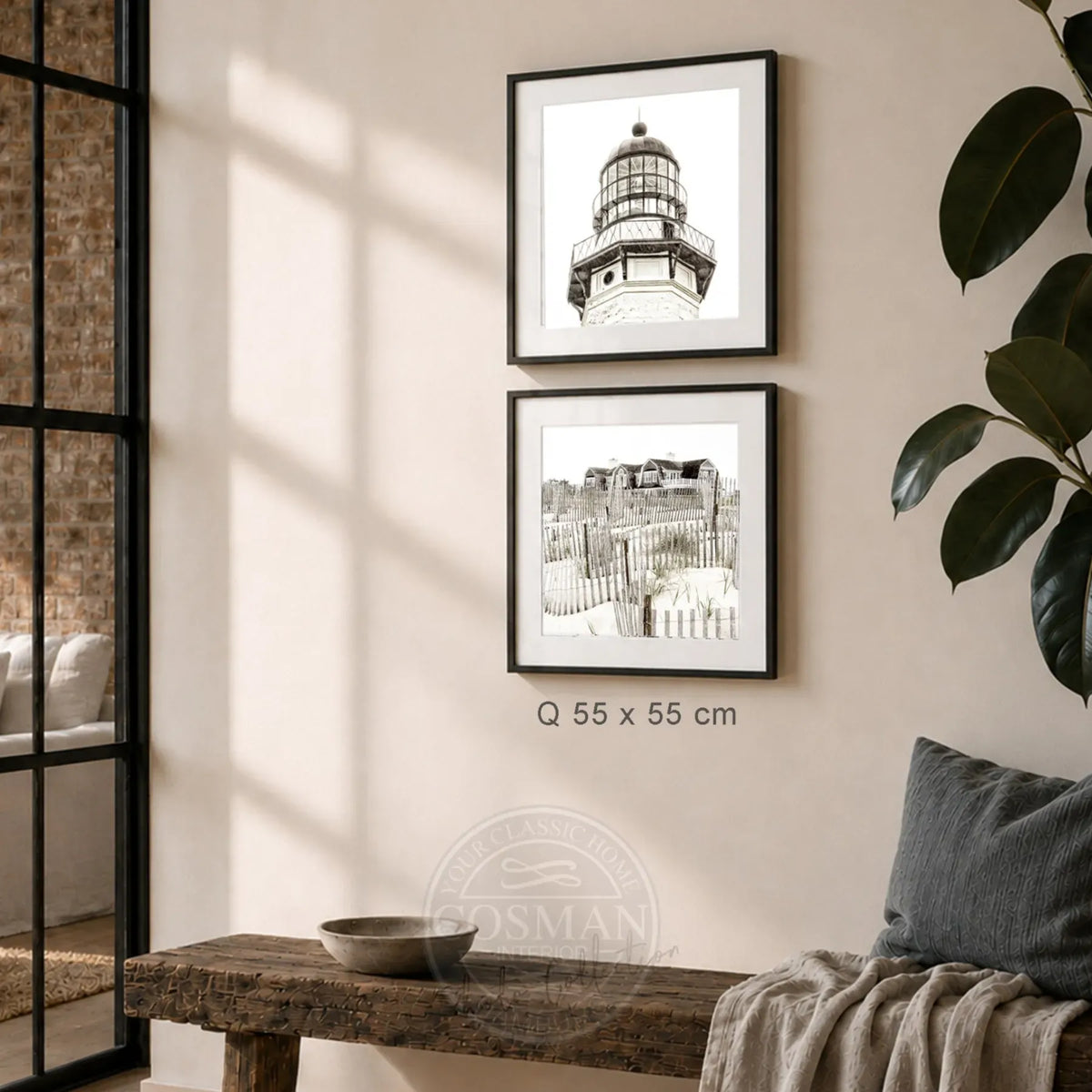
A picture wall also remains modern, but in 2026 it appears more orderly than before. Instead of many randomly thrown together formats, harmonious series of two to four images are created. They are connected by a common theme, a similar color scheme or the same frame. For example, several views of a destination can tell an elegant travel story on the wall. If you are planning a picture wall, you should lay out the arrangement on the floor before hanging it up or test it with paper formats on the wall. This prevents gaps that later appear unsteady.
Coast, city and familiar places of longing
Places remain one of the strongest themes in contemporary wall art. The view shifts away from the obvious souvenir and towards a sophisticated, atmospheric perspective. It's not the well-known landmark alone that counts, but rather light, composition, architecture and the mood of a moment.
Coastal motifs are particularly versatile. They naturally fit into holiday homes and apartments by the sea, but also bring peace and openness to a city apartment. Bright dunes, sailboats, beach architecture and water surfaces harmonize with natural wood, linen, sandy tones and cream-colored walls. A Motif from Sylt or Saint-Tropez can seem summery without being seasonal when presented in a clear, high-quality frame.
City motifs set a different accent. Hamburg connects Hanseatic clarity with water and historical architecture. New York brings rhythm, height and graphic energy to lofts or modern workspaces. Black, dark or narrow frames are particularly suitable for these motifs because they capture lines and contrasts precisely. In a more classic interior, however, a warm wood tone can pleasantly balance the severity of a skyline.
The color world becomes calmer and more durable
When it comes to wall art trends 2026, nuances take precedence over loud signal colors. Sand, off-white, smoky blue, sage green, deep navy and warm brown tones fit easily into many interiors. This does not mean that an image has to be colorless. A rich blue, coral or sun-warm yellow can liven up a room if this color is deliberately placed in the motif and does not dominate the entire interior.
If you are planning a wall color, you should include the picture in the decision early on. On a white wall, a dark motif appears graphic and precise. Light beach motifs appear softer and more homely on warm beige. Dark walls can frame art particularly impressively, but require sufficient light and a motif with clear, bright areas. Otherwise the image will lose depth.
A practical approach is to use a color from the image only once or twice in the room, for example in a pillow, a vase or the spine of a book. More repetition can quickly seem too decorated. Wall art can connect a room without everything having to be exactly color coordinated.
The frame is part of the design
A high-quality frame is not an afterthought. He decides whether a motif looks like a loose poster or a finished furnishing element. Especially with photographic wall art, it creates distance from the wall, frames the colors and supports the desired style.
Black frames are timeless and go well with architectural shots, black and white photography and high-contrast coastal motifs. White frames appear light and are suitable for bright, airy rooms. Natural wood brings warmth to minimalist interiors, while dark wooden frames confidently complement classic furniture and bold wall colors. The best choice depends less on a general rule than on the interaction with the floor, furniture and lights.
The material before printing also deserves attention. Acrylic glass protects the surface and gives the picture a clear, elegant appearance. In rooms with a lot of daylight, careful placement still makes sense: direct, strong sun can put a long-term strain on colors and materials. A bright place without constant sunlight is usually ideal.
Ready-to-hang wall art saves planning steps
The effect of a picture only emerges on the wall. This is exactly where the difference between an idea and a successful facility becomes visible. Organizing printing, matching frames, protection and hanging separately takes time and easily leads to deviations in size, color or quality.
A ready-to-hang solution takes these steps away. At Cosman Photocollection, motifs are made on high-quality photo paper, framed by hand and supplied with a hanging device. This is particularly helpful if a room needs to be finished quickly and harmoniously before moving in, renovating or furnishing a holiday property.
Before hanging it up, it's worth doing a quick check: in living rooms, the center of the picture is usually at a height of around 145 to 155 centimeters. The picture can hang a little lower over a sofa or sideboard so that a visible relationship to the furniture is created. A distance of around 15 to 25 centimeters is often appropriate. If you have multiple images, the gaps should remain consistently the same.
A carefully chosen mural does not have to prove a trend. It can make the room quieter, awaken memories or offer a small change of perspective every day. If the motif, format and frame match, a free wall becomes a place where you like to look for a longer time.


