How much does custom wall art really cost?
A blank wall above the sofa, bed or dining table rarely calls for any picture. It needs a motif, a format and a framing that visibly bring the room together. How much does custom wall art cost? The honest answer is: it's not just the picture itself that decides, but above all the quality of the execution - from the print to the size to the frame and the ready-to-hang delivery.
Custom wall art can start with a manageable amount or become a defining investment in a room. What is important is what is meant by “individual”: a curated motif in the desired format, a picture with suitable framing or a completely original photograph. If you know these differences, you can plan your budget more safely and end up with a work that doesn't seem like an interim solution.
How much does custom wall art cost? The short answer
For a high-quality art print in a smaller format without complex framing, around 40 to 100 euros can be realistic. A framed mural in a popular living format often costs between 150 and 400 euros. For large special formats, handmade frames, acrylic glass or a design for spacious rooms, 400 to 800 euros and more are quite understandable.
These ranges are deliberately wide. A small print can be cheap, but it hardly changes the effect of a spacious old building wall. Conversely, not every guest room needs a large-format statement. The right price results from the interaction of space, desired presence and material quality.
Four typical price levels
An unframed print is the cheapest option. It is suitable if suitable frames are already available or one loose picture wall should arise. However, there are often additional costs for framing, passe-partout and hanging.
A framed art print in a standard format is the balanced solution for many living spaces. It combines a carefully selected motif with a finished, clear presentation and saves you from having to run multiple individual errands.
At Custom wall art the price increases with the format and the level of craftsmanship involved. This applies, for example, to an unusually narrow portrait format for a hallway, a wide motif above a sideboard or a large-format picture for the holiday home.
The highest level includes very large formats, special glazing, complex frame profiles or production with your own photo. The focus here is not just on decoration, but rather on a permanent furnishing element with a strong spatial effect.
These factors determine the price
The format is more than a measurement
Size affects material usage, printing time, packaging and shipping. Above all, however, it changes the effect. A 30 x 40 cm picture can look convincing on a shelf or in a small niche. On the other hand, it usually seems lost over a three meter wide sofa.
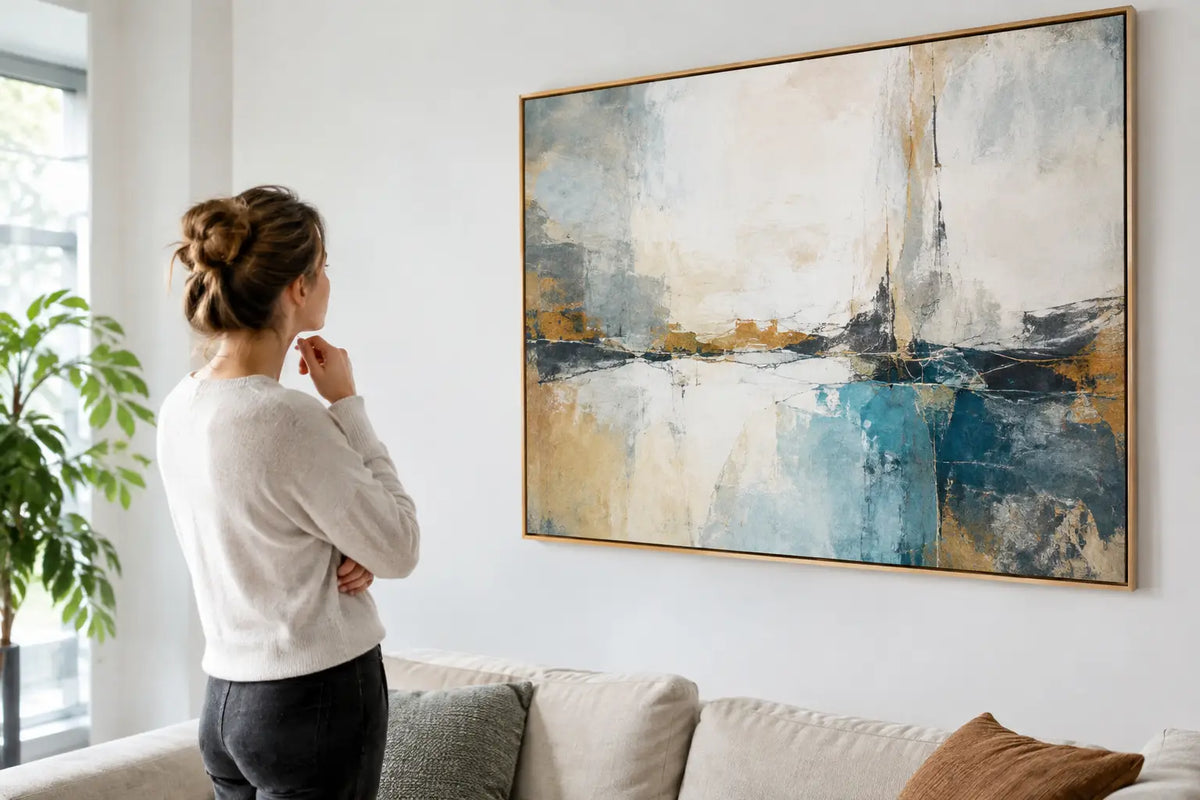
Large murals cost more, but can completely decorate a wall with a single, precisely chosen accent. This is often more economical and quieter than many small, randomly combined images. Panoramas of Hamburg, California or the coast are ideal for wide areas. Vertical motifs, such as architecture, palm trees or a graphically reduced abstract design, work particularly well in high entrance areas.
The printing material determines depth and durability
A high-quality photo print on good paper reproduces colors, contrasts and fine details in a much more differentiated manner than a simple poster production. This is particularly relevant in photographic wall art: light on the water off Sylt, the structure of a facade in New York or the gentle color transitions of a sunset thrive on precise reproduction.
Cheap prints can seem similar at first glance. However, in a direct comparison, differences often become apparent in black areas, skin tones, sharpness and color stability. If you choose wall art as part of your furnishings and want to look at it for years to come, you should not treat the print material as an afterthought.
The frame turns a print into a piece of furnishings
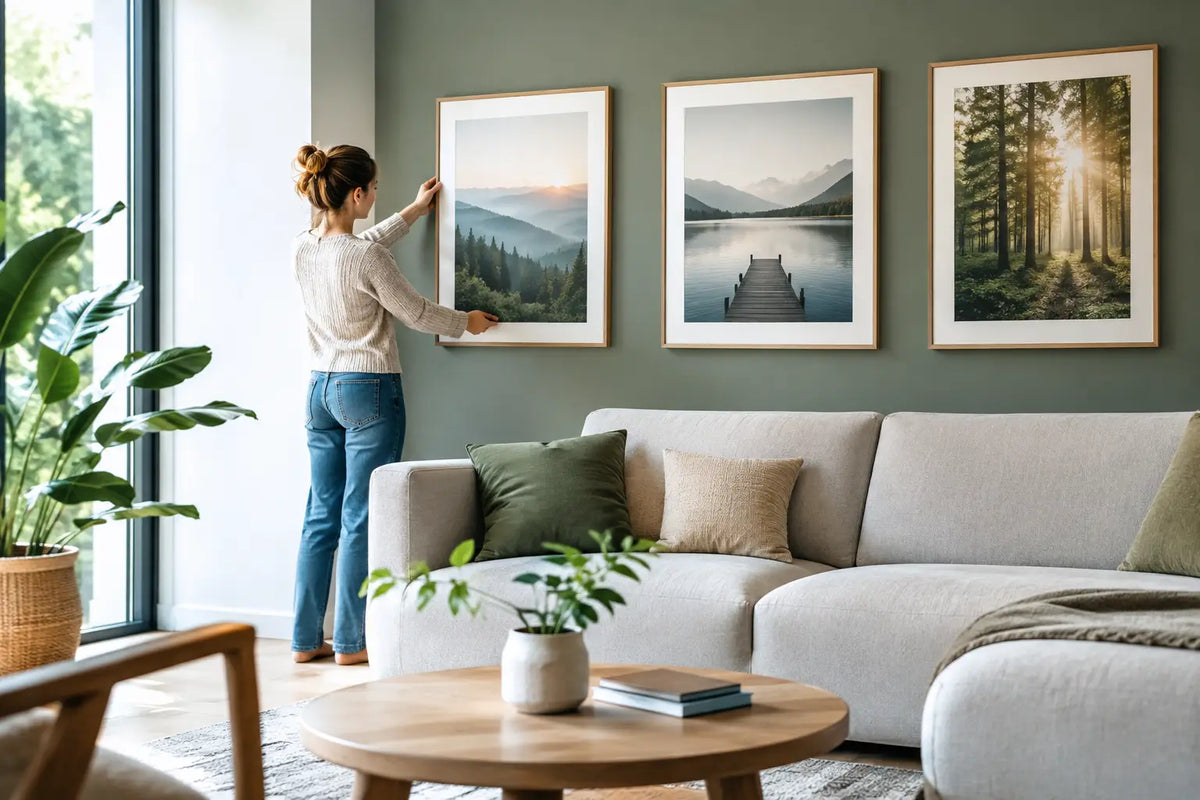
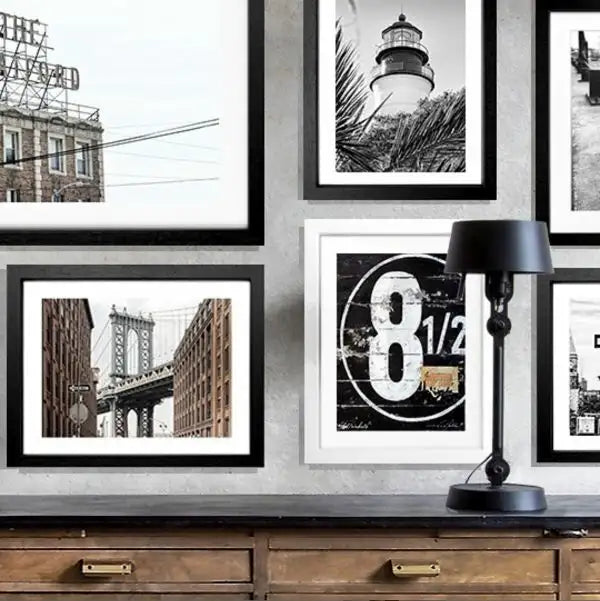
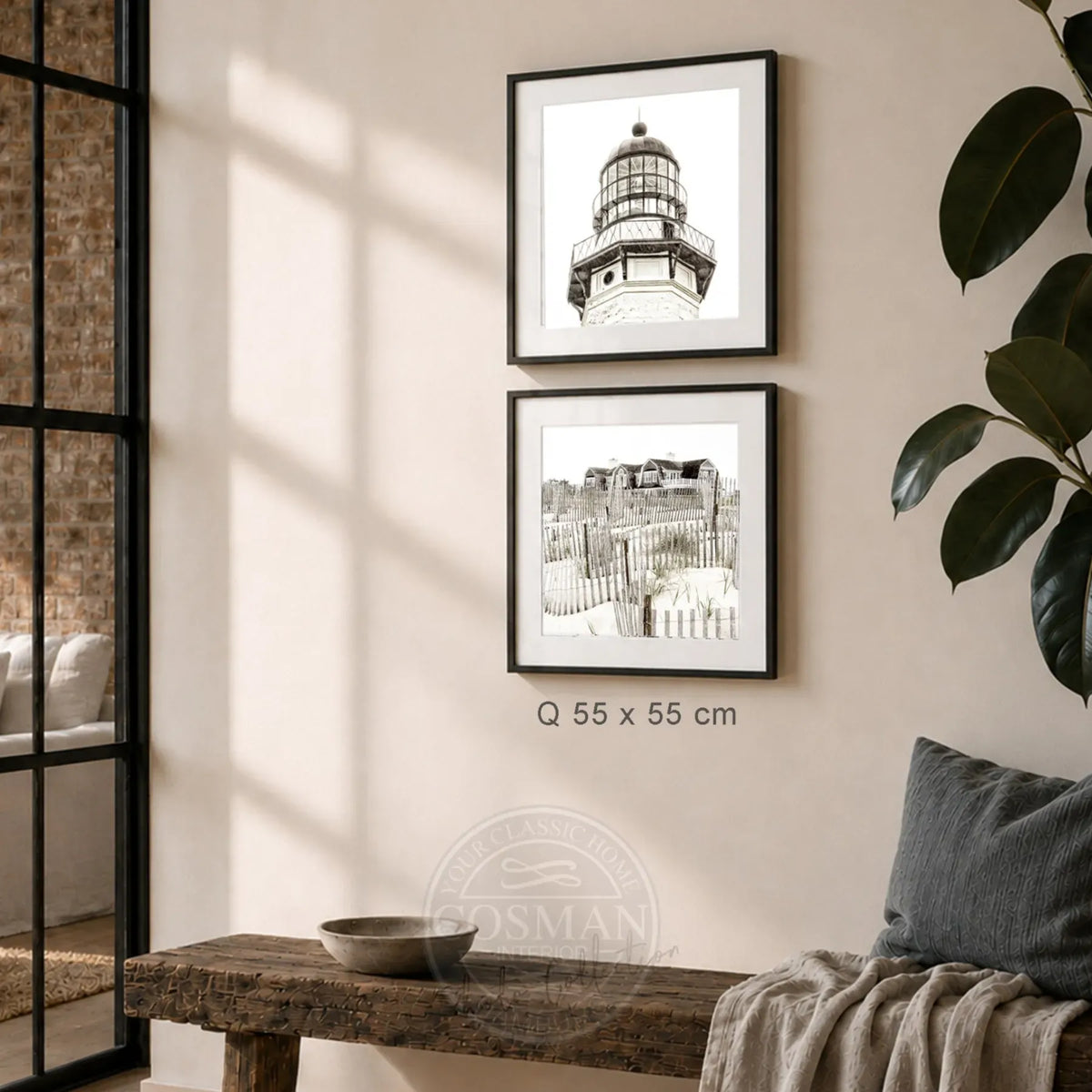
A frame is not just an accessory. Its color, width and surface direct the eye and decide whether a motif appears modern, classic, light or striking. A narrow black frame emphasizes a clear, urban imagery. Light wood looks bring warmth to rooms with natural materials. White can add calm to a colorful subject, while a bolder profile adds presence to a large image.
When it comes to high-quality wall art, precise framing is therefore part of the product. Handcrafted frames and neatly finished corners come at a price, but they also avoid the typical compromise of buying a nice print and then searching for a frame that neither fits properly nor has the desired effect.
Acrylic glass and protection influence appearance and budget
A cover protects the print and gives it a finished, high-quality appearance. Acrylic glass is light and shatterproof, which can be an advantage, especially in larger formats, family households or commercial spaces. It usually costs more than a simple solution, but contributes to a clear presentation and a long-lasting result.
Whether it is necessary depends on the location. In a quiet home office, a classic framed print may suffice. In a heavily used hallway, holiday property or café, additional protection is often a sensible decision.
What “individual” means in practice
Not every custom wall art has to be its own photo. Individuality often arises by choosing a curated motif exactly for the room: the right size, a frame in the right color and an image that captures a personal location or a desired atmosphere.
A Saint-Tropez motif can add summery lightness to a bright dining room. A Hamburg scene brings local connection to a city apartment. An abstract art print can pick up colors from carpet, curtains, or upholstery without filling the room with too much detail. This form of customization is usually easier to plan than a completely custom-made product with your own images.
When it comes to your own photos, another factor comes into play: the technical quality of the file. The resolution must be sufficient for large prints. A smartphone photo can look great in a small format, but lose sharpness for a large mural. Image checking, editing and possible adjustments to the cropping can increase the effort and therefore the price.
Where saving makes sense - and where it doesn't
Choosing a smaller format can make sense if the picture is part of a group of pictures or is intended to complement a narrow wall. You can also prioritize wisely when it comes to frame color: a timeless tone that goes well with several furnishing styles remains harmonious for longer than a trend that seems outdated after a short time.
It makes less sense to save on framing and hanging if the picture is intended as a single eye-catcher. A high-quality print quickly loses its effect if the frame is unstable, the glass is reflective or has to be improvised later. If you add up the print, frame, accessories, time and possible bad purchases, a completely finished mural is often the clearer calculation.
At Cosman Photocollection, the print, handmade frame, matching suspension and glazing are thought of as a complete product. This makes the decision easier, especially if a room needs to be completely furnished without any detours.
Plan the budget according to space
Wall art may be visible in the living room. Here it is often worthwhile to invest a larger part of the budget in a concise, framed format. The image creates a focus and can connect colors and materials in the room.
In the bedroom, quieter motifs and a softer color effect are often more appropriate. Instead of maximum size, the atmosphere counts here. A medium-sized, high-quality framed picture above a dresser or opposite the bed can be sufficient.
Hallways benefit from formats that reflect their architecture. A narrow portrait format can emphasize height, while two coordinated images structure a long hallway. In holiday apartments or commercial spaces, in addition to aesthetics, durability should also be taken into account: secure hanging, protective glazing and a frame that looks well maintained over the long term are particularly worthwhile there.
The better question to ask before buying
Instead of just asking how much individual wall art costs, it helps to think more specifically: What effect should this wall have every day? A good picture doesn't have to explain the whole room. It can awaken memories of Hamburg, create wanderlust for the Hamptons or give a reserved interior just the accent that was previously missing.
Therefore, first choose the location, then the desired feeling and only then the format and frame. This turns a price question into a decision for a mural that is not only delivered, but really resonates in the room.