Choose image motifs based on the spatial effect and shape rooms
A picture above the sofa is never just decoration. A wide horizon can add air to a compact living room, a tranquil beach shot brings balance to a busy home, and a nighttime city scene adds presence to a dining area. If you want to choose image motifs based on the spatial effect, you should not only decide based on personal taste, but also on the atmosphere that you want to create in the room.
The best wall art draws on existing colors, lights, and materials without competing with them. It sets a conscious accent and at the same time makes the room appear more harmonious. This applies to an old apartment in Hamburg as well as a modern townhouse, a holiday apartment on the coast or a professionally furnished reception area.
Choose image motifs based on the spatial effect: the room dictates the direction
Before choosing a motif, it is worth taking a look at the function of the room. Is this where you relax, concentrate, eat or receive visitors? An image may support this use. The effect arises from several levels: motif, perspective, color, format and framing always work together.
Bright, open motifs convey spaciousness. Darker photographs with clear contrasts create depth and character. Organic lines and gentle color transitions appear calm, while architecture, graphic structures or a striking skyline bring energy into the room. There is no one-size-fits-all right choice. A quiet bedroom can certainly support an expressive photograph if the rest of the furnishings remain minimalist. Conversely, a living space that is already rich in color often benefits from a restrained motif.
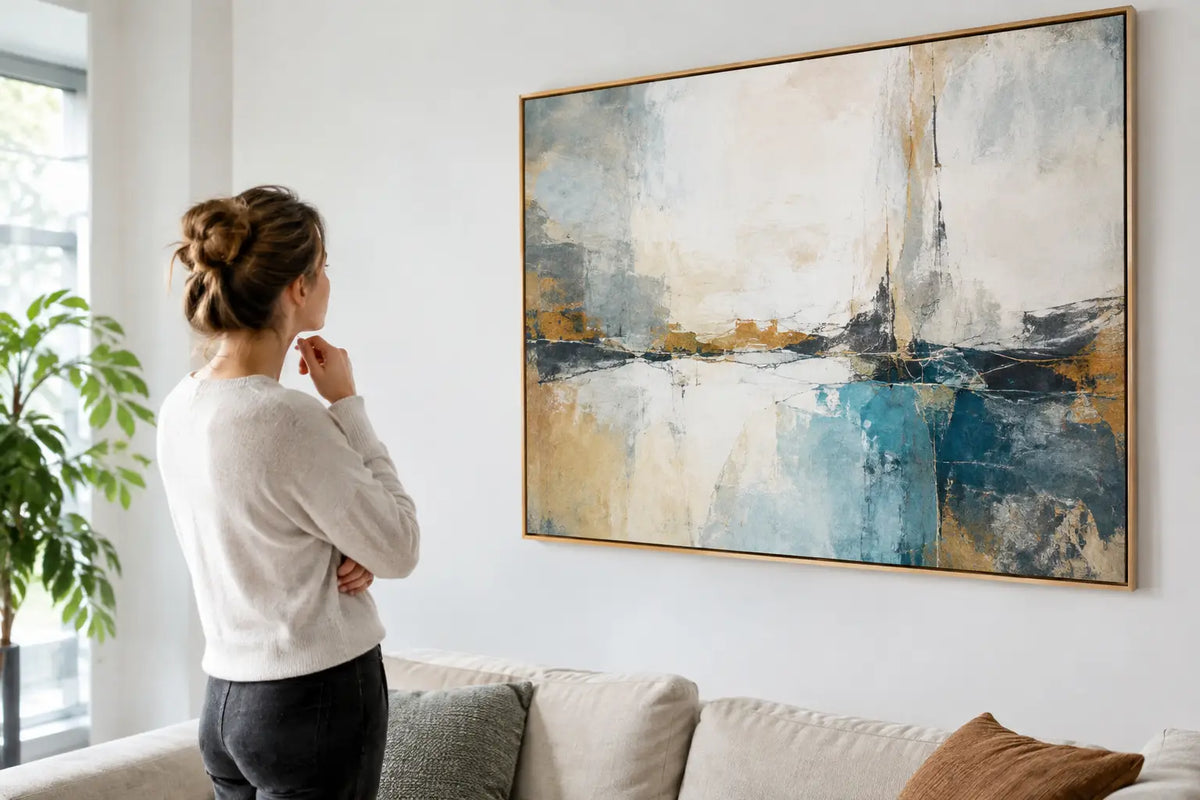
The wall itself also deserves attention. On a large, open area, a picture can appear spacious and create a clear line of sight. Above a sideboard, bed or sofa, the width of the motif should correspond to the piece of furniture. Formats that are too small disappear quickly, while a large-format framed picture immediately gives a room structure.
More width for small and narrow rooms
Small rooms don't necessarily need small art. What matters is whether the picture opens up visually or adds additional density to the wall. Landscapes with a wide perspective, coastlines, calm sea motifs and photographs with a visible horizon take the view into the depths. They make a wall appear less closed and the room appear more spacious.
Bright motifs with sand, sky, water or light architecture are particularly effective. A shot of Sylt with a wide beach, a clear coastal scene from California or a light-filled view of the Hamptons brings openness without visually weighing down the room. In a narrow hallway, a portrait format can draw the eye upwards and thus emphasize the height of the room. Above a low piece of furniture, however, a landscape format visually expands the wall.
You don't necessarily have to avoid dark motifs. They work in small rooms when used in a targeted manner, such as on a single accent wall or in combination with light-colored furniture. For example, a deep blue sea motif can give a compact guest room an elegant, almost hotel-like feel. It is important that the frame does not make the picture unnecessarily heavy. Light or natural-colored frames keep the overall effect light, while narrow black frames provide a more precise, modern contrast.
The distance makes a difference
A large subject needs sufficient viewing distance. In a narrow hallway, a detailed image in a small format can be more convincing than a large scene that cannot be captured. In living rooms, the opposite often applies: If you look several meters at the wall from the sofa, you should choose a format that has presence even from a distance.
Create peace in the bedroom and retreat area
A bedroom doesn't have to be colorless, but it benefits from motifs that don't constantly demand attention. Gentle coastal landscapes, pastel skies, calm water surfaces or abstract compositions with soft shapes support a relaxed atmosphere. Images in beige, sand, foggy gray, sage or muted blue blend particularly harmoniously with natural textiles and reserved materials.
Here, a single, spacious picture above the bed often appears to be of higher quality than many small frames. It creates a calm focal point and makes the wall appear tidy. For a wide bed, a panoramic format can accommodate the horizontal line. In rooms with high ceilings, a vertical motif creates an elegant counterpart.
If you want a personal travel connection, you can choose a quiet street scene instead of a classic nature photo. A morning view of Saint-Tropez or subtle coastal architecture speaks of wanderlust without transforming the room into a holiday setting. The imagery should be atmospheric rather than loud.
Energy and conversation piece for living and dining areas
Wall art can be more present in the living and dining room. These spaces are meeting places and the subject can show personality. Photographs of New York, Miami, Hamburg and California set urban and international accents. They go particularly well with clear furniture, dark wood, leather, glass or metal. A skyline can appear modern and confident, while a beach house, a pool motif or a Mediterranean facade convey more lightness.
The decisive factor is the desired tension in the room. If the interior is kept in neutral tones, the picture can add color, movement or contrast. A rich blue, warm orange or a bright sunset then becomes an eye-catcher. If there are already patterned carpets, colored upholstery or eye-catching lights, reduced black and white photography or a calm abstract design creates a better balance.
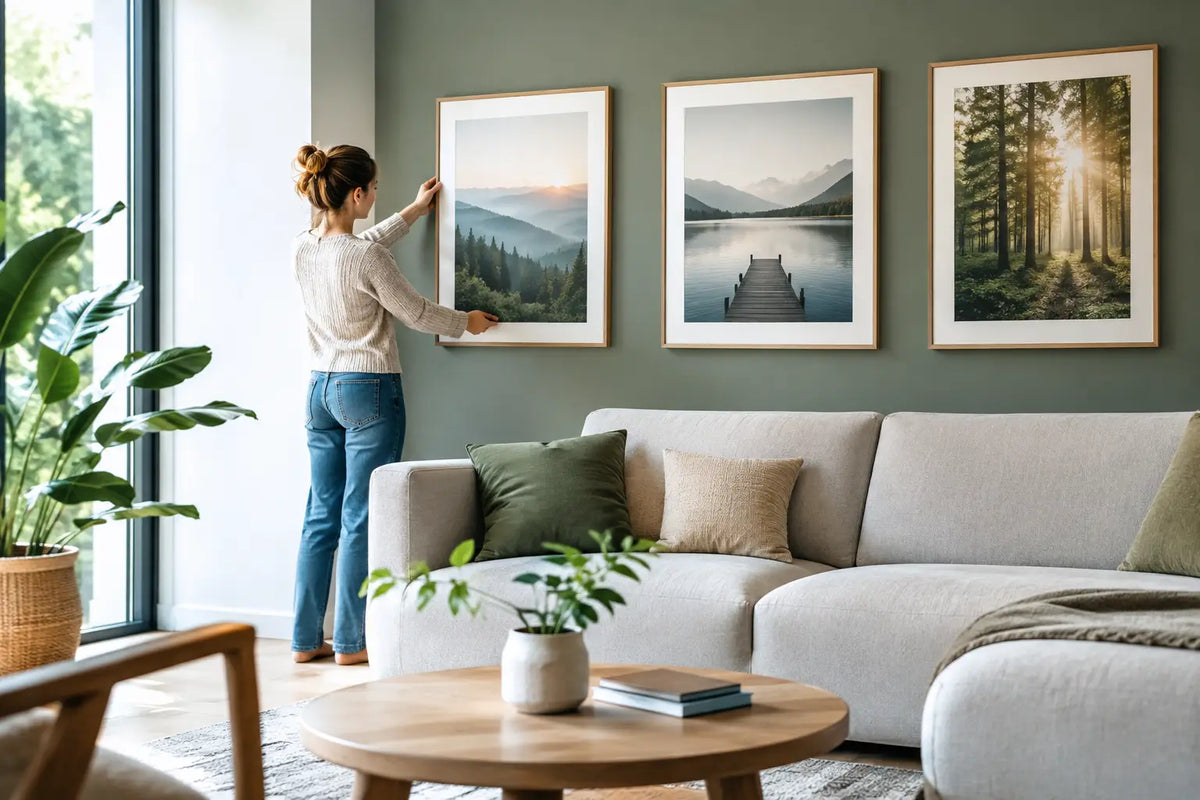
Motifs with clear compositions work particularly well above the dining table. They remain readable in changing daylight and give the room character even when the table is not set. Multi-part hangings can be attractive, but require very precise planning. If you are looking for an uncomplicated, elegant solution, a large framed picture will usually have a stronger effect.
Concentration in the home office and in commercial spaces
In the study, an image should inspire without constantly demanding attention. Architectural photography, minimalist coastal motifs or abstract works with an orderly color world create a professional background. Especially for video calls, it is worth deliberately placing an image behind or to the side of the workstation: it looks high-quality without looking like a decorative backdrop.
Motifs with a clear attitude are suitable for law firms, practices, studios or reception areas. A Hamburg photograph creates local connection, while international destinations convey cosmopolitanism. In more sober spaces, a warmly framed coastal motif can make the atmosphere more approachable. In creative offices, things can be more graphic and contrasting.
Pay particular attention to reflections here. Opposite large window can acrylic glass reflect light depending on the viewing angle. A side placement or a wall with less direct light ensures that the subject is clearly visible at any time of day.
Format, frame and color as part of the overall effect
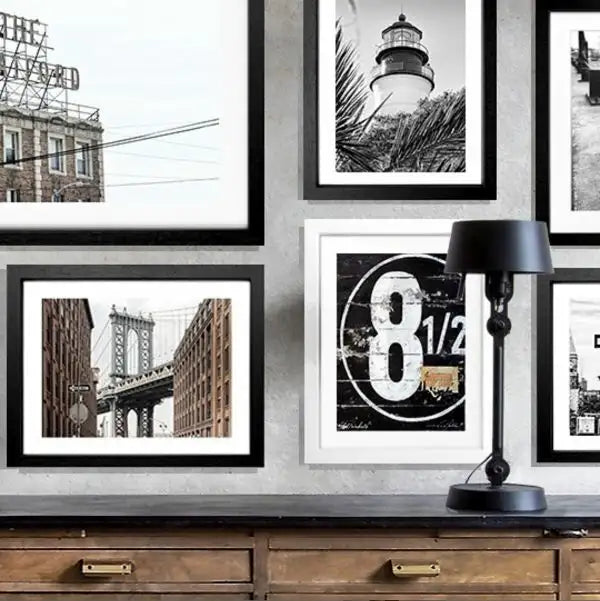
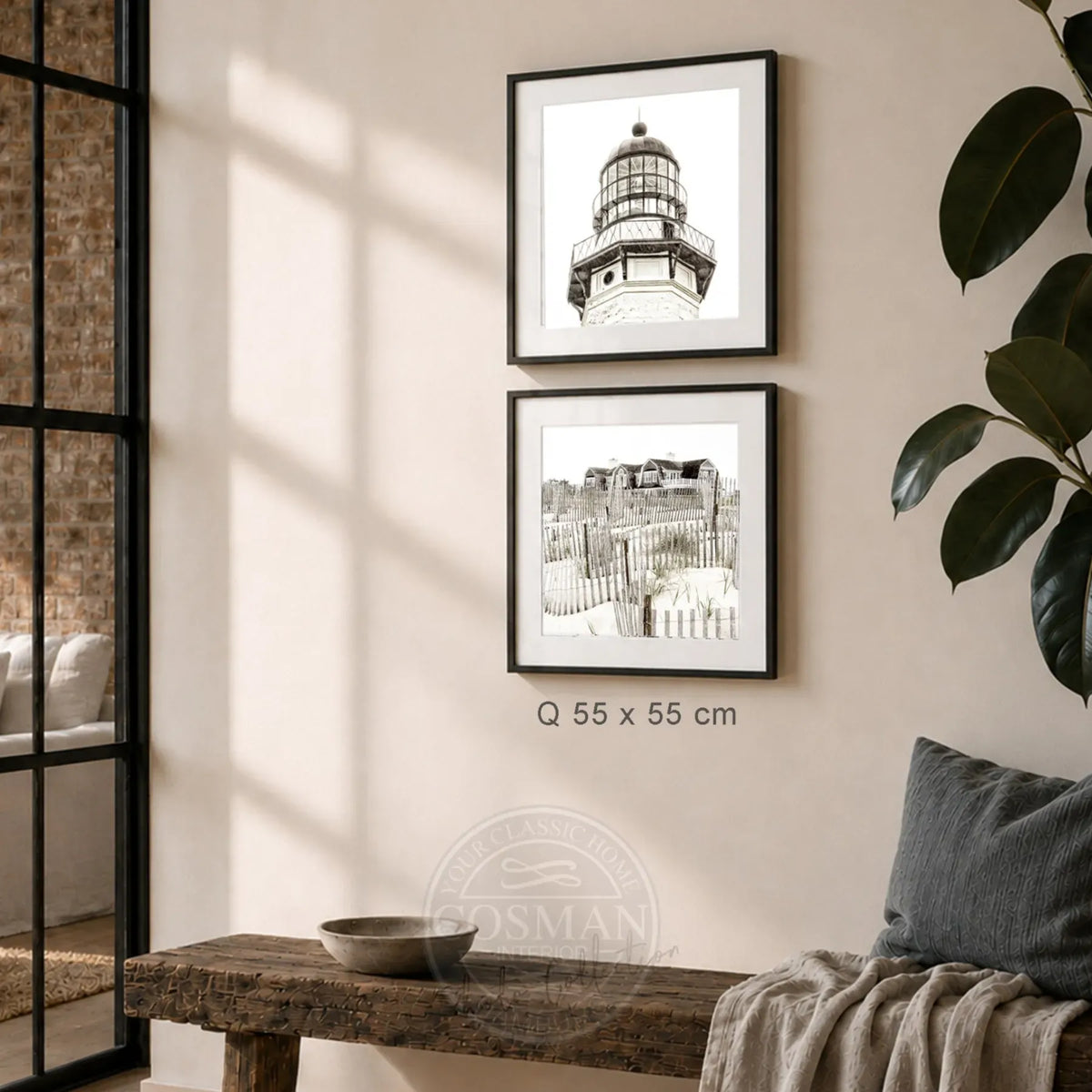
The motif attracts the eye, but the format and frame decide whether it naturally belongs to the room. A large-format art print with a passe-partout can give a classic interior peace and value. A frameless, narrow frame fits well with contemporary interiors. Black frames define contours and add depth to photographs, while white, beige or light wooden frames create a softer effect.
When choosing a color, not every tone has to be repeated exactly. It is much more elegant to pick up a nuance from cushions, curtains, carpet or a piece of furniture. If the room has warm wood tones, a motif with sand, terracotta or late sunlight can subtly continue this warmth. In a cool, modern interior, blue, gray and black provide clarity.
A picture that is framed ready to hang also removes a practical hurdle from the furnishing process. At Cosman Photocollection, high-quality photo prints are hand-framed and supplied with hanging equipment. This makes it easier to concentrate on the crucial question: What mood should this wall convey?
First the line of sight, then the detail
Stand where you see the room most often: on the sofa, at the dining table, in the doorway, or at the desk. The image should develop its effect from there. Only then do details such as frame color or the exact position on the wall come. A well-thought-out line of sight makes wall art not an afterthought, but rather an integral part of the interior.
Ultimately, don't choose the motif that has the strongest effect in isolation, but rather the one that gives your room exactly the quality it is still missing: space, peace, warmth, energy or a touch of wanderlust.