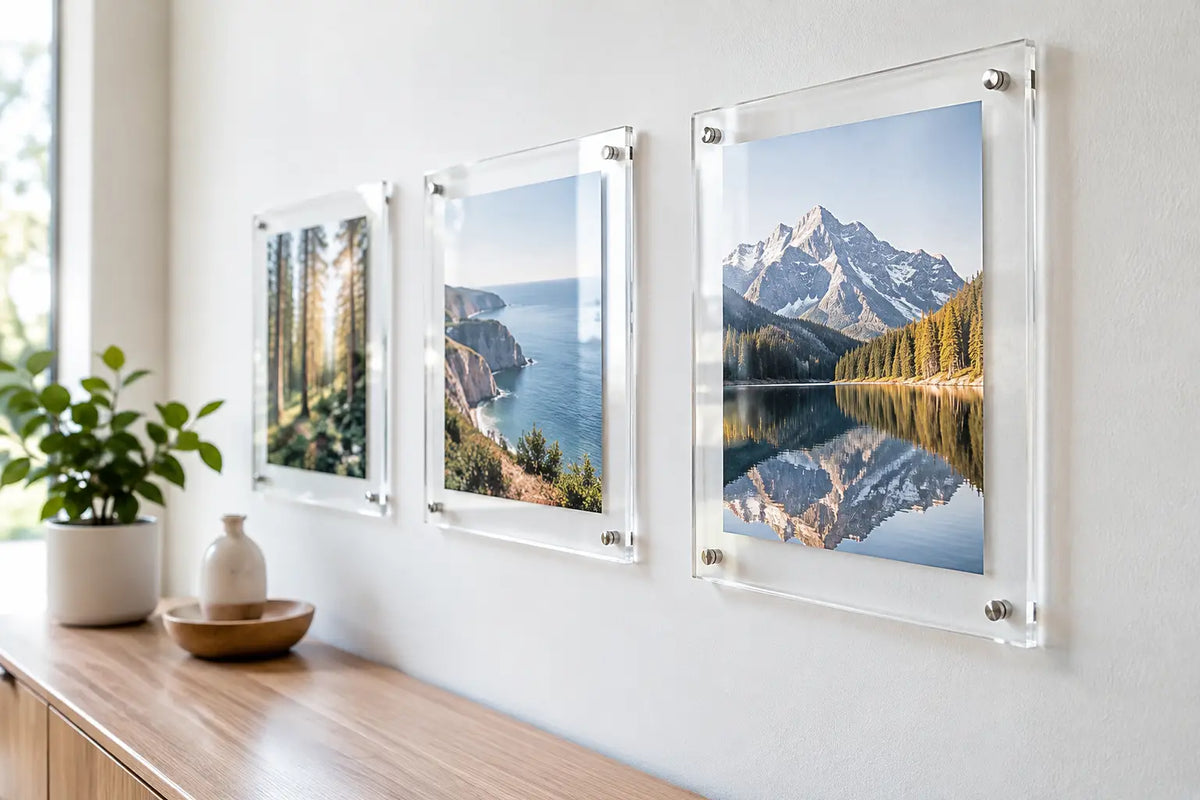
Acrylic glass frames tested for stylish walls
A motif from Sylt, the New York skyline or a calm abstract composition only appears as naturally high-quality as it should if the framing keeps up. An acrylic glass frame in the test is therefore not just about a shiny surface. What matters is how clear the picture appears, how harmoniously the frame is made and whether the work of art is convincing in everyday life as a finished furnishing solution.
Acrylic glass is an attractive alternative to classic glassfor many living spaces. It combines a high-quality, clear image view with a lower weight and a surface that is significantly less sensitive to breakage. This can be a noticeable advantage, especially with large-format wall art, in family households, holiday apartments or representative work areas. But acrylic glass is not automatically the best choice for every motif, every location and every taste. If you choose consciously, you will receive a frame that not only protects, but also gives the room presence.
Acrylic glass frames in the test: What is important
A sensible test does not just look at the material in isolation. An acrylic glass frame is a combination of cover, print, passe-partout or edging, frame profile, back wall and suspension. If one of these elements is chosen carelessly, even a beautiful motif loses its impact.
Image clarity determines the first impression
Acrylic glass can make colors appear fresh, contrasts precise and details clear. Photographs with bright skies, deep sea blues or fine architectural lines particularly benefit from a clean, transparent cover. A Hamburg motif with harbor lights or a coastal shot from California retains its depth instead of receding behind a dull surface.
It's worth taking a look at the lighting conditions in the room. In a bright living room with large windows, light sources can be reflected on smooth surfaces. This is not a quality defect, but rather a property that should be taken into account when placing it. Opposite a window or directly under a strong ceiling light, the reflection is usually stronger than on a side wall. For rooms with changing daylight, a motif often looks particularly harmonious if it hangs slightly offset from the window.
The distance to the image also plays a role. From a normal viewing distance, the surface should recede and the subject should guide the eye. For very large-format works, this calmness is more important than a short-term glossy effect. High-quality framing creates exactly this impression: the picture appears present, not packaged.
Protection, weight and suitability for everyday use
The practical advantage of acrylic glass often only becomes apparent after hanging. Unlike conventional glass, it is less fragile and lighter. This makes installation easier, especially for large formats, and is a convincing option in areas with a lot of movement. The material can be a smart choice in hallways, stairwells, vacation properties or rooms used by children.
Light, however, does not mean arbitrary. A large-format image must be cleanly constructed despite its lower weight. The back wall should be stable, the motif must not wave, and the suspension must match the format. A frame that tilts on the wall or whose image is not flat appears unfinished, even with a first-class photo print.
Acrylic glass also requires careful handling when cleaning. Dust can be removed with a soft, clean cloth. Abrasive materials or unsuitable cleaners can leave fine marks. For most living situations, this isn't a big effort, but there is a difference to consider if, for example, a picture is hanging in a busy kitchen or in the entrance area.
The frame turns a print into a furnishing element
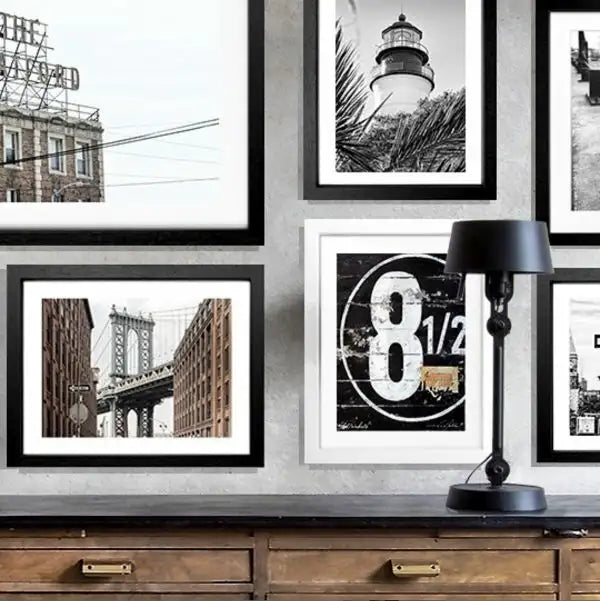
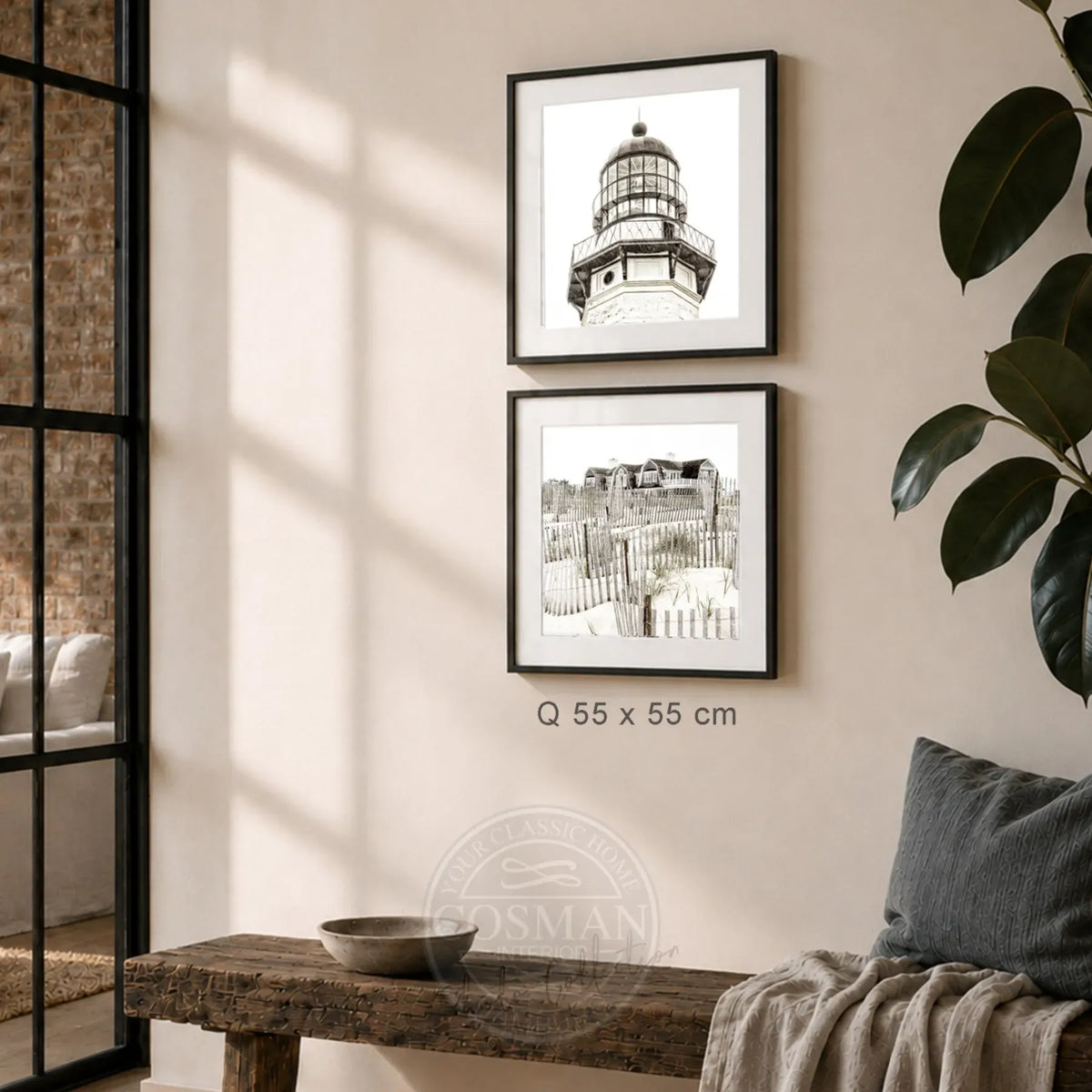
The cover is the focus, but the frame profile determines the overall effect. A narrow black frame gives urban motifs, such as New York or Hamburg at night, a clear graphic outline. Light wood nuances or reserved natural tones make beach landscapes, dunes and coastal-inspired photographs appear homely and relaxed. White frames fine and modern, while darker tones give images more depth and presence.
The best choice doesn't just depend on the wall color. Also consider furniture, lighting and existing materials. In a room with oak, linen and sandy tones, the frame is allowed to capture the calm atmosphere. A dark, slim profile can provide the desired contrast to a reduced interior with metal, stone and clear lines.
A hand-made frame shows its quality in the details: even edges, neatly closed corners and a harmonious relationship between frame width and image format. With small motifs, the frame must not dominate. In the case of a large photograph over a sofa, sideboard or dining table, however, it needs enough visual weight to capture the work convincingly.
Which motifs particularly benefit from acrylic glass?
Acrylic glass frames go particularly well with photographs and graphic works whose color scheme, sharpness or spatial depth should be effective. A view over Saint-Tropez, palm trees in Florida or the quiet expanse of the Hamptons has a clear, modern feel. Abstract motifs with rich surfaces, fine lines or deliberately placed contrasts also benefit from precise presentation.
For very reserved, matt or strongly structured works of art, classic glass or another surface may be a better fit depending on the desired feel. Anyone looking for a deliberately soft, reserved effect should not decide solely on the basis of maximum clarity. Institution thrives on coordination. In a reduced bedroom, a calm, matt look can be right, while a colorful photograph in the living area benefits from the brilliance of the acrylic glass.
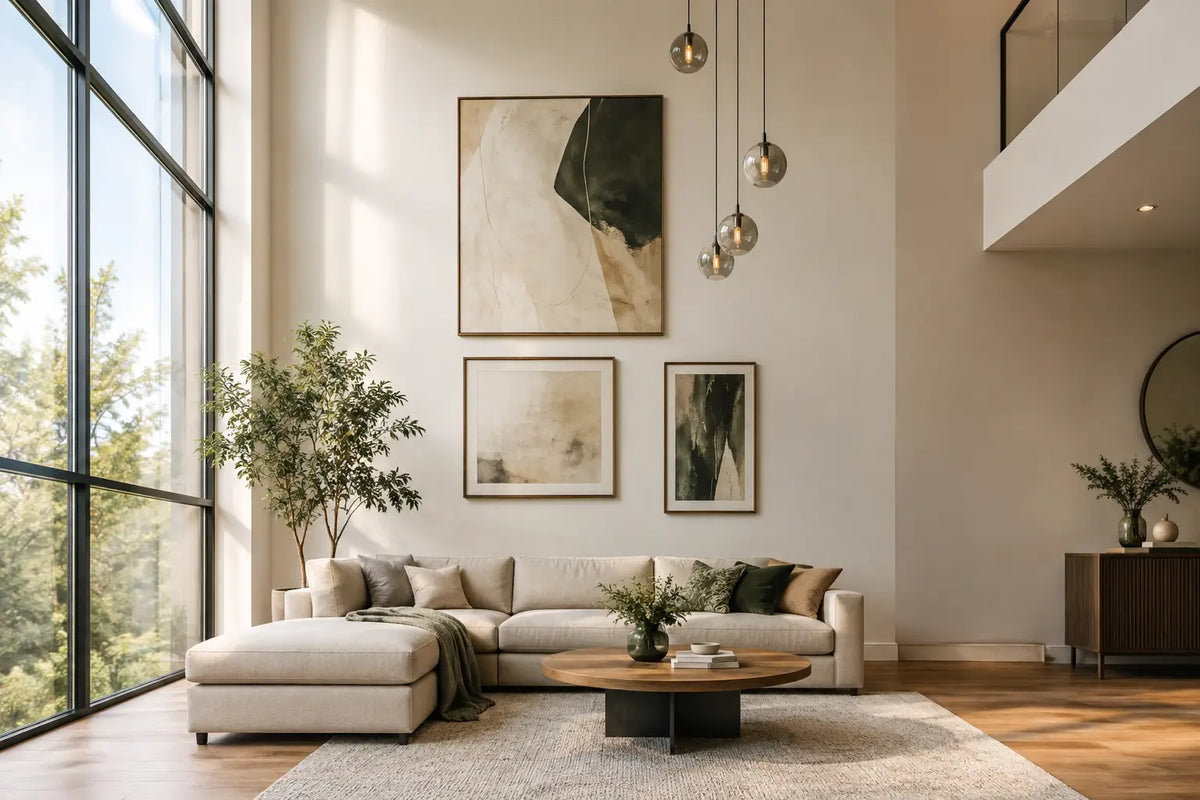
The format also changes the impression. A single large-format acrylic painting can quickly define a blank wall and give direction to a room. Two or three coordinated works, on the other hand, create rhythm, for example in the hallway or above a long sideboard. It is important that the motifs do not hang next to each other by chance. Common colors, a recurring destination or an identical frame ensure a clear line.
Assembly is part of the quality
Wall art loses its comfort if you first have to look for suitable frames, hooks and fastening solutions after delivery. Especially for larger formats, a ready-to-hang version is therefore more than just a practical extra. It ensures that the proportions of the hanging fit the frame and that the picture sits on the wall as planned.
Before assembly, it is worth briefly marking the desired height with paper or painter's tape. A center of the image at eye level often works as a guide. Above a sofa or sideboard, the motif can sit a little lower so that it remains visually connected to the piece of furniture. As a rule, leave enough space between the edge of the furniture and the frame without moving the picture too high on the wall. The most common mistake is not a motif that is too small, but a placement that loses its connection to the room.
At Cosman Photocollection, high-quality photo prints are framed by hand and delivered with hanging equipment. This takes the crucial intermediate step out of the process: The selected motif does not arrive as an individual piece, but as wall art that can take its place directly in the room.
When is an acrylic glass frame worthwhile?
An acrylic glass frame is worthwhile if you want a clear, modern presentation and at the same time value a lighter, less break-sensitive material. It is particularly suitable for large-format photographic art, vivid travel pictures and rooms in which the wall design should be uncomplicated but visibly high-quality.
It is less ideal if strong reflections in the intended space are unavoidable or if you are specifically looking for a completely matt, reserved surface. This trade-off makes sense because the best framing is not the one with the most properties, but the one that brings together the subject, space and everyday life.
So first choose the picture that triggers a mood that you want to see every day. Then decide on the format, frame color and acrylic glass based on the location where you want it to work. This means that a free wall is not just a decorated area, but a room with its own attitude.