Hand-framed pictures correctly classify experiences
An empty wall next to the dining table, above the sofa or in the entrance area rarely looks unfinished because some poster is missing. Most of the time it lacks a picture that convincingly brings together size, motif and workmanship. Hand-framed pictures Experiences are exactly about this difference: about the effect of a fully composed wall picture compared to a loose print that still has to be made to fit.
If you decide on a framed picture, you are not just buying a motif. Paper, frame profile, protective screen and hanging together determine whether a photograph from Hamburg, a coastal scene from Saint-Tropez or an abstract motif appears calm, valuable and lasting. Especially with larger formats, the quality is not only apparent up close, but rather at the first glance into the room.
What makes hand-framed pictures different in everyday life
A single art print can be very beautiful. However, with an unframed poster, a second shopping list often begins: a suitable frame, glass or acrylic glass, back wall, hanging, possibly a passe-partout and finally the question of whether all the dimensions really fit together. This takes time and does not always lead to a consistent result.
Hand-framed wall pictures anticipate these steps. The print and frame are coordinated, the picture is delivered protected and can be hung on the wall after unpacking. For people who want to furnish an apartment, a holiday home or a work area in a targeted manner, this is one thing above all else: plannable. The wall design does not become a craft project, but rather a finished design decision.
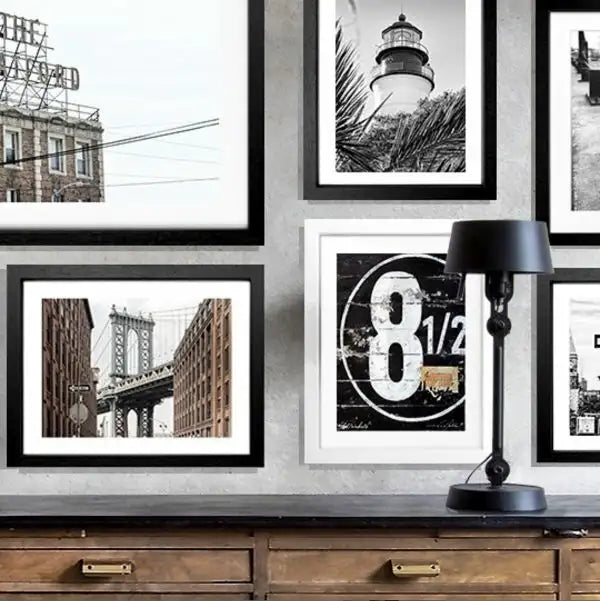
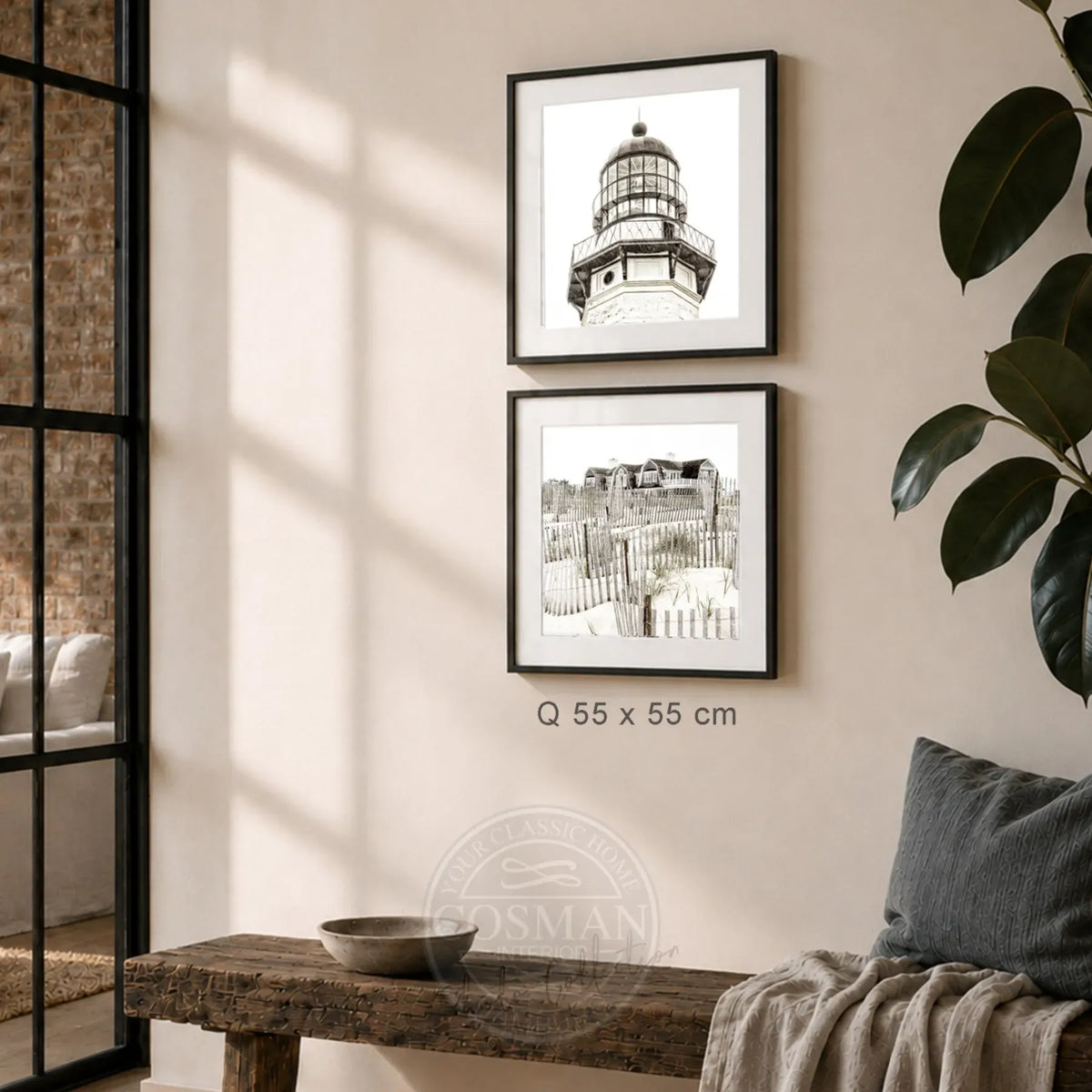
Hand-framed does not automatically mean a certain style. A narrow black frame can make a high-contrast New York photograph appear clear and urban. Natural wood brings warmth to rooms with linen, oak or subtle sandy tones. A white frame gives bright subjects, such as beach photos from Florida or the Hamptons, more air. The framing accompanies the motif without taking the main role away from it.
Hand-framed pictures Experiences: What buyers look for
The most compelling experiences arise when the visible and less visible components fit together. A beautiful motif alone does not compensate for a poorly crafted frame. Conversely, high-quality framing cannot save a print that turns out to be flat or blurry in color.
The print: detail, depth and calm surfaces
For photographic wall art, high-quality photo paper is crucial. It affects how finely architecture, horizon lines, water surfaces and skin tones are reproduced. Clean print quality is particularly noticeable for motifs with a lot of sky, sea or monochrome surfaces: transitions should appear calm, not grainy or streaky.
The color mood also deserves attention. A picture of evening light in California can be warm without appearing artificially orange. A Hamburg city view can have clear contrasts, but should not appear unnecessarily harsh in a living room. Good wall art strikes a balance between photographic presence and an atmosphere that you want to live with every day.
The frame: profile, color and precise workmanship
The frame creates a clear boundary between the picture and the wall. Its task is both creative and practical. A cleanly crafted profile gives the picture stability, while the frame color can reflect the furnishings or deliberately set an accent.
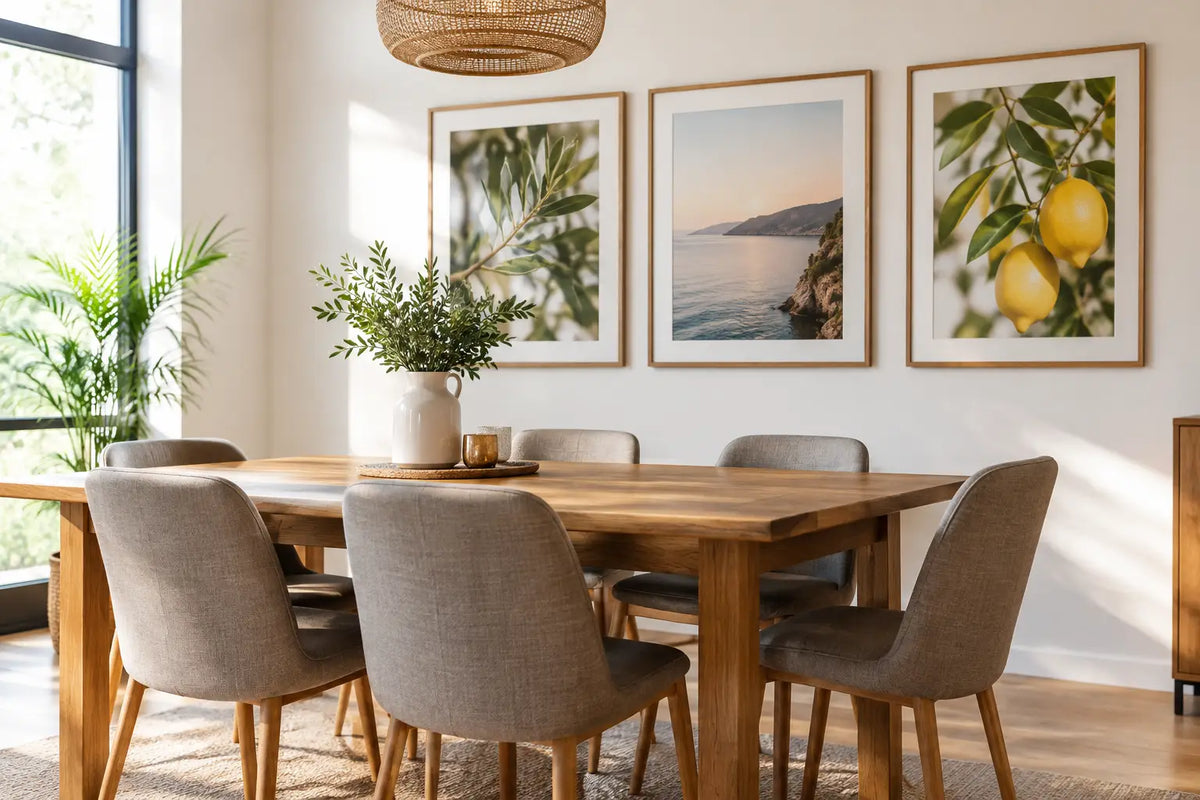
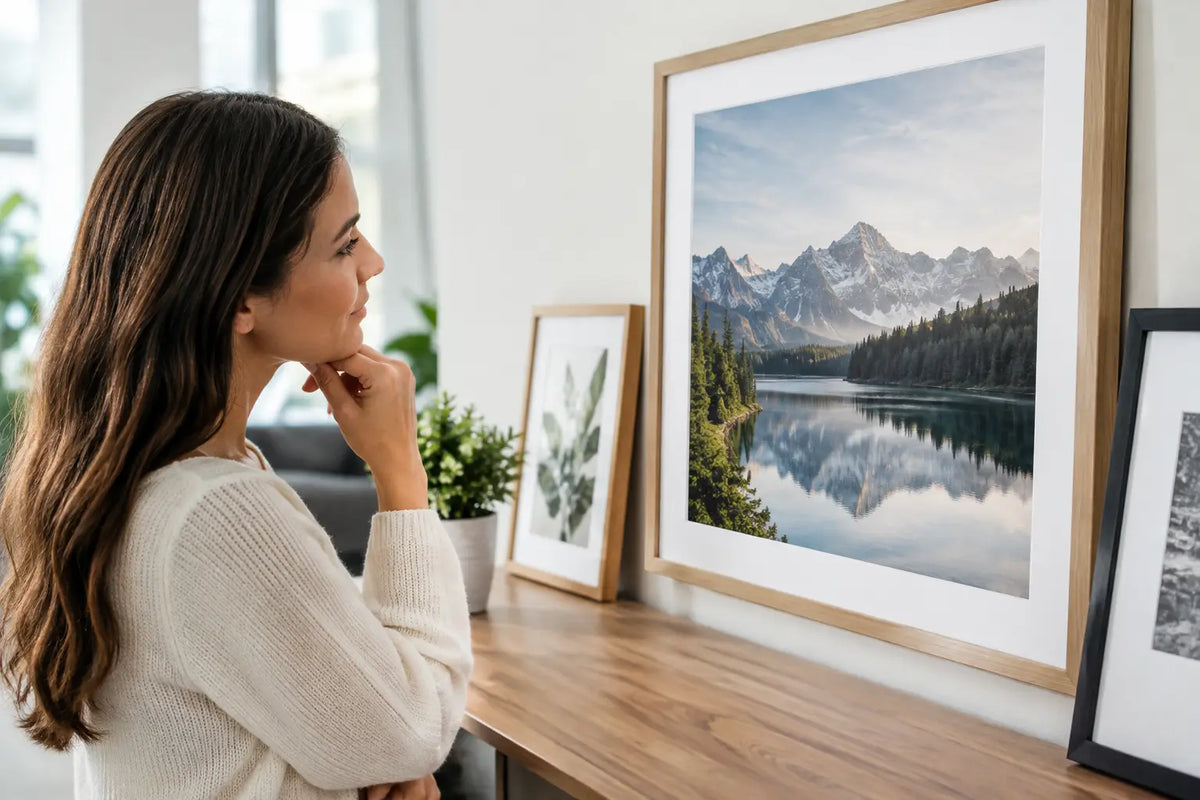
Black, white and wood are particularly versatile for modern interiors, but for different reasons. Black precisely frames graphic or colorful motifs. White appears light and reserved, especially on light walls. Wood conveys a homely, natural character and goes well with travel destinations, landscapes and rooms in which materials can remain visible.
For large pictures, a sufficiently stable frame profile is more important than for small formats. Very delicate frames look elegant in a small photograph, but can lose presence in a wide wall work. The right choice therefore depends not only on personal taste, but also on the image size and wall space.
Acrylic glass: protection without a heavy impact
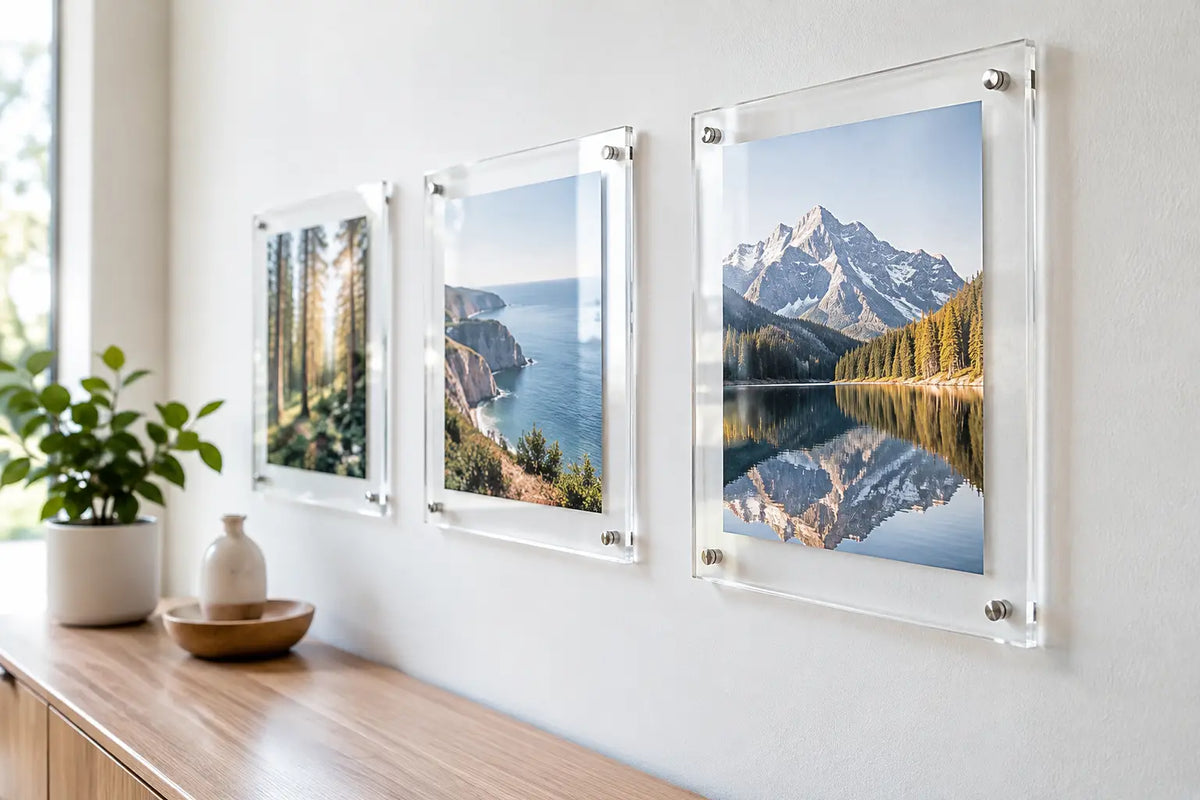
Acrylic glass protects the print from dust and contact and is lighter than classic glass. This is particularly pleasant when hanging larger pictures or when creating a wall design in households with children, pets or a lot of movement.
Depending on the lighting situation, any transparent cover can create reflections. Opposite a large south-facing window or a direct light, the position should therefore be taken into account. The effect can often be improved by not hanging the image exactly opposite the light source. Acrylic glass still remains a convincing solution for many living situations because it sensibly combines protection, weight and suitability for everyday use.
Size determines the effect
A common disappointment with wall pictures has nothing to do with the motif: the picture was simply chosen too small. A single small format quickly looks lost over a wide sofa, even if the photography and frame are high quality. A more generous picture, on the other hand, can create calm because it deliberately uses the surface.
As an orientation, the mural above a piece of furniture may have a visible reference to the width below without completely filling it. Above a chest of drawers or a sideboard it usually looks harmonious if there is enough wall left and right. In high old rooms, a picture can also be chosen to be more vertical and present than in a low hallway.
Special formats make sense if the room does not require a standard solution. A narrow wall between two windows, a long corridor or the area above a headboard can appear significantly more high-quality with a moderately coordinated format than with a compromise. Before ordering, a simple test helps: mark the format on the wall with painter's tape and look at it from several meters away. This quickly shows whether the proportion is right.
Choice of motif: show travel without appearing arbitrary
Travel-inspired motifs give rooms personality if they not only function as a holiday souvenir, but also reinforce the desired mood. A tranquil ocean shot can slow down a bedroom. An architectural view from New York brings structure to a home office. Hamburg motifs create local connection without the room having to appear thematically staged.
It is important to look at the existing color concept. In a room with warm natural tones, sandy coastal motifs, pastel facades or sunny street scenes fit in particularly naturally. Cooler interiors benefit from black and white photography, deep blues or clear, urban perspectives. Abstract images are a good choice when color and composition are more important than a specific location.
Multi-part image groups can be attractive, but require a little more planning. They work best when there is a unifying element: the same frame color, a similar color scheme or a common travel theme. If you are looking for a quick, strong change, a large-format single picture often achieves a calmer and longer-lasting effect.
Delivered ready to hang: Convenience is part of the quality
A high-quality framed picture should not only find its place after several additional purchases. A good product experience therefore includes a ready-to-hang version with suitable devices on the back. This not only saves time, but also protects against damaging the work when placing it into a frame yourself.
Before hanging it up, it's worth taking a quick look at the wall and the mounting. Solid walls, drywall and old building walls place different requirements on dowels and screws. For heavy or very large formats, properly selected fastening is more important than a quick move. The hanging on the picture forms the basis, the appropriate solution in the wall ensures lasting support.
The delivery also influences the overall impression. Careful packaging, comprehensible communication regarding order-related production and accessible support are not secondary matters. They are part of an experience that lives up to the standards of a handmade product. Cosman Photocollection combines curated motifs with hand-framed, ready-to-hang wall pictures from Hamburg.
When the investment is worth it
Hand-framed pictures are usually priced higher than a rolled poster. But the comparison should be fair: with a loose print, the frame, protection and assembly are often added. Anyone who selects these components separately often pays more than expected and takes responsibility for fit and workmanship themselves.
Finished framing is particularly worthwhile for large-format photographic art, for a visibly central wall and for rooms that are being furnished for the long term. In the living room, entrance area, office or holiday property, the first impression counts. Here, a carefully framed picture can define an area that would otherwise remain decoratively undecided.
For very changeable decorations, for example in a child's room or with seasonal themes, a simple, interchangeable poster frame may be a more suitable choice. Quality does not mean always choosing the most complex solution. It means choosing the product to suit the use, the space and the desired durability.
In the end, it's worth not just looking at the motif on the screen, but at the image as a finished object in the room. When the format, photography, frame and hanging are thought of together, a free wall becomes a place with attitude - and a furnishing becomes an atmosphere that immediately feels right.