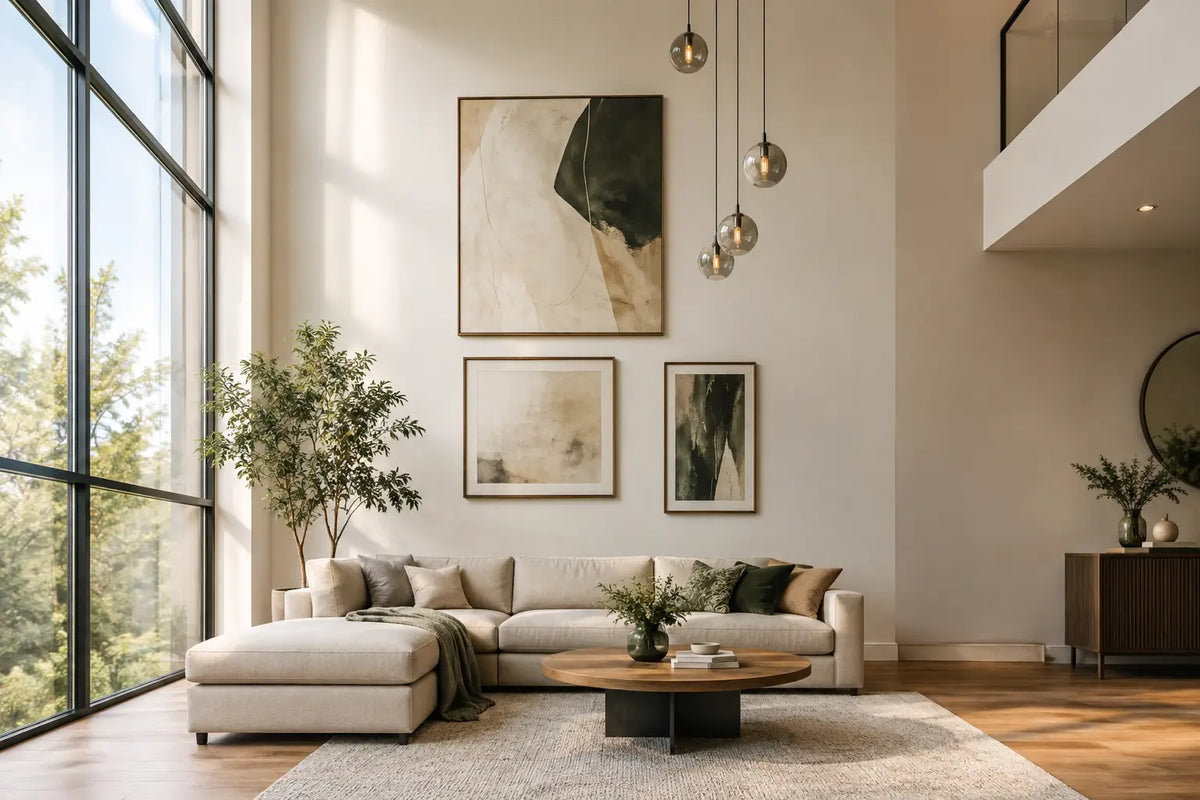
Properly plan wall decoration for high ceilings
A high ceiling is a gift for a room - and can still quickly appear cool if the wall underneath remains empty. If you want to plan wall decoration for high ceilings, you need more than a beautiful motif: what is important is the right size, a harmonious hanging position and a frame that visibly supports the format. This means that a large wall does not become an unused area, but rather a defining part of the interior.
Think of the wall as a total area
In old apartments, city villas, lofts or holiday homes, high ceilings create generous proportions. A small picture that works well in a room with a normal ceiling height can quickly look lost there. This is not due to the motif, but rather the relationship: the higher the wall, the more consciously the wall art has to show its presence.
Don't just consider the free area above a sideboard or sofa, but the entire wall from the piece of furniture to the ceiling. That doesn't mean that every picture has to hang as high as possible. Rather, the design should accommodate the vertical without the facility appearing visually disconnected from the floor. A large framed mural or a carefully constructed group of pictures constructed group of images connects both levels.
High rooms look particularly elegant when the wall decoration creates a clear focal point. A large format coastal view, the architecture of Hamburg or an urban New York shot can take on this role. Abstract motifs are a strong alternative if colors, materials and furniture are to be the focus in the room.
Planning wall decoration for high ceilings: The right format
The size is the most important lever. As a guide, a single image above a piece of furniture can take up about two-thirds to three-quarters of its width. Above a 200 centimeter wide sofa, a format of around 130 to 150 centimeters looks much more harmonious than a small individual picture. If the wall is particularly high, the motif can be higher as long as the room offers enough distance for viewing.
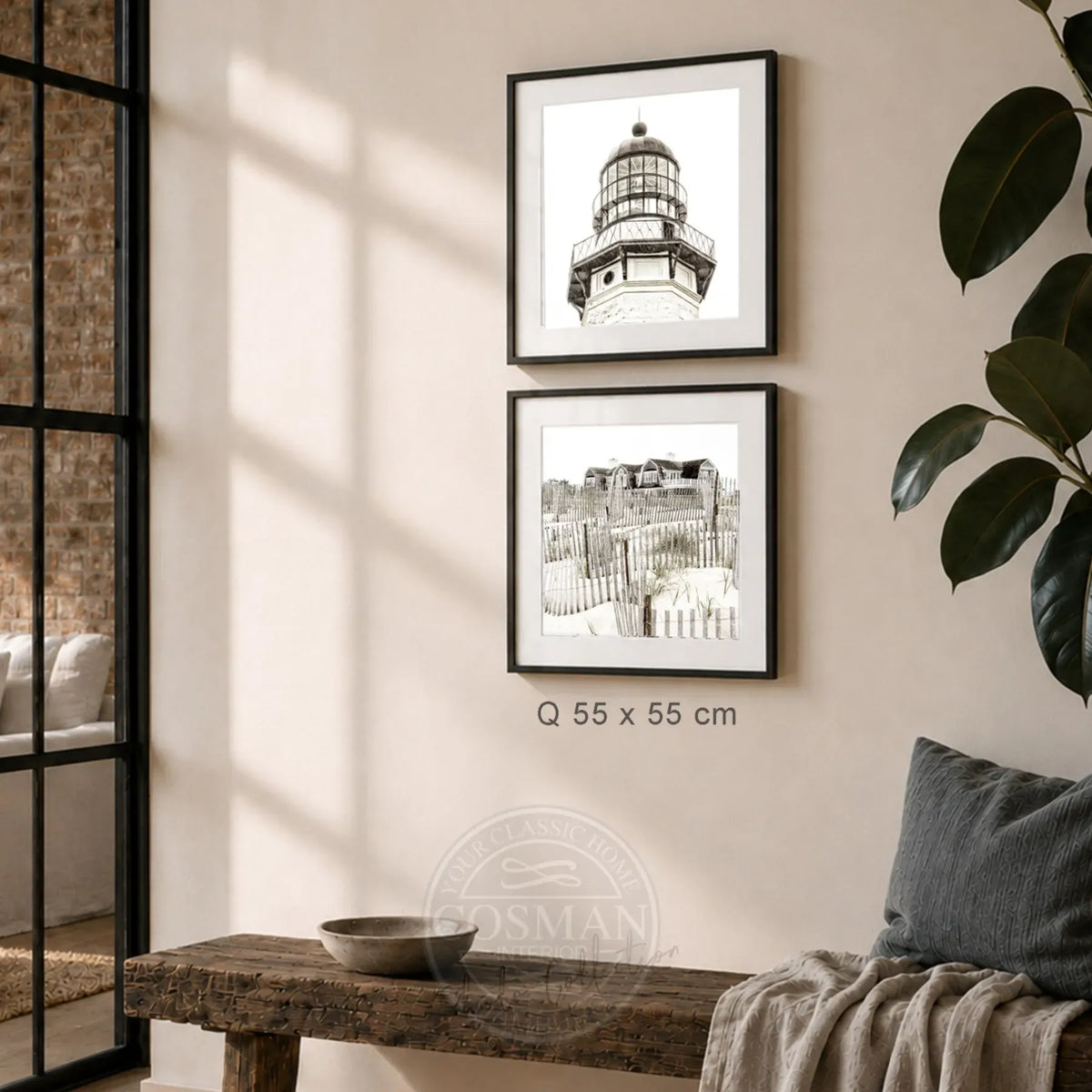
Portrait formats are particularly suitable for narrow wall sections next to high windows, in the stairwell or in the entrance area. They take up the height and give structure to an otherwise restless surface. A vertical photo of dunes, palm trees or a skyline visually lengthens the wall without overloading it.
Landscape formats, on the other hand, create peace and space. They are ideal above a bed, console or long bench. A sprawling beach motif from Sylt, a coastal scene from California or a view of Saint-Tropez brings horizon and depth into the room. In high living areas, a generous landscape format prevents the wall from just running empty towards the top.
For special formats, it is worth taking a look at the actual wall dimensions. A wall three meters high does not automatically require an image in XXLformat. If it is only slightly wider than the piece of furniture in front of it, a narrow, tall piece may be a better decision. Width and height should always be considered together.
One picture or several pictures?
A single large mural appears reduced, high-quality and calm. It goes particularly well with clear furniture, spacious rooms and motifs with a strong visual impact. The framing becomes a visible part of the design: A slim black frame gives architectural and city motifs contour, while light wood or natural tones make travel images and soft interiors appear warmer.
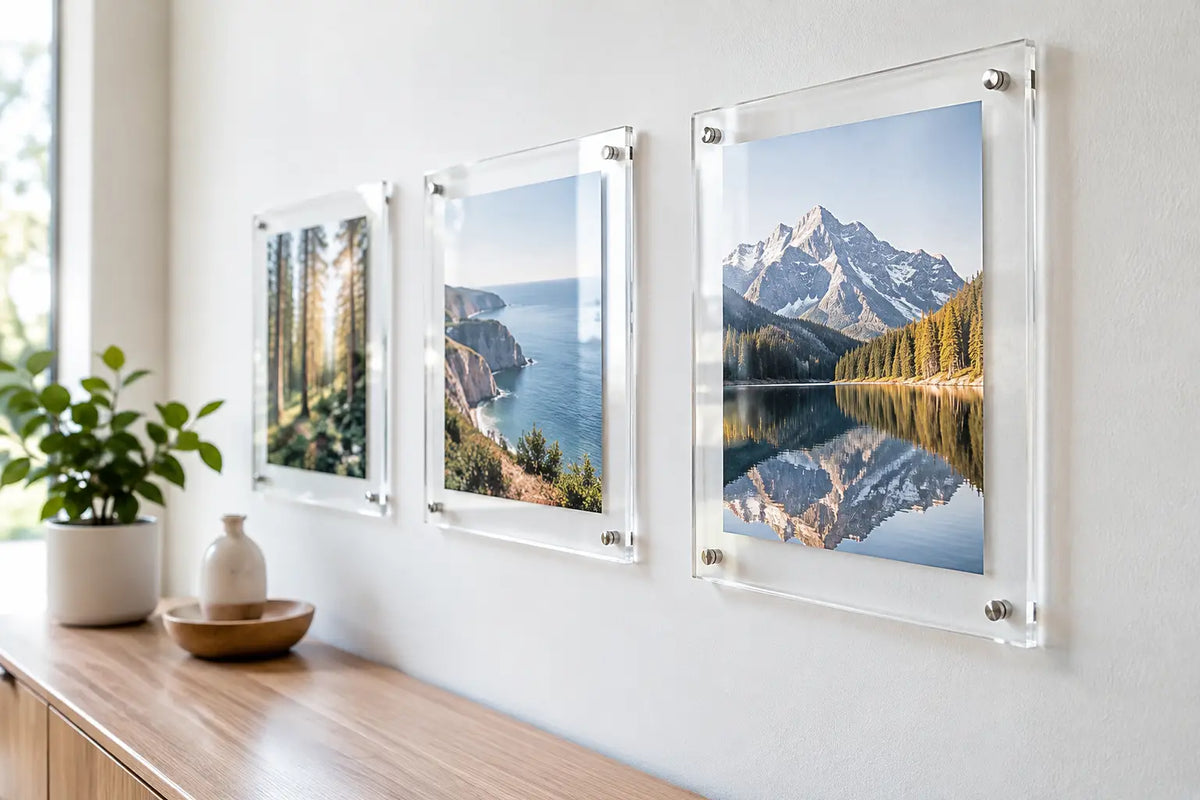
Multi-part arrangements bring more movement to the wall. Two portrait formats of the same size can elegantly frame a dining area or hallway. Three motifs next to each other work well over wide sofas and sideboards if their combined width is read as a unit. What is important is an even distance of usually five to ten centimeters. If the distances are too large, the group falls apart and loses its effect from a distance.
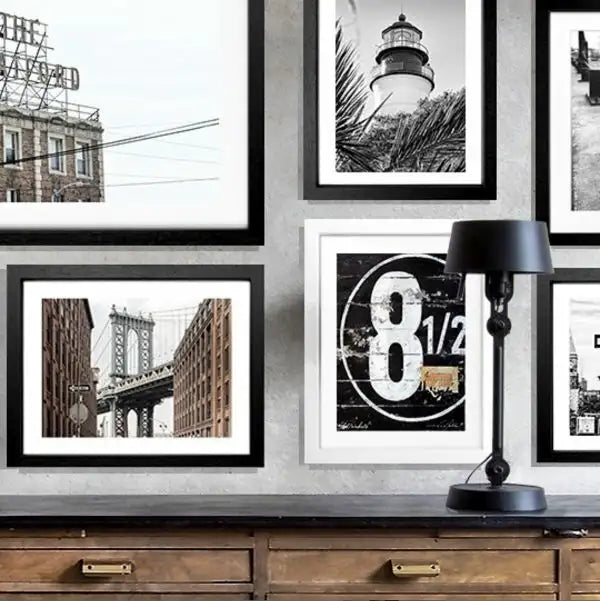
A salon hanging can also look excellent in high rooms, but requires discipline. Choose a unifying frame style or a recurring color scheme and first lay out the arrangement on the floor. Different formats can be combined as long as a clear external outline is created. Without this order, the high wall quickly appears random instead of curated.
The correct height depends on the furniture
The common rule of hanging pictures at eye level is a helpful starting point - but not a rigid requirement. Above a sofa, bed or sideboard, the wall art is first oriented towards the piece of furniture. 15 to 25 centimeters is usually a good distance between the top edge of the furniture and the bottom edge of the frame. This creates a visual connection and the image does not seem to float above the room.
In a high entrance hall or stairwell, different standards apply. Here wall art is often seen from a greater distance. The center can therefore be slightly higher, but should still be in relation to doors, railings or lights. Don't hang a picture high up just because there is a lot of free wall above it. The empty area can deliberately remain part of the spatial effect.
In a group of pictures, the center of the entire composition is crucial, not the center of each individual frame. This view of the ensemble is particularly helpful in rooms with high ceilings: the group gains weight and appears like its own architectural element.
Choose motifs that give the room character
High walls attract attention. That's why it's worth choosing a motif that not only matches the color but also conveys a mood. In a bright living room with linen, wood and natural stone, the beach, water and wide horizons appear relaxed and timeless. A motif from the Hamptons or Florida can create a light, sunny atmosphere without seeming seasonal.
Urban photography goes well with modern homes, offices and dining areas. Hamburg with its clear lines, New York with graphic energy or architectural photos in black and white bring structure to high walls. They harmonize with dark frames, metal, glass and straight-lined furniture.
Abstract wall art is ideal if you want to reflect the color scheme of the room. A large motif with tones of sand, blue, green or terracotta can calm a high wall and at the same time visually bring pillows, carpets or curtains together. The specific location is less important here than the effect of color, depth and surface.
Plan the frame, glass and light
The processing is particularly important for large formats. A handmade frame gives the picture stability and creates a precise finish to the wall. Especially with high ceilings, where wall art is visible from several meters away, high-quality framing appears much calmer than an unframed poster print.
The frame color can create contrast or be subtle. Black sets a clear graphic line and gives depth to photographs with strong perspectives. White makes bright motifs appear light and modern. Wooden frames bring warmth to rooms with parquet, natural textiles or furniture in oak and walnut. Which variant is suitable also depends on whether the frame should function as a visible design element or as a reserved border.
Acrylic glass is a convincing choice for larger pictures because it is light and protects the surface. However, check the incidence of light in advance. Compared to a large window front, any glazing can show reflections. Then hang the picture slightly offset from the direct line of sight or choose an area with indirect light for the wall. A specifically aimed wall light can additionally highlight the motif in the evening, but should not create a harsh reflection.
Measure precisely before hanging
A paper cut in the size of the desired image is a simple and very reliable decision-making aid. Attach it to the wall with painter's tape and look at the effect from different areas of the room. Don't just check the height, but also the distance to windows, doors, lamps and furniture edges.
Note the external dimensions including the frame, not just the print format. If you are hanging multiple parts, add the gaps directly. This way you can see early on whether the composition is centered over the furniture and whether there is enough space left and right.
If you choose custom-made, framed wall art ready to hang, you save a lot of coordination in this step. At Cosman Photocollection, the photo print, frame, acrylic glass and hanging are prepared as a harmonious unit. This means that the planning stays where it belongs: in terms of spatial effect, motif and format - not in the search for individual components.
The best wall decoration does not simply fill up high walls. It gives the room a focus, takes its spaciousness seriously and at the same time leaves enough peace and quiet. If the motif, frame and hanging position match, even an impressive ceiling height does not seem distant, but rather like an invitation to consciously experience the room.