
Picture frame test: What makes quality visible
A striking photograph loses its impact if the frame is too narrow, the glass reflective, or the workmanship visibly simple. Conversely, a suitable picture frame can give a favorite place, an architectural photograph, or an abstract print the presence that transforms a wall into a designed part of the room. A sensible Picture frame test Therefore, he doesn't just ask about the price. He assesses how convincingly the frame, picture, and room work together.
Especially with large formats and high-quality photo prints, the frame is not just an accessory. It influences protection, color perception, proportion, and the overall impression. Anyone who has ever had to organize the print, frame, and hanging hardware separately knows that a cohesive, ready-to-hang solution not only saves time but also prevents many avoidable compromises.
Picture frame test: These criteria decide
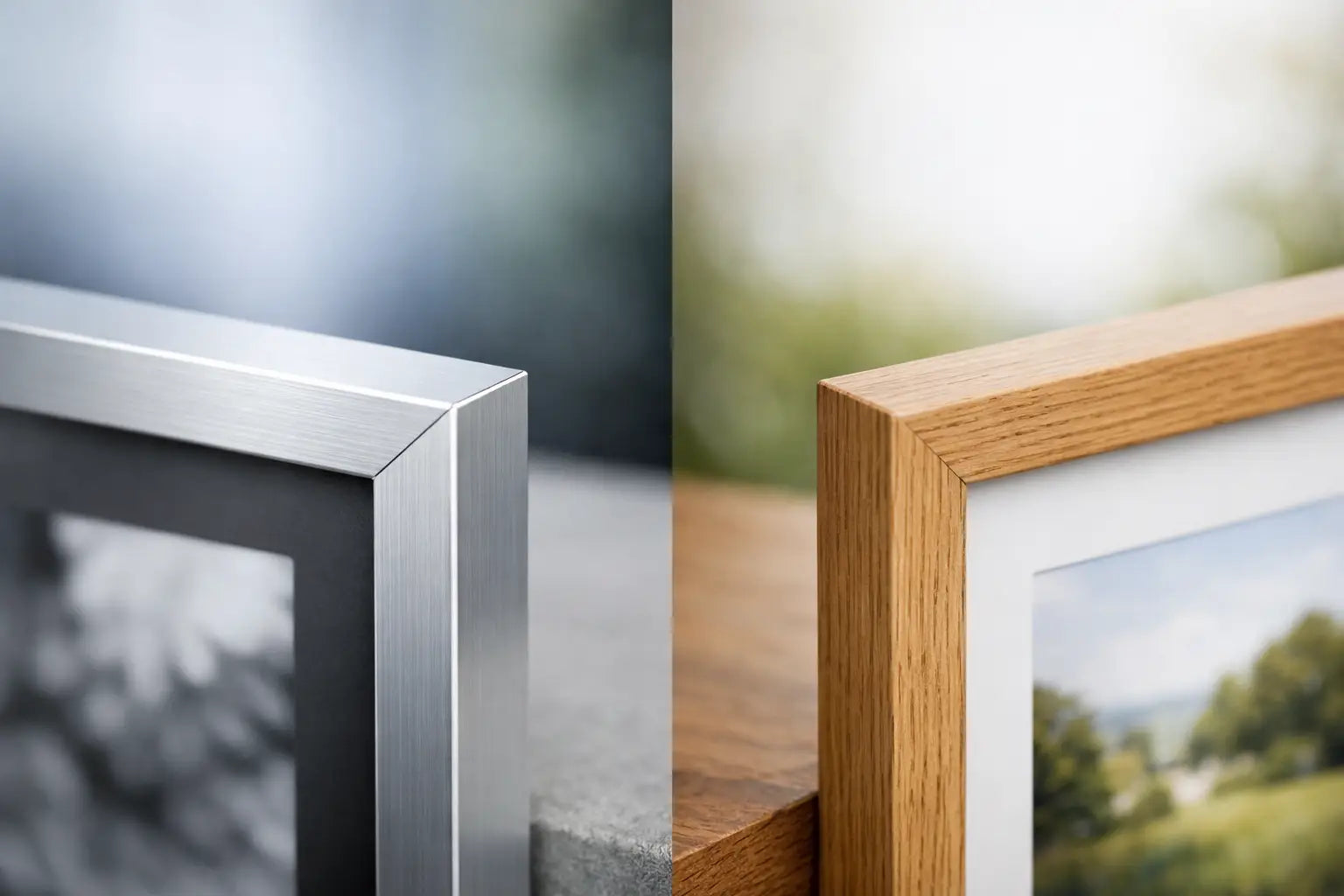
A good picture frame doesn't have to be flashy. Its job is to support the artwork, provide a clean finish, and complement the interior. Therefore, in our tests, we focus on details that are often only perceived intuitively at first glance: the feel of the material, the precision of the corners, the depth of the frame profile, and the quality of the cover.
Material and profile: The basis for a high-quality effect
Wooden frames exude warmth, sophistication, and natural beauty. They are particularly well-suited to photographs of coastal landscapes, urban scenes, or calm, light-colored subjects. Their grain and subtly textured surface add depth to the room. Crucially, the craftsmanship must be impeccable: the miters at the corners should be seamless, the edges even, and the surface carefully finished.
Metal frames have a more minimalist and graphic look. In modern city apartments, offices, or cleanly designed vacation properties, they can create a precise, contemporary feel. However, they are not automatically the better choice. A very cool metallic tone can make a warm beach scene or a photograph with Mediterranean colors appear distant. It's the desired interplay that matters, not a general rule.
The frame width also deserves attention. A narrow profile makes small to medium-sized pictures appear light and modern. However, with a large picture, it can offer too little visual support. A wider frame adds presence but requires sufficient free wall space. In narrow hallways or above narrow sideboards, an overly bulky frame can quickly become dominant.
Acrylic glass or classic glass?
The cover protects the print from dust and contact, but also enhances the visual appeal. Acrylic glass is lightweight and more shatter-resistant than traditional glass. This is a significant advantage for large formats, shipping, and in homes where pictures are frequently rearranged. It supports a high-quality, clear presentation without adding unnecessary weight.
Classic glass can also appear very clear, but it is heavier and more fragile. It can be suitable for small, permanently placed pictures. For large-format wall art above a sofa, bed, or dining table, acrylic glass is often the more practical choice. In both cases, careful cleaning remains essential: A soft, clean cloth prevents fine scratches and preserves the clear surface.
Back panel and suspension: Invisible, but crucial
A stable backing board keeps the print flat and prevents the image from moving within the frame. Especially with large frames, it should not warp easily. Equally important are precisely fitting closures: they must securely fix the contents without putting unnecessary strain on the frame when opening.
Quality also includes a reliable hanging system. It should be suitable for the weight and size of the picture and allow for straight placement. A beautiful frame that comes without a suitable hanging device simply postpones the work to the next trip to the hardware store. High-quality wall art is especially convenient when it can be placed immediately after unpacking.
The right format starts at the wall.
Many purchasing decisions fail not because of the subject matter, but because of incorrect proportions. A single small picture above a large sofa often looks lost, even if the print and frame are excellent. Conversely, an oversized format in a low alcove can make the room feel cramped.
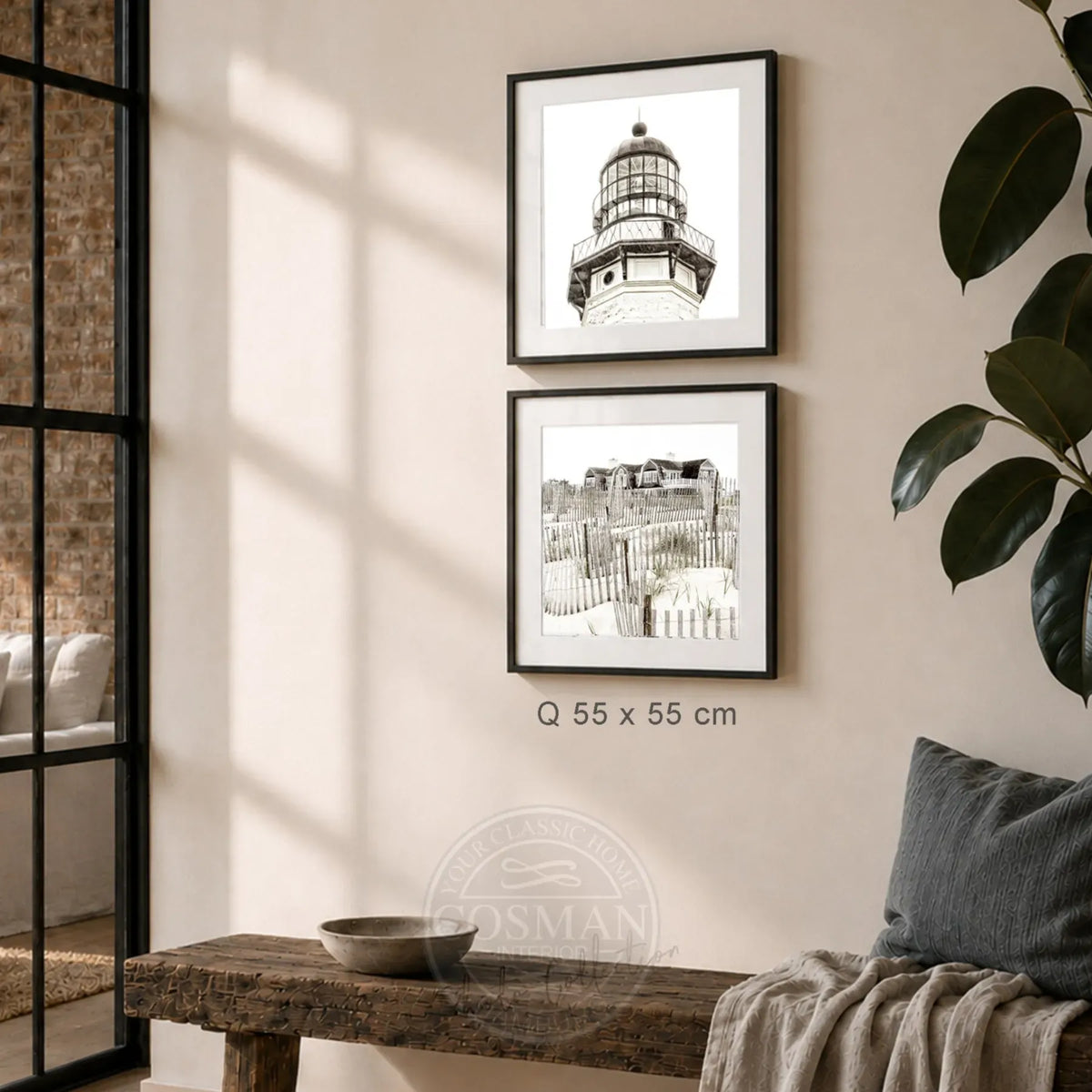
Therefore, measure not only the free wall space but also the furniture below it. A picture usually looks harmonious above a sofa or sideboard if its width visibly relates to the furniture without completely filling it. With high ceilings, a more vertical and expansive format is acceptable. In narrow spaces like hallways, a portrait format can create perspective and guide the eye.
Before ordering, a simple test with paper or painter's tape the size of the picture will help. This will reliably show whether the planned framing will have enough space. At the same time, pay attention to light sources, electrical outlets, switches, and the distance to doors. These are small factors that determine whether a picture looks deliberately placed or as if it's been tacked on.
Choose frame color to match motif and decor
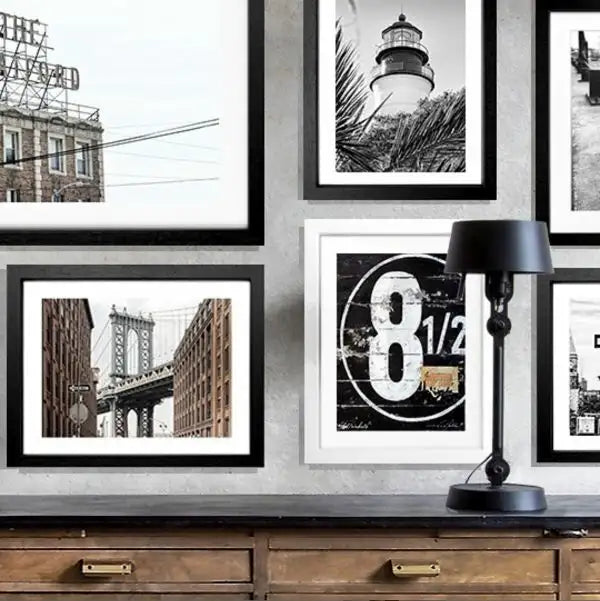
Black, white, natural wood, or a dark wood tone significantly alters the same photograph. A black frame adds contrast and definition. It suits Black and white photographs, architecture, graphic motifs and spaces with clean lines. In bright interiors, it can create a deliberate focal point.
A white frame creates a subtle and fresh look. It's suitable when the subject itself is meant to be the focus or when the wall is already very simply decorated. However, with very light-colored images, white can create little definition. In such cases, a thin black or natural-colored frame can add more depth to the picture.
Natural wood blends particularly beautifully with sandy tones, Coastal photographyDark wood frames complement warm beige tones and living spaces with linen, ceramic, or oak. They add elegance and depth and are a compelling choice for classic period rooms, bold colors, or artwork bathed in evening light. The key is not to match every wood in the room exactly. A harmonious temperature—warm or cool—is usually more important than an identical shade.
Passepartout: When the additional spacing makes sense
A passe-partout creates a calm space between the image and the frame. It can give a smaller print more presence and visually reduce the visual clutter in highly detailed photographs. This distance often looks particularly elegant with black and white images, minimalist architecture, and subjects with a lot of fine texture.
Not every picture needs a frame. With large-format, color-intensive photographs, the subject can often extend close to the frame for a more direct and expansive effect. Similarly, for a planned gallery wall, a uniform frame without a passe-partout often creates a cleaner look. The decision depends on the subject, the size, and the desired effect.
Single picture or gallery wall.
A large framed picture can define a room with surprisingly little effort. Above the bed, in the dining area, or in the entryway, sometimes a striking motif is all it takes. Hamburg, Sylt, New York or a Californian coast, to create a clean, uncluttered atmosphere. This works particularly well if the room already features calming materials and few competing decorative elements.
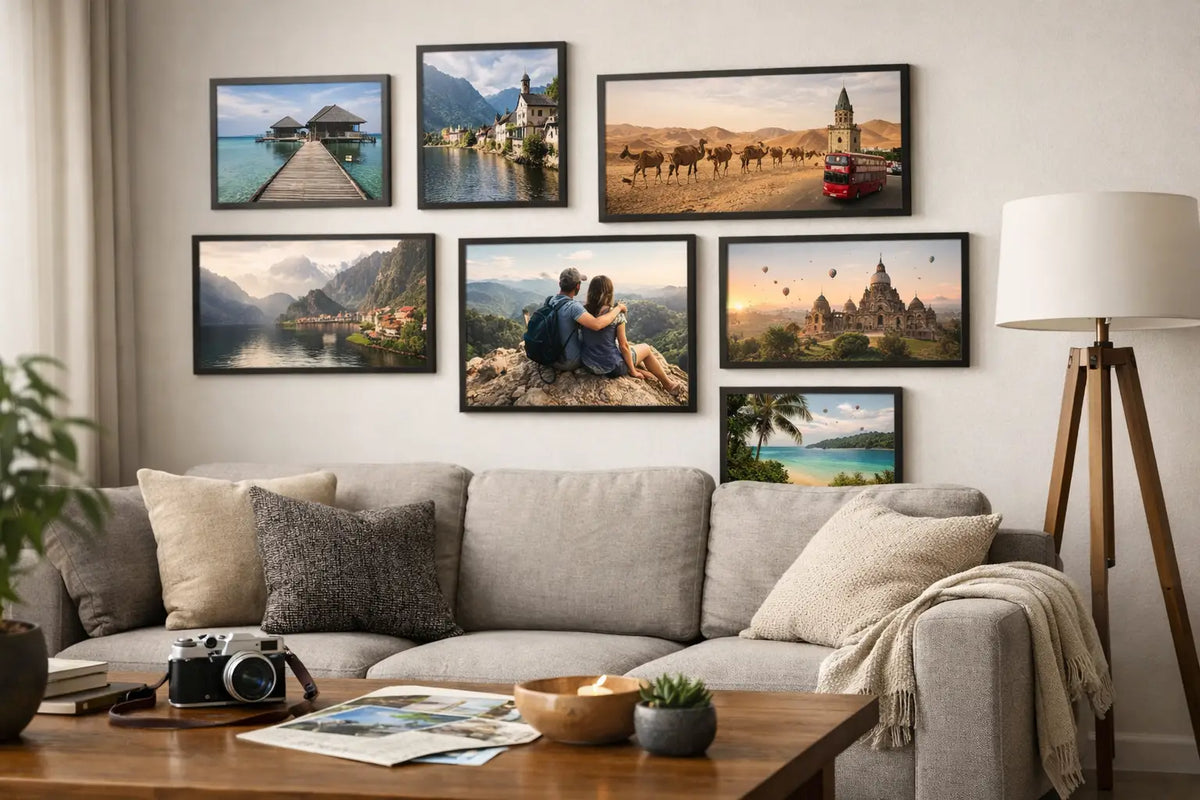
A gallery wall tells a story and offers more flexibility in its design. To ensure it appears sophisticated rather than random, it should have a unifying theme: similar frame colors, related motifs, or a consistent color scheme. Too many different profiles, formats, and themes can quickly detract from the wall's visual appeal. First, lay out the arrangement on the floor and maintain even spacing.
At Cosman Photocollection, the photo print, handcrafted frame, acrylic glass, and hanging hardware are manufactured as a coordinated unit. This is particularly useful when a picture is intended not as a DIY project, but as a finished piece of interior design.
How to recognize compromises in cheap frames
A low price might be acceptable for a small poster intended for short-term use. However, for a favorite image or a larger wall area, the differences often become apparent quickly. Thin, unstable frames, imprecise corners, wavy backing boards, or simple plastic panels make an image appear less clear and less durable. Inadequate hanging hardware only becomes a problem when the picture hangs crooked or isn't secure when moved.
The best frame isn't necessarily the most expensive. It's the one whose material, profile, protection, and size are best suited to its intended use. For a large picture in the living room, it's worth investing in a sturdy, pre-mounted frame. For a small, rotating collection of artwork in a home office, lighter solutions may suffice.
Take a moment to carefully consider the combination of motif, format, and frame color. When these three choices harmonize, a blank wall becomes a place that invites you to linger.