Photo poster or canvas print - which is better?
The wall above the sofa, dining table, or bed often has a greater impact on the atmosphere of a room than a new piece of furniture. When considering this question... Photo poster or canvas print Therefore, it's not just about personal taste. Material, surface, and framing determine whether a motif appears calm and elegant, creates a modern gallery atmosphere, or deliberately sets a casual, homely tone.
Both options can visibly enhance a room. The crucial factor is what suits the theme, the existing furnishings, and the desired overall look. Anyone who... Travel memory of Sylt, Someone who wants to showcase a Hamburg harbor scene or a clear architectural print will often make a different choice with a photo poster than with a picturesque beach scene or an abstract color image.
Photo poster or canvas print: The difference at a glance
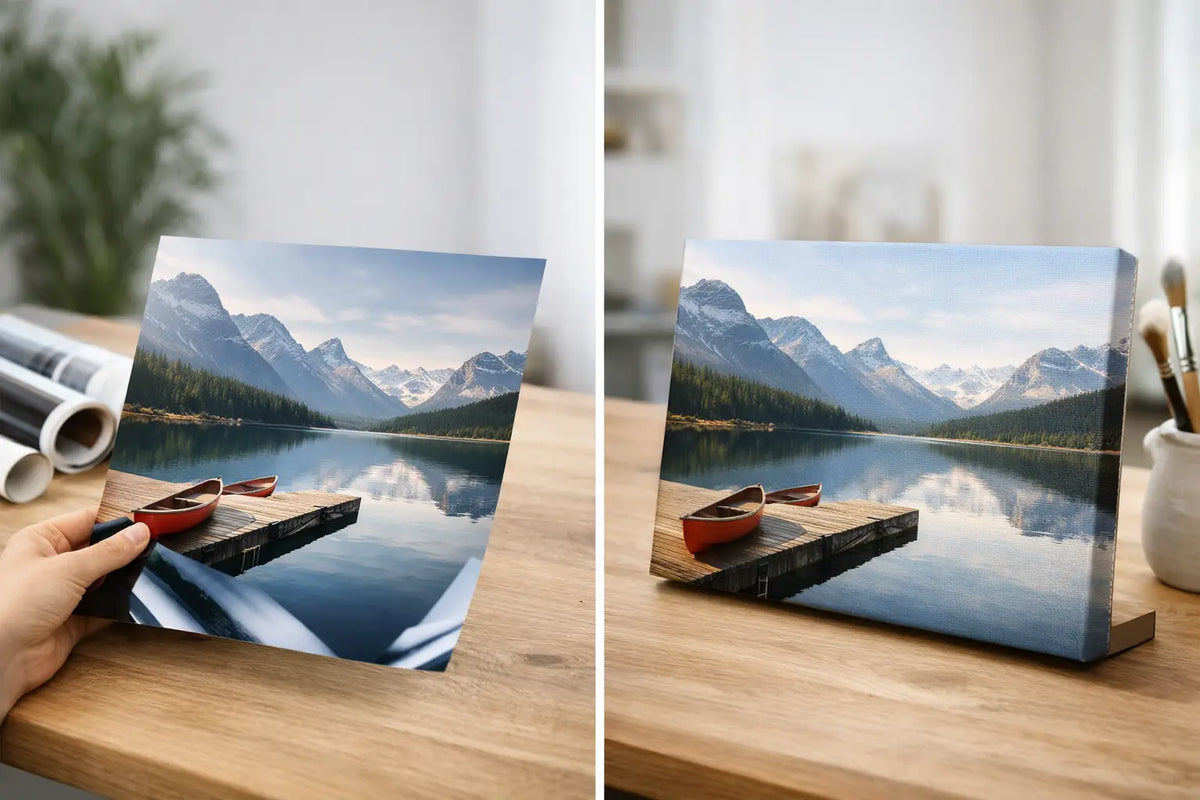
A photo poster is printed on photo paper. The smooth surface brings out fine details, clear contrasts, and precise colors particularly well. This makes the format ideal for photographs of architecture, horizons, cityscapes, or graphic compositions. Framing is what transforms the print into a fully presented wall decoration—especially when a suitable frame and acrylic glass protect the image and visually unify it.
A canvas print is printed onto a textile fabric and stretched over a wooden frame. Its surface has a visible and tactile texture. This makes the images appear softer and gives them a more informal, almost painterly presence. Canvas prints are usually hung without an additional frame, but can also look significantly more elegant with a shadow gap frame.
There is no universally better choice. A detailed Photo of New York A photograph might lose some of its precision on canvas, while a sun-drenched coastal scene can benefit from the textile texture. Those seeking the clean, high-quality look of a framed photograph will usually opt for a photo poster.
When a photo poster is the more convincing choice
Framed photo posters are particularly well-suited to rooms that are intended to be thoughtfully designed yet uncomplicated. They evoke the look of a carefully curated gallery wall without the need to organize multiple individual pieces. A high-quality print, a handcrafted frame, and a ready-made hanging system create a harmonious whole, rather than a loose poster.
For motifs with fine details and clear lines
Photographic wall art often thrives on subtle nuances: the light on water, the windows of a facade, the contours of a palm tree, or the many layers of a skyline. These details remain clearly visible on high-quality photographic paper. Acrylic glass can provide additional surface protection and lends the image a clean, sophisticated look.
This is particularly advantageous in studies, modern living areas, hallways, and dining rooms. In these spaces, wall art can appear precise and uncluttered. Black and white architectural photographs, Hamburg cityscapes, or graphic abstract designs, framed within a frame, achieve the necessary calm to avoid making the room feel chaotic.
If the frame is to be part of the interior design style
With a photo poster, the frame isn't just a practical addition; it significantly influences the overall effect. A narrow black frame creates modern contrasts, while a light wood finish brings warmth to Scandinavian or naturally furnished rooms. White makes intensely colored images appear light and airy, while darker frames give the picture more depth.
This is particularly helpful in rented apartments: A large-format, framed picture can be used to define a white wall in a targeted way, without making any structural changes.The result looks fully furnished, not provisionally decorated.
For a screen wall with a uniform appearance
Several framed photo posters can be combined particularly harmoniously. Choose similar frame colors and a recurring visual theme, such as coastal locations, cityscapes, or abstract forms. Different sizes are perfectly acceptable, as long as a common frame style ties the arrangement together.
For a gallery wall above a sideboard, three to five images are often a good guideline. Very small formats can quickly look lost on a wide wall. It's better to work with sufficiently large pictures and leave even spacing between the frames.
What speaks in favor of a canvas print
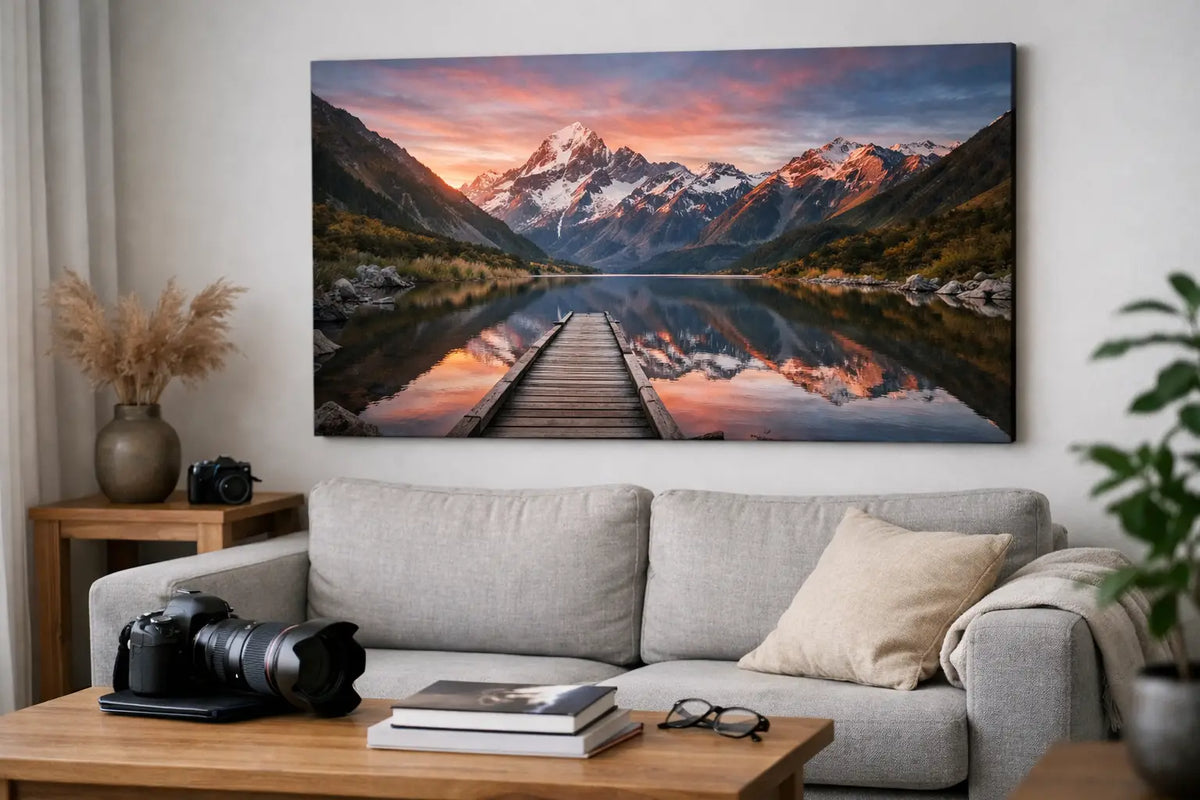
Canvas prints have an immediately inviting, homey feel. Because no glass covers the surface, they appear less formal and more integrated into the material. This complements relaxed interior design concepts, natural materials, linen fabrics, wood, and rooms that are meant to have a less austere atmosphere.
For soft motifs and a relaxed atmosphere
Beach scenes, clouds, dunes, plant motifs, or abstract color fields can look very harmonious on canvas. The fabric's texture softens the image's photographic sharpness, creating a gentler effect. This can be the perfect choice for a bedroom, vacation home, or cozy reading nook.
For highly detailed images, however, canvas isn't always ideal. Fine lettering, intricate architectural views, or images with many subtle contrasts usually appear clearer on photographic paper. Also, keep in mind that with dark images, a textured surface reflects light differently than a smooth, framed photograph.
When a large wall is intentionally meant to remain calm
A large-format canvas print can fill a spacious wall without appearing as imposing as a picture behind acrylic glass. This is an advantage in open-plan living areas where many materials and colors already converge. A calm motif in sand, blue, or warm beige can create a sense of space without adding visual clutter.
Those choosing a canvas print should pay attention to clean workmanship. Evenly stretched fabric, neatly finished edges, and a sturdy stretcher frame are crucial for the picture to look high-quality even up close.
The spatial effect plays a crucial role.
Wall art in the living room can make a statement. A large-format, single image works particularly well above a sofa, especially if it covers approximately two-thirds of the furniture's width. A framed photo poster with a Photo taken in California, A Hamptons or Saint-Tropez print makes a bold statement and brings a travel-loving, elegant lifestyle into the room. A canvas print can convey the same color scheme in a softer and more understated way.
A more tranquil choice is often recommended for the bedroom. Gentle coastal scenes, bright horizons, or abstract forms create atmosphere without being too dominant in the evening. Whether a photo poster or canvas is more suitable depends largely on the other surfaces: With clean-lined furniture and few accessories, a framed picture looks very elegant. With lots of wood, textiles, and natural colors, a canvas might be the more harmonious choice.
In hallways and home offices, the precision of a photo poster truly pays off. These spaces benefit from clean lines, easily legible details, and frames that provide structure. Cityscapes, architecture, and graphic motifs appear focused without overwhelming the space.
Even in holiday apartments, medical practices or office spaces, it's worth taking a look at the practical aspect.A pre-framed, ready-to-hang wall art print saves time and ensures a cohesive look. At Cosman Photocollection, high-quality photo prints are hand-framed and come with hanging hardware – a solution for anyone who wants to make an impact without having to plan printing, framing, and installation separately.
Don't underestimate size, light, and maintenance.
A beautiful image can quickly lose its impact if chosen too small. Measure the available wall space before ordering and mark the desired size with painter's tape as a test. This way, you can see from a distance whether the picture has the right presence. Above furniture, it shouldn't be wider than the piece of furniture itself, but it can cover significantly more area than many initially expect.
Light affects both materials differently. Photo posters behind acrylic glass benefit from a bright location but should not be exposed to direct, intense sunlight for extended periods. Canvas reflects less light but can require slightly more maintenance due to dust accumulating on its textured surface. A dry, soft duster is sufficient in most cases.
If a picture hangs in a high-traffic area, such as an entryway or near a dining table, the protected surface of a framed poster offers a practical advantage. In a quiet bedroom or guest room, on the other hand, the open, textile effect of a canvas print might be just right.
The best choice begins with the desired feeling.
Don't just choose between paper and canvas, but between two ways to present an image in a room. If you want it to look precise, framed, and like a deliberately chosen design object, a photo poster is the strong choice. If you prefer something softer, more relaxed, and blending more seamlessly with natural materials, a canvas print might be a better fit.
Ultimately, a mural can be more than mere decoration. When the motif, format, and presentation come together, a blank wall becomes a place that leads you a little further each day towards Hamburg, the coast, or a view of the big city.