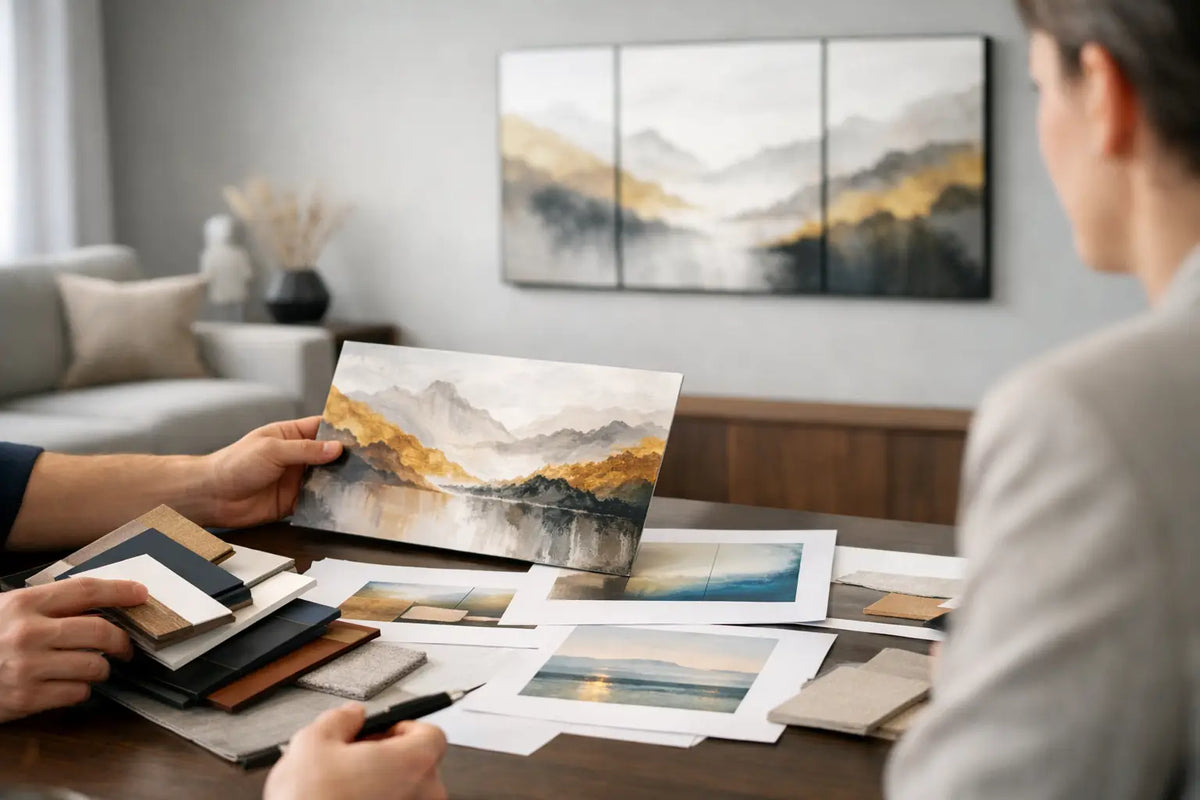
When is custom-made wall art worth it?
A wall above the sofa, in the stairwell, or next to the dining table often has a greater impact on the overall feel of a room than a new piece of furniture. If the picture is too small, too high, or in a format that doesn't suit the space, even a beautiful image will leave the room with an unfinished impression. When is custom-made clothing worthwhile? Really? Whenever wall art is meant to do more than just fill a gap, but to visibly unite a room.
A custom format isn't about luxury for its own sake. It's a choice of proportion, material, and a presentation that suits the home. Especially with high-quality photographs, framed posters, and art prints, the image only truly unfolds its full impact when the size and frame are carefully selected.
When is custom-made wall art worthwhile?
Custom-made artwork is particularly worthwhile where standard sizes would force compromises. This could be a wide wall in the living room, a narrow space in the hallway, or a niche in an older apartment. In vacation rentals, offices, and reception areas, the first impression is crucial: a properly sized picture appears planned, high-quality, and calming.
On a large wall, a small poster can quickly look lost. Conversely, a large-format image can overwhelm a compact room if there's hardly any space around it. A custom format gives you the opportunity to balance the wall space instead of having to choose the nearest available size.
This also applies to motifs with a clear visual language. The Hamburg skyline, which Dunes of Sylt, Architecture from New York or a tranquil coastal scene from the Hamptons thrives on horizon lines, perspectives, and expansive areas of color. A format that supports these elements makes the photograph appear more open and harmonious. Conversely, with abstract wall art, the right size can strategically introduce color and texture into the room.
The wall determines the format, not the other way around.
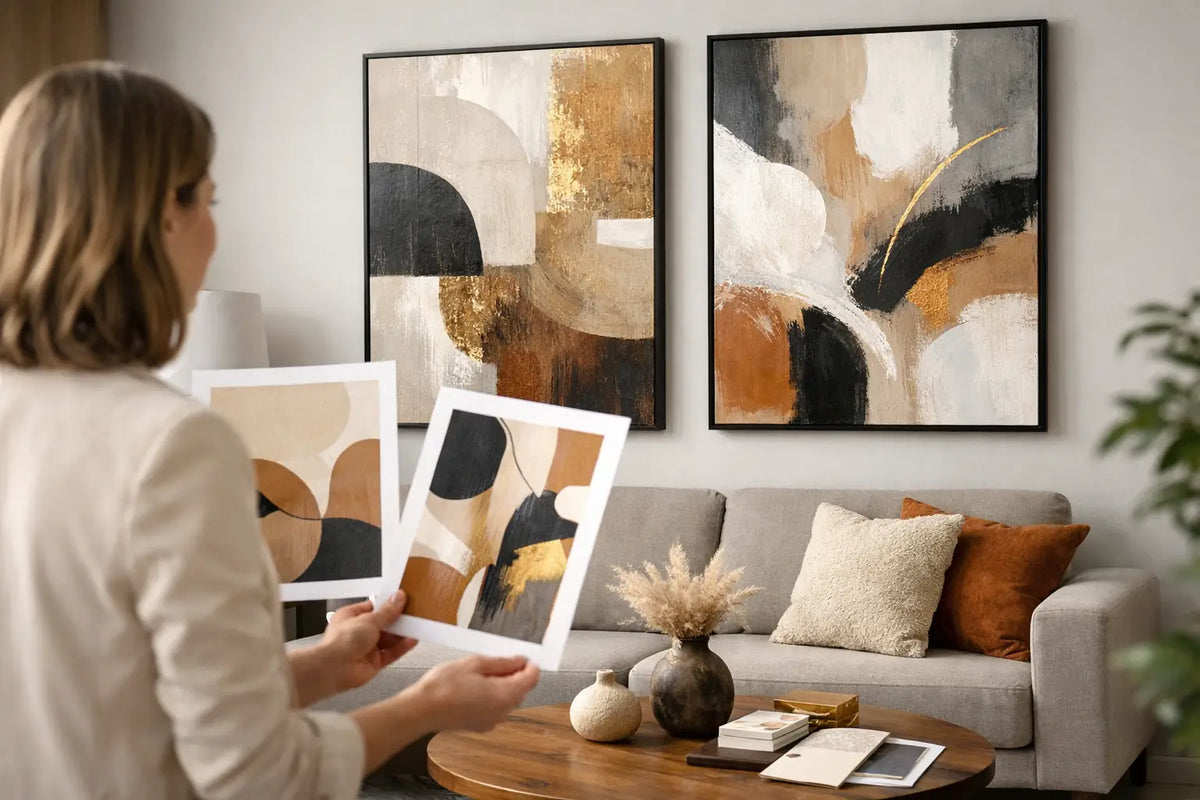
The most common reason for a custom-made picture is simple: the wall requires a specific size. Before choosing a design, it's worth considering the available space and the furniture beneath it. A picture above a sideboard or sofa shouldn't take up its entire width, but neither should it appear as a single, randomly placed accent.
As a guideline, framed wall art can occupy roughly two-thirds to three-quarters of the width of the furniture below it. This isn't a hard and fast rule. A very minimalist room can often accommodate a slightly larger format, while a wall with lights, shelves, or multiple pieces of furniture might require more space. The crucial point is that the picture, frame, and surroundings remain legible as a unified whole.
Height also affects the overall impression. In rooms with high ceilings or above a staircase, a more vertical format is recommended. A horizontal image often works particularly well above a low sofa or a long chest of drawers. Standard sizes cover many situations. However, if just a few centimeters determine whether the image looks confident or too small, a custom-sized print is the better choice.
How to measure effectively
Don't just measure the free wall space; include furniture, electrical outlets, light switches, and existing decorations in your measurements. Then mark the desired picture size with painter's tape. From a few steps back, you'll immediately see if the proportions look right.
Consider the frame. It increases the overall dimensions and gives the image visual weight. A delicate frame can complement a photograph in a modern and understated way, while a wider profile creates more presence on a large wall. Those who only consider the print size easily underestimate this effect.
If the subject matter requires a specific aspect ratio
Not every photograph feels the same in every format. A wide beach, a Promenade in Saint-Tropez Or, for example, the Miami skyline needs horizontal space. A vertical architectural detail, a palm tree detail from California, or a motif with a clear upward movement can have a much stronger effect in portrait format.
Custom printing is advisable if you want to preserve the character of the image rather than having to crop it extensively for a standard format. While cropping can sometimes condense the composition, if important image elements are missing at the edges or a calm perspective becomes unnecessarily narrow, the subject loses its impact.
Here, it's best to let the image speak for itself first and then determine the appropriate frame size. The result won't look like a mass-produced decorative accessory, but rather like a deliberately chosen eye-catcher.
Custom-made also means: The frame fits the room.
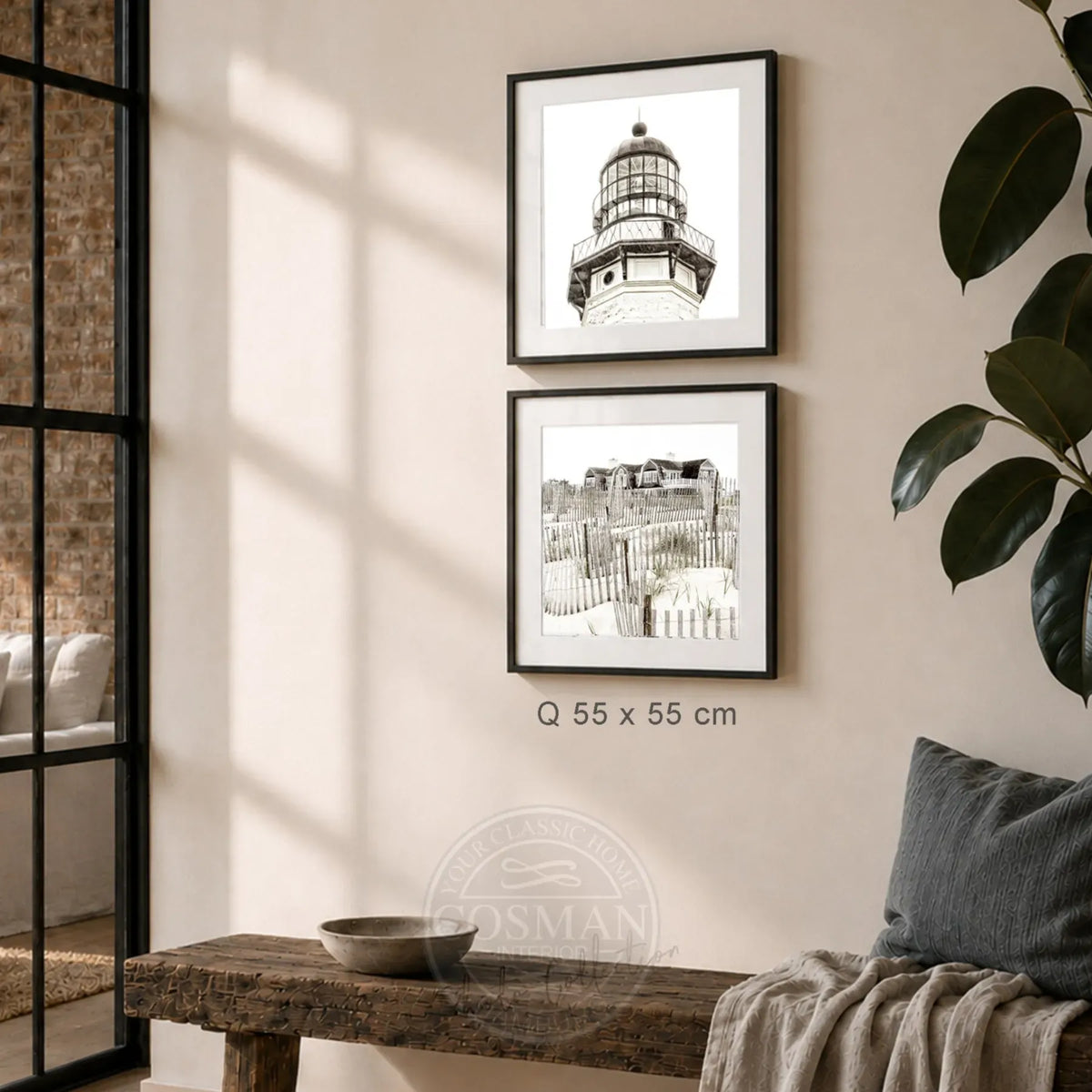
Size alone doesn't make for a compelling wall design. Only a carefully chosen frame truly connects photography and interior design. In a bright, uncluttered interior, a white or light-colored frame can emphasize a sense of lightness. Black frames precisely highlight graphic elements and contrasts. Wood finishes add depth to rooms with natural materials, linen, oak, or warm earth tones.
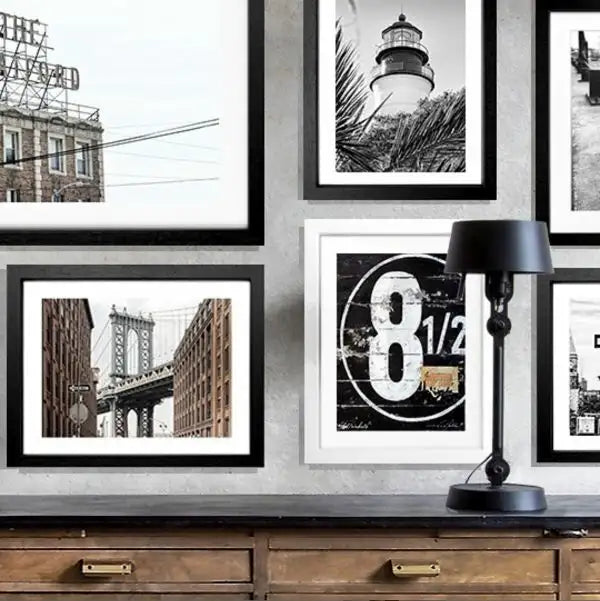
With custom-made frames, the interplay of format, frame profile, and subject matter can be planned from the outset. This is particularly valuable if several pictures are already hanging in the room. Different subjects can retain their own character, but should be linked through recurring frame colors or proportions.
Acrylic glass complements this high-quality look and protects the print at the same time. It is particularly suitable for frequently used living areas, hallways, or commercial spaces. The surface has a clean and modern appearance, without the need to organize the print, frame, and protective cover separately.
When standard formats are the better choice
Custom-made artwork isn't always necessary. For small wall spaces, picture rails, or a deliberately casual gallery wall, standard sizes are often the simplest solution. Standard sizes also offer flexibility if you plan to regularly change the artwork.
If you want to try out a color scheme in a room or liven up a small corner, you don't necessarily need a special format. A high-quality framed picture in a suitable standard size can make the same difference, provided the proportions and subject matter are right.
The difference lies in the requirements for the space: If a picture is meant to charmingly complement an existing surface, a standard frame is often sufficient. If it's intended to define a large, challenging, or particularly prominent wall, individual planning is worthwhile. Custom-made pieces usually cost more and require a more careful decision before ordering. However, this avoids the typical hassle of buying a replacement when the first picture turns out to be too small, too narrow, or unsuitable.
Especially useful in these rooms
In the living room, a custom format is worthwhile if a single artwork is intended to become the visual focal point above the sofa, fireplace, or sideboard. large-format coastal print It can convey peace and vastness, while city photography creates an urban contrast.
In the dining area, landscape-format artworks are often a compelling choice because they accommodate the length of a table or sideboard. In the hallway, on the other hand, a narrow, vertical format can transform a passageway into a thoughtfully designed space. Wall art plays a particularly important role where floor space is limited.
For vacation properties and guest rooms, destinations with high recognition value work exceptionally well. Sylt, Hamburg, or the Mediterranean coast create atmosphere without overwhelming the space thematically. In offices, law firms, studios, or reception areas, the format can be somewhat more generous: it conveys attention to detail and lends personality even to functionally furnished rooms.
A ready-made solution saves more than just time.
The effort involved in creating a custom wall design is often underestimated. Printing, framing, glass, matting, hanging, and choosing the right mounting hardware quickly lead to multiple decisions and contacts. A ready-to-hang, custom-made piece combines all these steps into one product.
At Cosman Photocollection, high-quality photo prints are hand-framed, fitted with acrylic glass, and come ready to hang. This provides peace of mind during the planning process: you choose the image, format, and frame, but you don't receive a loose print that you then have to worry about.
This is especially useful if you want to furnish a room without a lengthy renovation phase. A framed artwork arrives, is hung up, and immediately changes the atmosphere. This clarity is a real advantage, particularly when moving in, renovating, or setting up a new workspace.
The right question to ask before ordering
Don't just ask if you like the image. Ask what function it should fulfill in the room. Should it calm a wall, create a focal point, pick up colors from furniture and textiles, or evoke a memory of a favorite place? The clearer this answer is, the easier it will be to decide on the size and frame.
A custom-made piece is worthwhile if it transforms a beautiful photograph into an image that becomes an integral part of that specific space. Therefore, take a few minutes before making your selection to consider dimensions, sight lines, and frame color. This little planning ensures that your wall art doesn't just hang there, but fully contributes to the room's story.