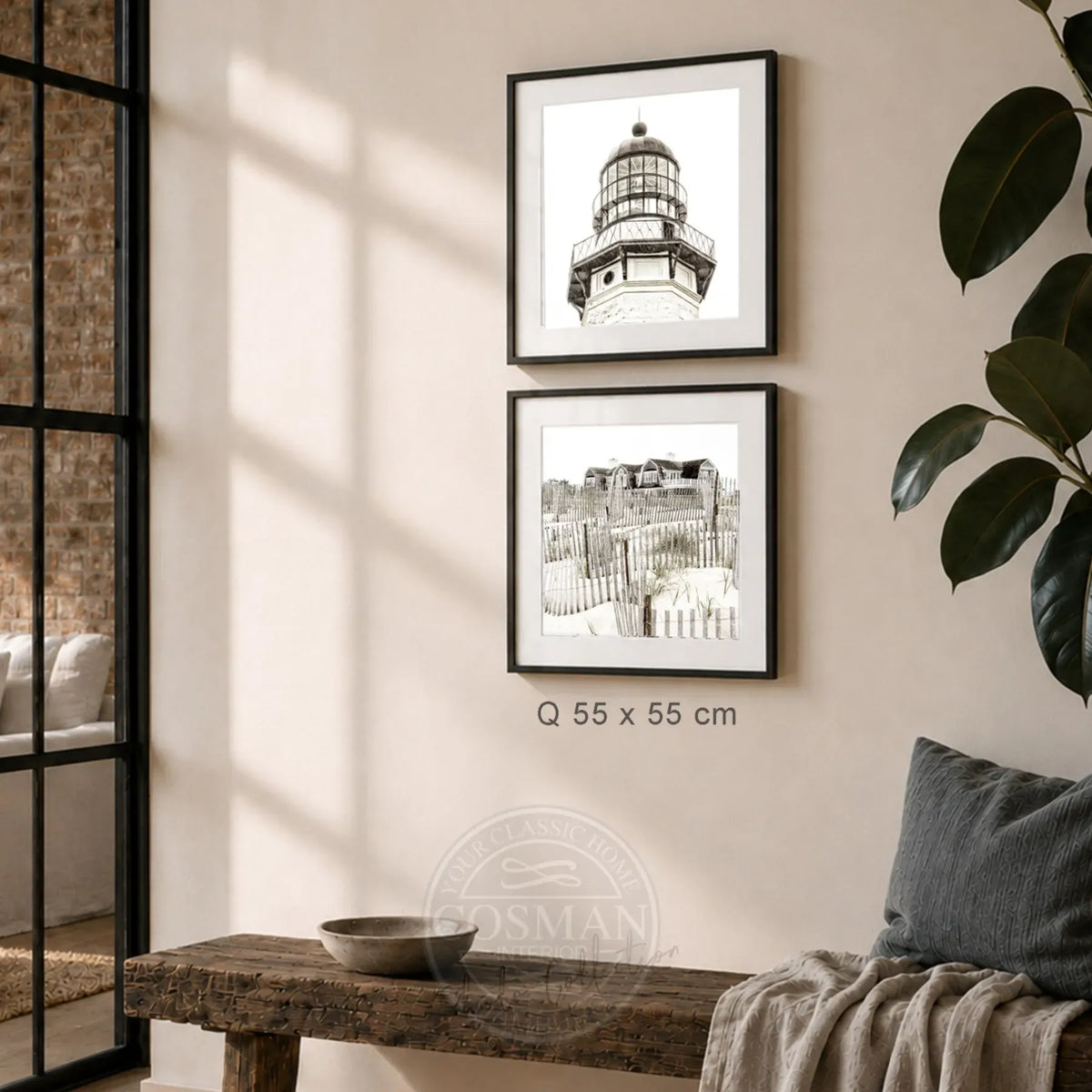

Choose the right size made-to-measure versus standard format
A blank wall above the sofa is rarely just a blank wall. It determines whether a room appears calm, spacious and fully furnished - or whether it is still missing something despite the beautiful furniture. The decision between custom-made versus standard format is therefore not just about centimeters. It's about proportions, lines of sight and how naturally a picture appears connected to the room.
Standard formats are familiar, easy to plan and a convincing choice for many walls. A custom-made design, on the other hand, offers the scope to match a motif exactly to the furniture, architecture and feeling of space. Which variant is the right one depends less on a general rule than on the area you want to design.
Custom-made versus standard format: the crucial difference
A standard format follows fixed dimensions. This makes the selection easier, especially if the wall is manageable or a picture should act as a single accent. Formats such as portrait, landscape or square images create a clear order and fit well into many living situations.
A custom-made product On the other hand, it is chosen for a specific wall or a specific place. Perhaps a coastal motif should fit the width of a sideboard, a photo of Hamburg should fit into a narrow old building wall, or an abstract motif should be placed exactly between two windows. Here it is not the available grid dimensions that set the pace, but the space itself.
The visible difference lies in the effect. A picture that is too small will quickly make a large wall appear indefinite. A format that is too large, on the other hand, can visually overwhelm furniture or take the air out of a narrow room. The appropriate size does not appear as if it was added later, but as if it had been part of the furnishings from the start.
When a standard format is the better choice
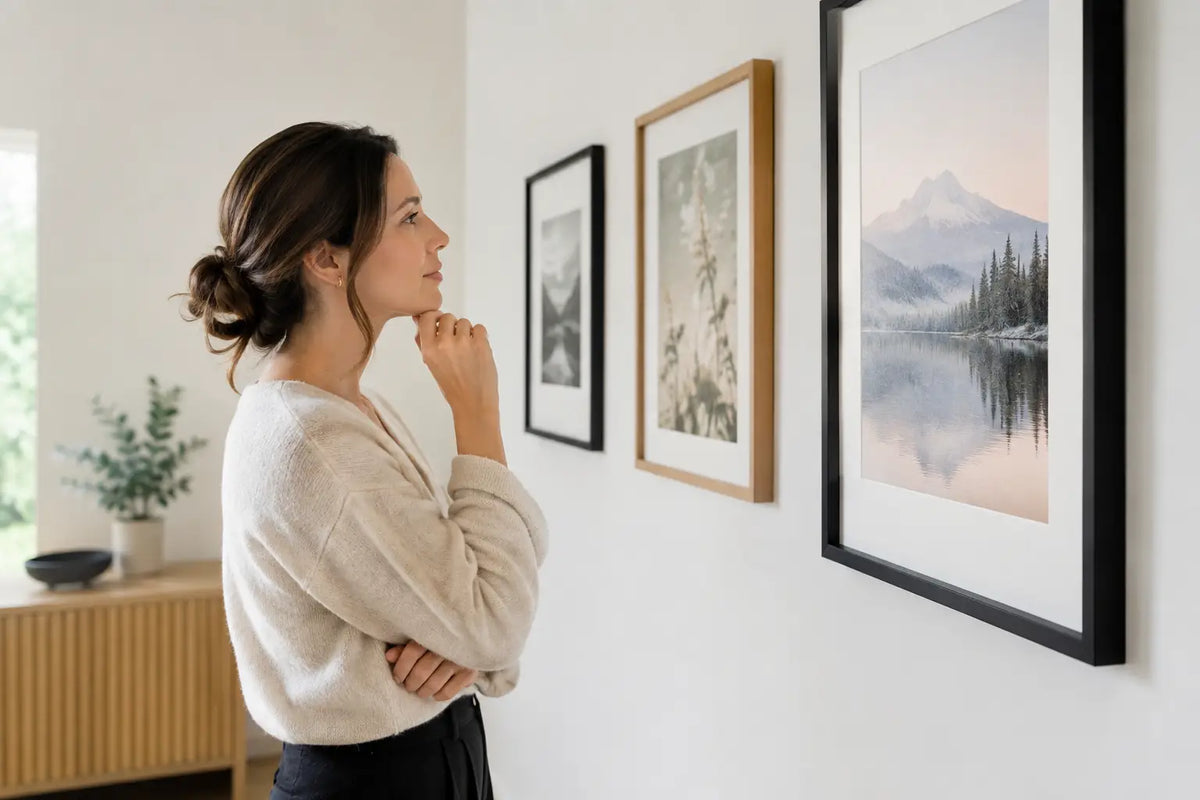
Standard formats are by no means a compromise solution. They are ideal when the wall already has a clear boundary, such as above a dresser, next to a bookcase or in a hallway with limited width. Even in smaller rooms, a deliberately chosen standard format can create calm instead of making maximum use of every area.
They are particularly suitable for motifs that can work alone: an iconic view of New York, an elegant scene from Saint-Tropez or a graphic work in clear colors. In a bedroom, for example, a single framed picture in a fixed format can provide a calm contrast to textiles and furniture.
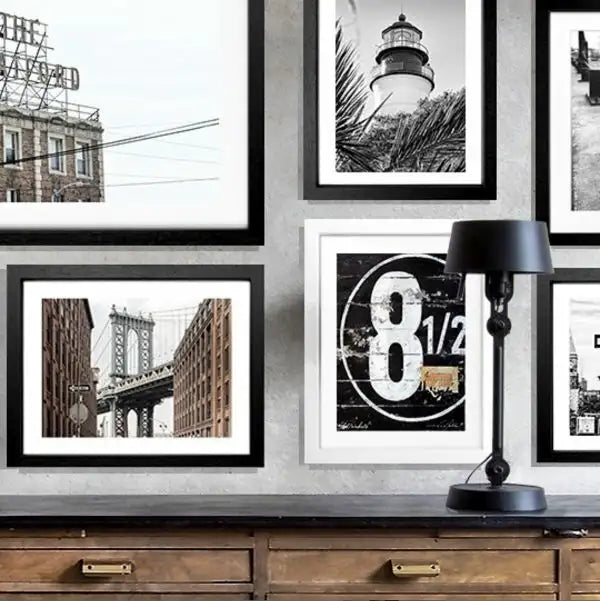
The standard format is also practical in picture groups. Several frames of the same size create a clear, recognizable structure. If you are planning a gallery of travel memories, coastal views and abstract motifs, you can create a harmonious overall picture with identical external dimensions, even though the photographs show different perspectives and colors.
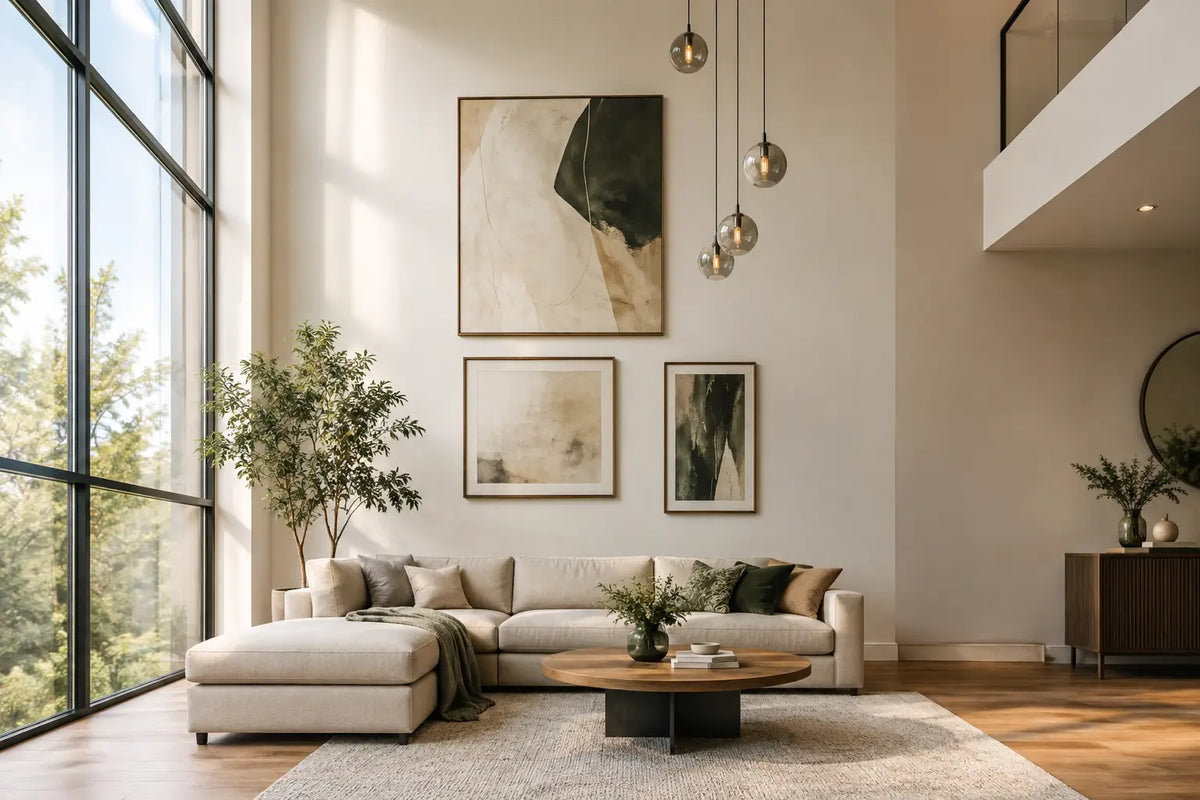
It is crucial that the image does not appear lost. As a guide, a mural above a piece of furniture may take up a noticeable portion of its width. It doesn't have to be exactly flush, but it should create a visual relationship with it. A small picture above a very wide sofa often seems more like a standalone object than a design focal point.
It is worth custom-made for these walls
Custom-made wall art comes into its own when architecture and furnishings have special requirements. This is often the case with spacious sofa walls, long hallways, high ceilings or holiday properties with spacious living areas. Niches, wall surfaces between windows and narrow areas next to doors often require a format that is not provided for in the standard grid.
Custom-made work is particularly convincing when a motif is intended to convey a certain atmosphere. A wide beach shot from Sylt or Florida gains presence as a large landscape format because the horizon, sky and water are given space. A vertical city motif can elegantly accompany a high wall and emphasize the height of a room without making it appear heavy.
Bigger doesn't automatically mean better. A bespoke design can also be useful if only a few centimeters are missing so that a picture sits neatly above a console table or appears balanced in a narrow wall area. It is precisely these precise adjustments that make the difference between a good idea and a truly harmonious facility.
At Cosman Photocollection, motifs are made on high-quality photo paper, framed by hand and delivered ready to hang. This is particularly pleasant with individually selected dimensions: the print, matching frame, acrylic glass and hanging are coordinated with one another. You don't have to first look for a separate frame and then consider whether the picture, glass and mounting actually fit together.
The furniture sets the scale
Don't start with the wall alone, but with the piece of furniture underneath or next to it. Above a bed, dining table or sideboard, an image should incorporate the existing line without copying it. A wide landscape format creates a calm, horizontal base above a sideboard. Two portrait-format works can structure a wall next to a window and at the same time emphasize the vertical.
Also pay attention to the distance. A mural that hangs too high loses its connection to the furniture and quickly appears isolated. If it hangs too low, it creates tightness. The ideal position depends on the space, image size and use, but a harmonious impression is usually created if there is clearly visible but not excessive space between the furniture and the frame.
The frame is part of the format
When deciding on size, the frame is often underestimated. In doing so, it changes the external appearance significantly. A narrow, reserved frame makes the motif appear more spacious and modern. A more high profile or dark frame sets a clear outline and can give a motif more weight.
Frames that support the lightness of photography are often suitable for bright, airy interiors. A view of the Hamptons, bright architecture or a beach motif can appear spacious without dominating the furnishings. In rooms with dark wood, strong fabrics or striking designer furniture, however, a contrasting frame can create exactly the necessary presence.
If you choose the size and frame together, you avoid a typical mistake: the motif fits the wall on paper, but the overall framed size no longer fits. Therefore, always plan with the visible external dimensions of the finished mural.
How to make the right decision for your space
A photo of the wall and a simple tape measure provide a good basis. Measure the width and height of the available area, taking into account furniture, lights, electrical outlets and wall projections. Then mark the desired external dimensions with painter's tape. In this way, you can immediately see whether a format supports the surface or whether it appears too dominant.
Then comes the question of motive. Panoramic landscapes, long coastlines and architectural shots often require a landscape format. Portraits, palm tree avenues or vertical city scenes often appear more intense in portrait format. With abstract designs there is greater freedom, but colored areas and lines should not randomly divide the space, but rather consciously guide it.
Also think about the distance from which the image is viewed. Wall art is often seen from a short distance in the hallway, which is why a format that is too large can quickly become overwhelming. In an open living area, however, a large-format picture can have a wider impact and make a clear statement from several meters away.
A standard format is often attractive for rental apartments if flexibility is a priority. It will be easier to integrate into another room later. On the other hand, anyone who is designing a permanently planned facility, a home or a holiday apartment often benefits more from custom-made furniture. It doesn't take anything away from the room, but rather gives it a consciously chosen order.
Not every wall has to be filled to the maximum
The highest quality solution is not always the largest possible image. Some walls benefit from a single, precisely placed format; others need the confident presence of a bespoke work. What is crucial is that the mural performs a task in the room: it can define a dining area, bring together a sofa corner, open up a hallway or give a bedroom a quieter mood.
If you're toggling between sizes, don't choose based solely on available space. Ask yourself what effect you want to feel when you enter the room. A picture that matches the architecture in format, frame and motif turns a wall into a natural part of your home.